
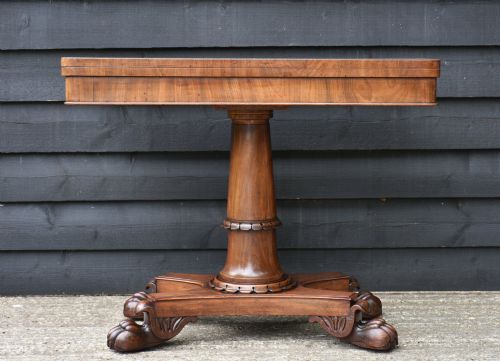
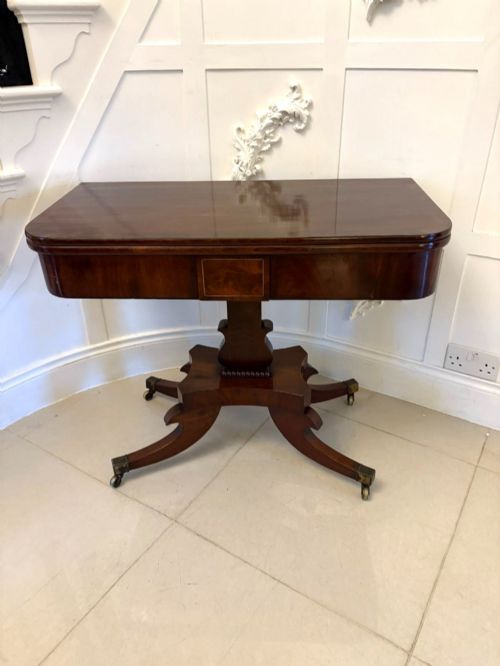
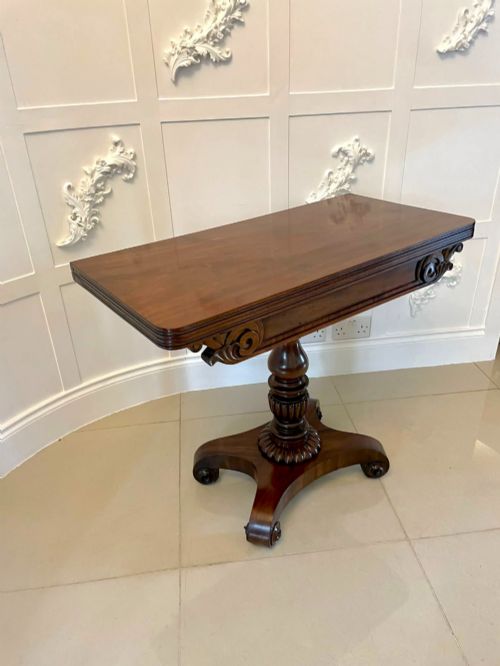
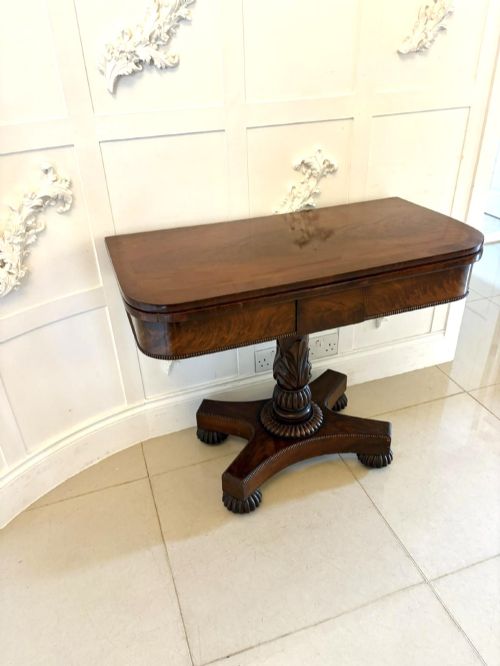

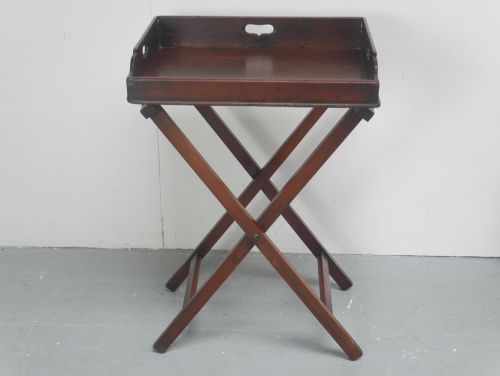
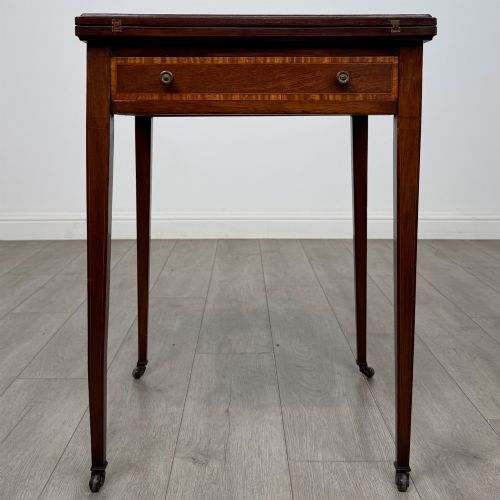
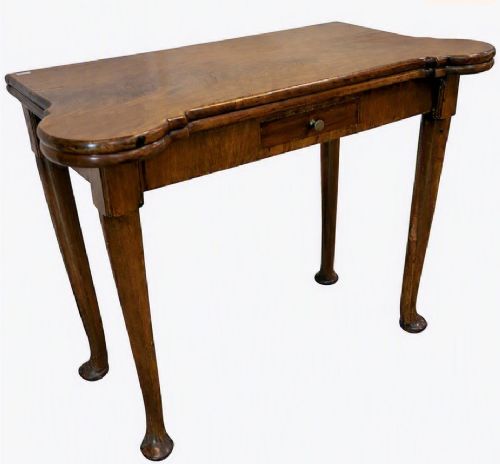
Folding Mahogany Tea Table
A folding mahogany tea table is a versatile antique that combines a compact footprint with a clever hinged surface.
Folding Mahogany Tea Table
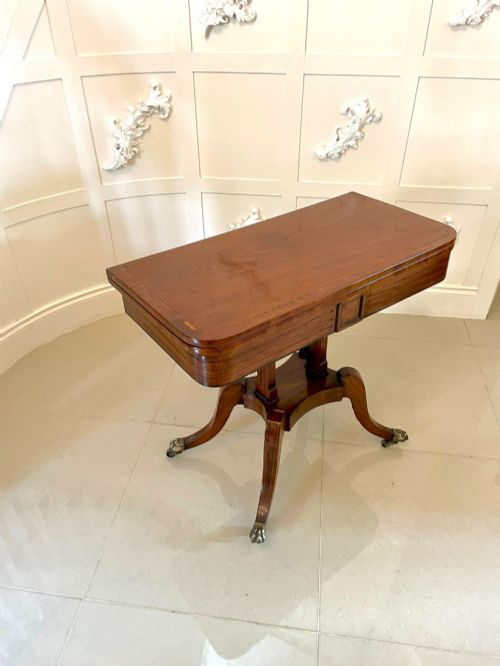
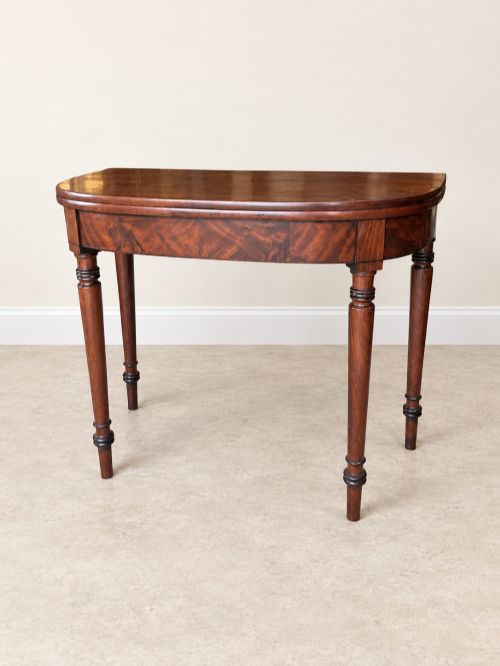
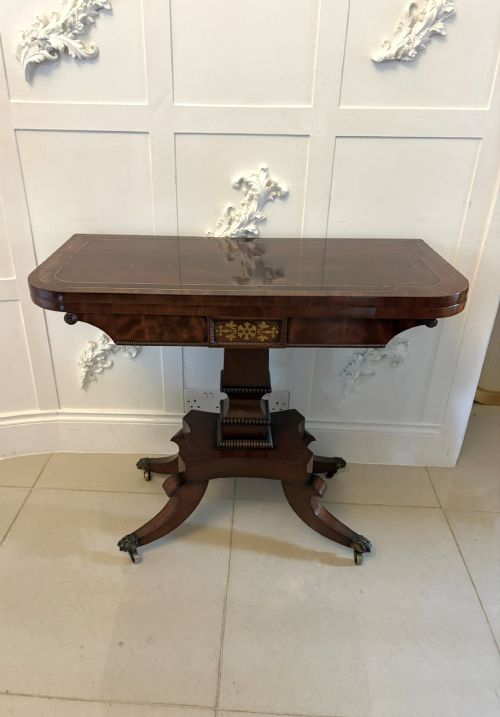
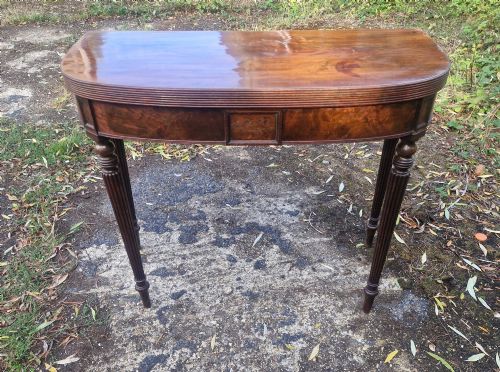
A folding mahogany tea table is an adaptable item designed to sit neatly against a wall before opening out to serve tea or host card games. Buyers searching for a folding mahogany tea table will find pieces spanning the Georgian, Regency, and Victorian periods.
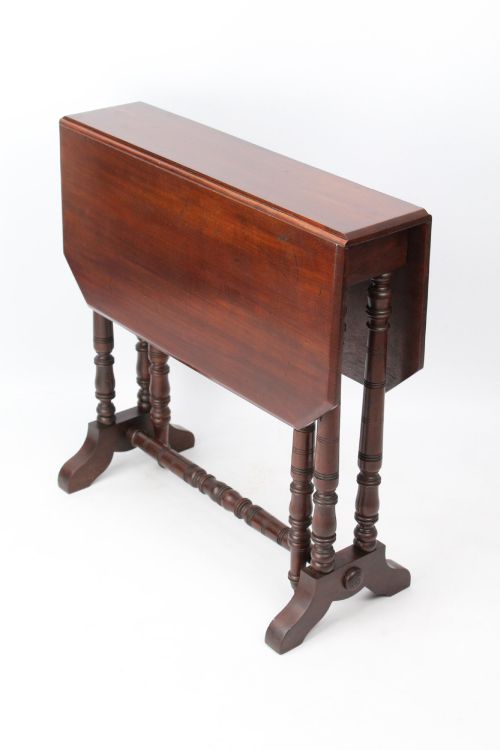
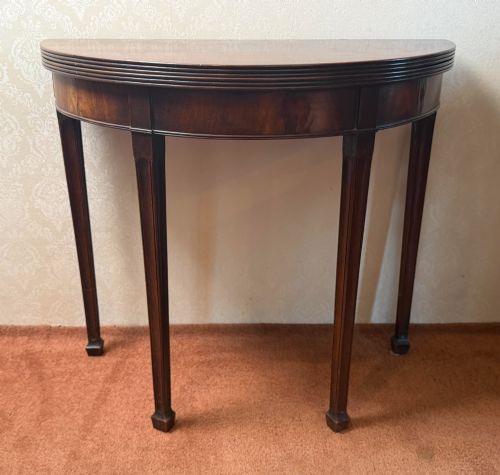
The most common formats on this page include demi-lune, D-shaped, and rectangular turnover tops supported by concertina actions, swivel mechanisms, or gateleg frames. These tables served multiple functions in period drawing rooms, shifting effortlessly from console tables to gaming surfaces.
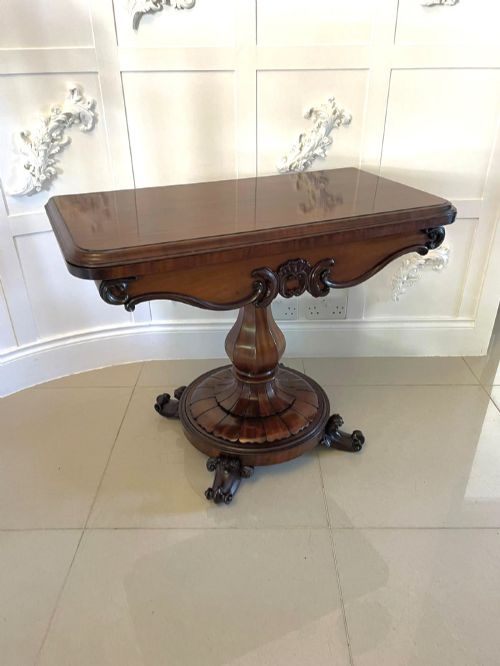
Examples range from restrained 18th-century George III designs to more robust William IV and Victorian interpretations featuring bold sabre legs or figured veneers. Each piece reflects the shifting social habits of its era, primarily built for domestic hospitality.
Materials and construction methods
Cabinet makers relied heavily on solid mahogany and rich flame mahogany veneers, often enhanced by contrasting satinwood and boxwood inlay to define the borders and edges of the folding tops.
Structural stability was achieved through precise joinery, including concertina frames that expanded to support the unfolded leaf, alongside pivoting hinges and brass fittings embedded within the timber.
Materials documented across the inventory include solid mahogany, flame mahogany veneer, brass, satinwood, and boxwood inlay.
Assessing craftsmanship and finish
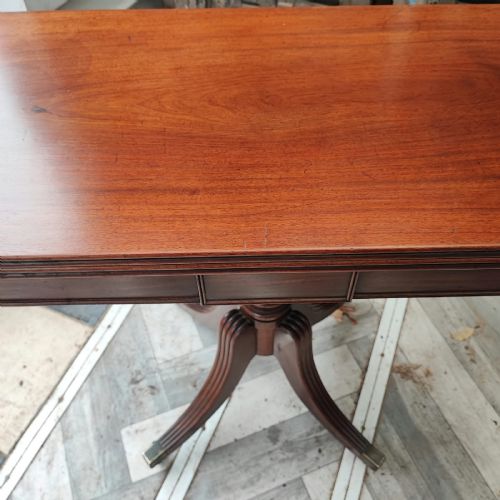
Quality rests in the depth of the mahogany grain and the figuration of the veneer selected for the top, where superior examples display symmetrical flame patterns and rich original patina.
The sophistication of the opening mechanism marks the difference between standard production and finer workshops, particularly seen in concertina frames that maintain flush alignment when closed.
The Folding Mahogany Tea Table Glossary
- Concertina action
- A mechanical frame that expands outward in an accordion fold to support the opened leaf of a table evenly on all four sides. This clever engineering allows the apron to move outwards with the legs for maximum stability.
- Demi-lune
- A half-moon shape popular for console and tea tables designed to stand flush against a wall. When opened, the hinged top forms a full circle or semi-circular playing surface.
- Turnover top
- A hinged wooden surface that folds back upon itself or rotates to reveal a finished top or a lined interior well. It is the defining feature of dual-purpose tea and card tables.
- Satinwood inlay
- Contrasting blonde wood inserted into recesses within the darker mahogany surface to create geometric borders or decorative motifs. This technique highlights the edges of the folding tops.
Folding Mahogany Tea Table: Frequently Asked Questions
How did people use these tables?
These tables remained folded against the parlour wall holding decorative objects until tea time or evening card games arrived.
At that point, servants or hosts swung or unfolded the top to create a stable surface for porcelain services or gaming counters.
How do I tell a tea table from a card table?
Tea tables often feature plain wooden surfaces inside, sometimes with small corner recesses for cups, designed for serving afternoon beverages.
Card tables generally conceal a baize or felt-lined interior intended for playing cards, dice, and board games.
Where should I place one at home?
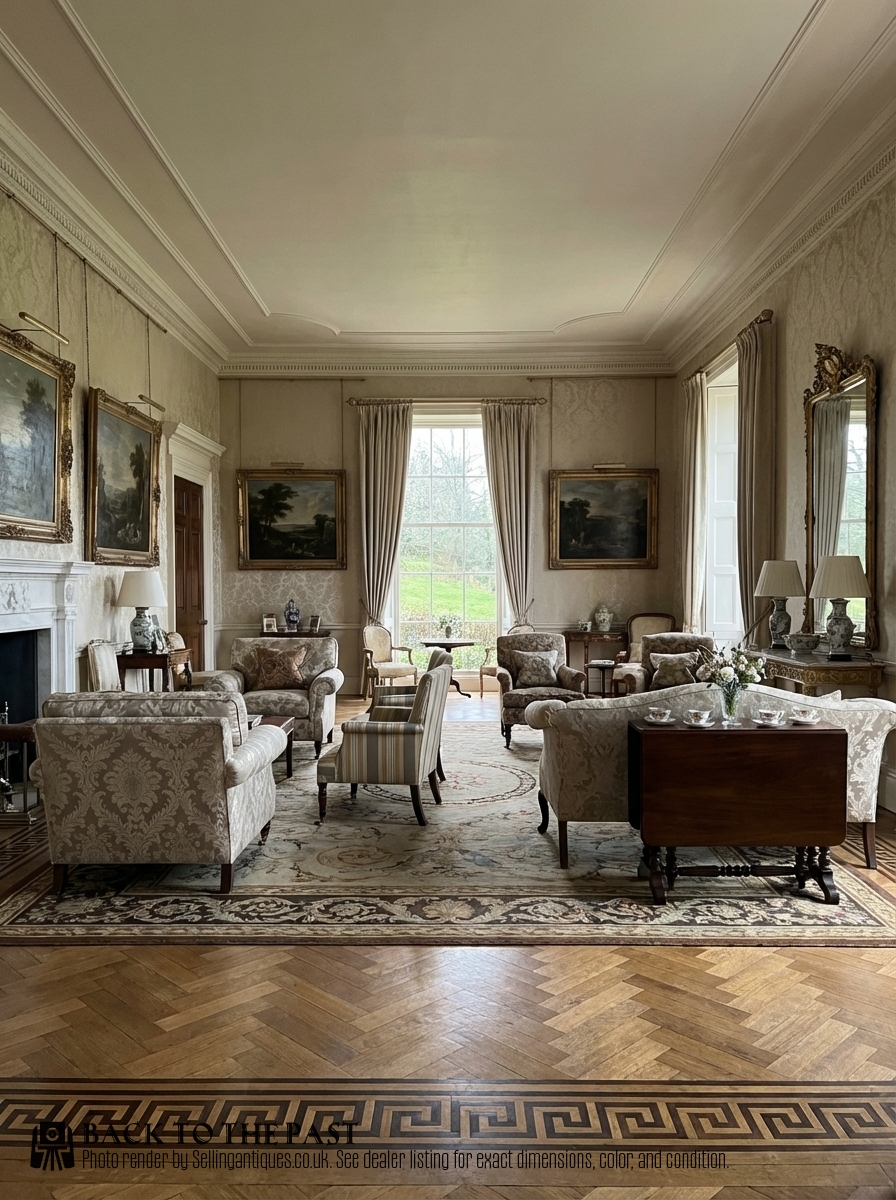
Their shallow profile when closed makes them ideal as console tables in narrow hallways, landings, or living room perimeters.
Pulling them into the room allows them to function as occasional dining surfaces or desks when the top is fully expanded.
How do I identify the period?
Early pieces from the Georgian era often showcase subtle proportions, straight or cabriole legs, and understated crossbanding.
Later Regency and Victorian examples lean towards bolder turned pillars, platform bases, brass inlay, and more pronounced mahogany figuring.