


Folding Library Chair
A folding library chair is a clever piece of dual-purpose seating that transforms into library steps, offering both comfort and practicality for a domestic study.
Folding Library Chair
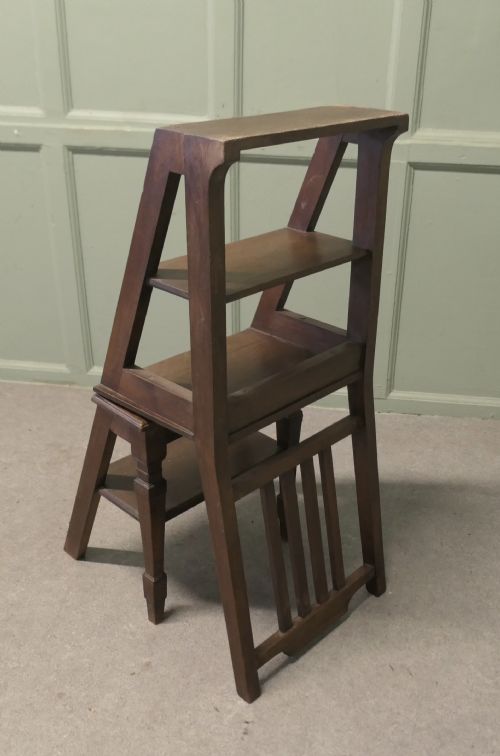
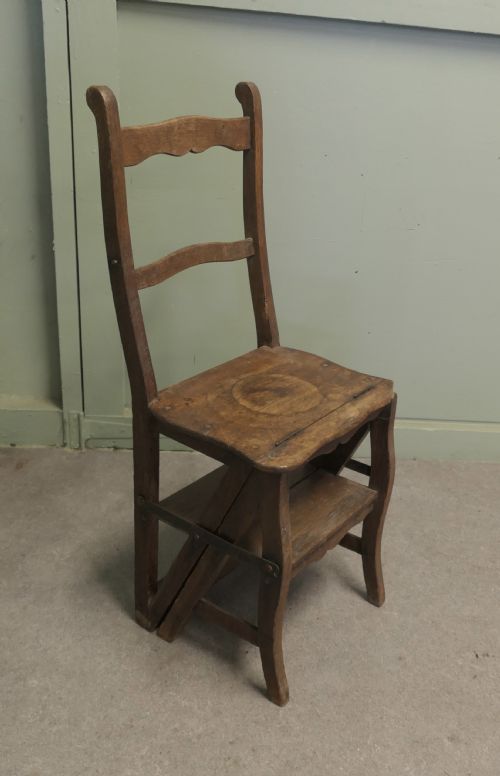
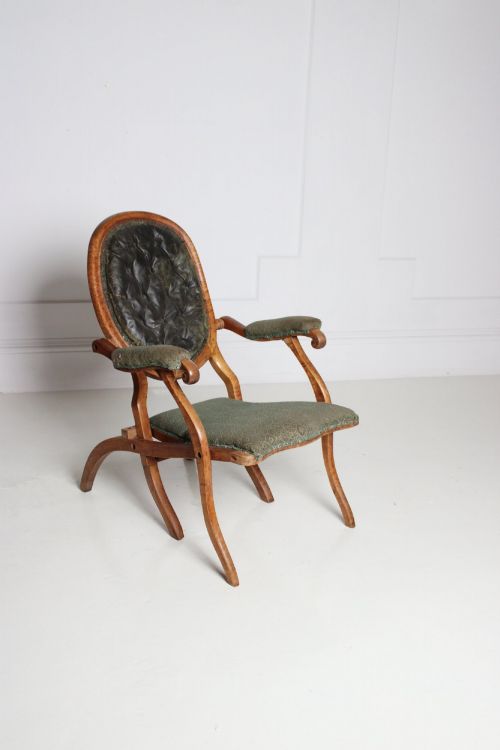
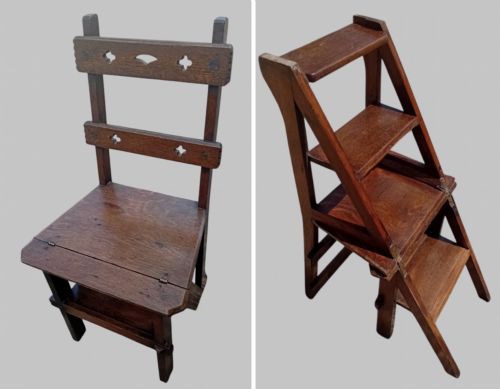
When you search for a folding library chair, you encounter a hybrid seating form designed for the home library or study. These pieces serve primarily as armchairs or library chairs before converting into library steps or a ladder.
The versions most commonly met on this page span several distinct periods including the Georgian, Regency, and Victorian eras, alongside Edwardian examples. They take the form of armchairs, metamorphic chairs, and library steps.
Makers designed these convertible items to address the practical challenge of reaching high bookshelves in private rooms. They combine standard seating upholstery with hinges and pivoting frames that alter the silhouette.
How they were made
Cabinet makers constructed these metamorphic seats using timbers such as mahogany, oak, walnut, and birds eye maple. These dense woods provided the structural integrity required to support both sitting and climbing.
Makers integrated brass hinges, iron mechanisms, and cane or leather panels to facilitate the transformation between chair and steps. Decorative details like pierced carved crest rails, fluting, and bone button decorations appear on select examples.
Selected nineteenth-century campaign chairs feature tiny bone button decorations alongside standard brass hinges and fluted woodwork.
What varies in quality
The sophistication of the mechanical action dictates the caliber of a metamorphic piece, distinguishing smooth transformations from stiff or awkward transitions. Finer examples conceal their hinges and pivots within the timber frame.
The selection and treatment of the primary timber, whether mahogany, oak, or birds eye maple, governs the visual authority of the piece. Superior construction maintains stability and balance in both the chair and the steps configuration.
Morgan and Sanders·Richard Hicks Bridgens
The Folding Library Chair Glossary
- Metamorphic chair
- A piece of furniture designed to transform from one functional form into another, such as an armchair into library steps. This dual purpose defined much inventive seating of the nineteenth century.
- Library steps
- A set of portable stairs used to reach high bookshelves in private studies and institutional libraries. They frequently took clever forms to save space in domestic interiors.
- Campaign chair
- A portable folding seat originally built for travel and military use in the field. These chairs utilised folding frames for ease of transport.
- Crest rail
- The top horizontal member of a chair back, often shaped or decorated with carving. On these chairs, it provides a finished appearance when the piece stands upright.
Folding Library Chair: Frequently Asked Questions
How do folding library chairs work?
These pieces use hidden hinges, pivots, and sliding tracks built into the wooden frame. The seat and back section manipulate outward or upward to form a stable flight of steps.
Users manually guide the transformation by releasing latches or shifting the wooden sections into their secondary locking position.
Where were these chairs used?
Owners placed them in private libraries, studies, and drawing rooms where floor-to-ceiling bookshelves required elevated access. They served as primary seating for reading before converting to reach high volumes.
Their dual function made them especially popular in homes where space for separate ladders and armchairs was limited.
How do I date a folding library chair?
Dating relies on identifying the prevailing stylistic traits, timber choices, and construction methods of the period. Georgian and Regency examples typically feature mahogany with classical lines, while Victorian pieces often showcase heavier oak and Gothic or Aesthetic Movement details.
Hardware materials and the style of turning or carving also offer clear indicators of the decade of production.
Are these chairs comfortable for daily seating?
They were built to function as genuine armchairs with upholstered seats in leather or cane support. The need to house folding mechanisms inside the frame sometimes influenced the proportions of the seat and back.
They offer standard nineteenth-century seating comfort while retaining their mechanical purpose.