
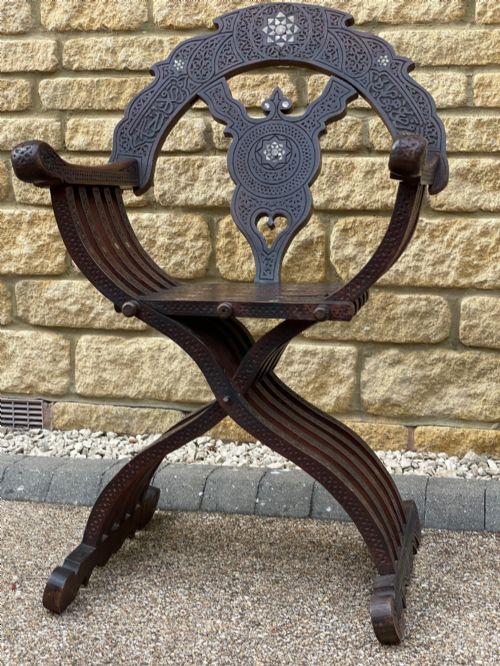


Bone Inlaid Wooden Chair
A bone inlaid wooden chair brings intricate geometric patterns and warm timber into a room, offering both seating and striking decorative presence.
Bone Inlaid Wooden Chair
When you search for a bone inlaid wooden chair, you encounter seating developed across various global traditions, most notably Moorish Revival, Syrian Ottoman, and Anglo-Moorish styles from the nineteenth and early twentieth centuries. These pieces encompass diverse forms, including armchairs, corner chairs, hall chairs, and folding campaign designs alongside conversation seats.
The version you are most likely to meet on this page is a nineteenth-century Moorish or Syrian armchair featuring intricate woodwork and detailed surface decoration. Alongside single armchairs, the selection includes matched pairs and occasional three-piece seating suites intended for prominent placement in reception spaces.
Originating from workshops in Damascus and Italy, as well as British retailers influenced by Eastern design, these chairs combine functional seating with elaborate architectural motifs. The forms range from traditional Savonarola and folding camp frames to sturdy hardwood side chairs and low corner seats.
How they were made
Carpenters constructed the structural frames using dense timbers such as walnut and general hardwood, shaping the legs, rails, and crests through traditional joinery and carving techniques. Pierced carved crest rails and fluting frequently define the upper sections of the woodwork.
Artisans applied surface decoration by meticulously setting pieces of bone and mother-of-pearl into prepared recesses within the timber. These geometric and floral inlay patterns were supplemented by turned spindles and Mashrabiya panels.
Additional detailing incorporated secondary materials such as leather upholstery for seats and brass elements for structural reinforcement or button decorations. Folding mechanisms on campaign models relied on precise wooden hinges and pivots.
Several armchairs incorporate tiny bone buttons that secretly double as structural pins, proving that even a humble fastener deserves a polished inlay.
What varies in quality
The precision and density of the surface decoration dictate much of the visual success in these pieces, with finer examples displaying tightly fitted mosaic patterns where bone and mother-of-pearl sit flush against the timber. Hand-carved elements show varying degrees of depth and sharpness in the pierced woodwork.
Structural integrity of the hardwood frame and the stability of the inlay work determine the durability of the seating. Pieces that retain their original joinery without excessive replacement of missing bone tesserae represent higher standards of preservation.
Liberty and Co
The Bone Inlaid Wooden Chair Glossary
- Bone inlay
- A decorative technique where small carved pieces of bone are embedded into wooden surfaces to create intricate geometric patterns. This method creates high-contrast visual detail against darker hardwoods like walnut.
- Mashrabiya
- An architectural element adapted into furniture, consisting of turned wooden lattices assembled into intricate screens or panels. These panels provide decorative transparency within chair backs and corners.
- Savonarola chair
- A folding chair type formed from multiple curved wooden slats that cross to create a supportive X-shaped base. Named after the Renaissance frieze, these designs often incorporate carved crests and bone button embellishments.
- Moorish Revival
- An architectural and decorative style popular in the nineteenth century that reinterpreted Islamic design motifs from Spain, North Africa, and the Middle East. Furniture in this style utilises extensive geometric carving and inlay.
- Campaign chair
- A portable folding chair designed for travel and military use during the nineteenth century. These sturdy wooden seats combine practical folding mechanics with decorative carving and inlay.
Bone Inlaid Wooden Chair: Frequently Asked Questions
Where were these chairs placed originally?
These decorative seats were typically positioned in drawing rooms, reception hallways, and reading nooks where their elaborate inlay and carved woodwork could be admired by visitors. They served both as functional seating and as statements of sophisticated global taste.
Because of their intricate surfaces, owners often placed them away from direct sunlight and heavy daily wear to protect the delicate bone and mother-of-pearl elements.
How do I identify a Syrian Ottoman chair?
Syrian Ottoman pieces usually feature dense geometric mosaic patterns created from bone and mother-of-pearl covering significant portions of the wooden frame. The woodwork often incorporates arched motifs and sophisticated turned spindle work.
Makers in Damascus produced many of these distinctive armchairs and suites during the late nineteenth and early twentieth centuries, utilising native hardwoods.
Are folding campaign chairs comfortable?
Nineteenth-century folding campaign chairs were built with supportive wooden slats and often included leather elements or added cushions for everyday utility. The X-shaped frame distributes weight evenly while allowing the seat to collapse for transport.
Their sturdy walnut or hardwood construction ensures they remain practical for occasional seating in modern living spaces.
How should I care for bone inlay?
Maintaining inlaid furniture involves keeping the timber and bone in stable environmental conditions away from excessive moisture and rapid temperature changes. Regular dusting with a soft, dry cloth helps prevent debris from accumulating in the recessed joints.
Applying specialised wax sparingly to the wooden areas preserves the finish without affecting the delicate bone tesserae.
What defines Anglo-Moorish design?
Anglo-Moorish furniture combines traditional British furniture forms, such as corner chairs and hall seats, with the surface decoration and pierced woodwork characteristic of Middle Eastern craftsmanship. British firms commissioned or imported these hybrid pieces to satisfy Victorian demand for exotic styles.
The resulting items bridge European structural typologies with intricate Islamic-inspired inlay.