





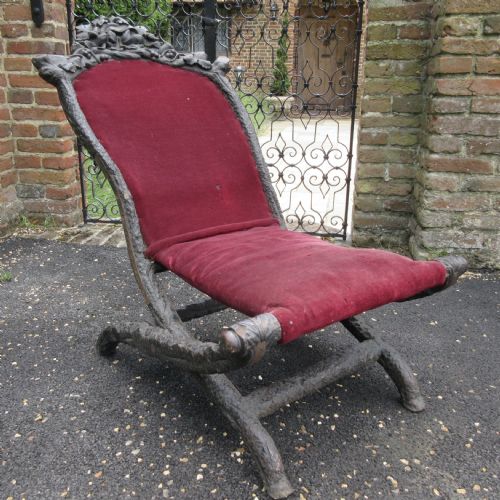


19th Century Folding Chair
These 19th century folding chair designs offer portable seating and inventive engineering, combining historical craft with practical utility for modern interiors.
19th Century Folding Chair
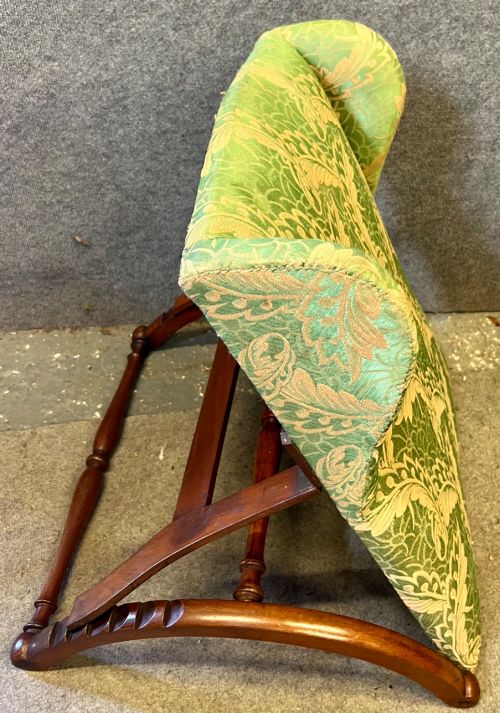
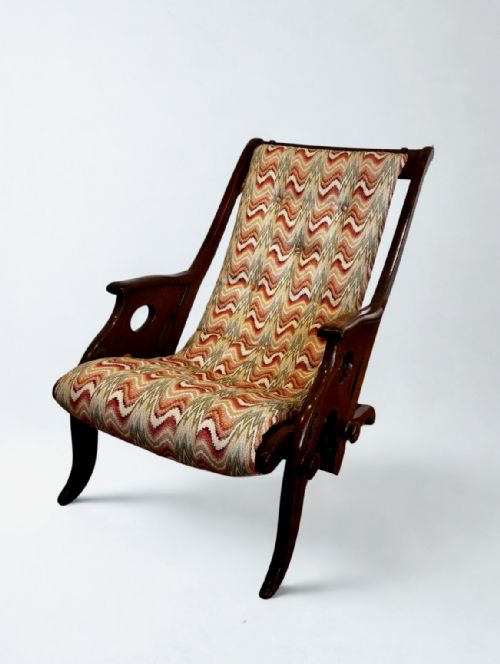
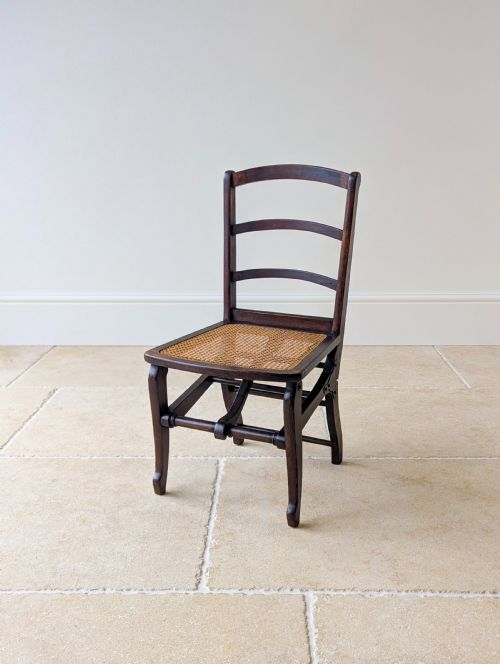
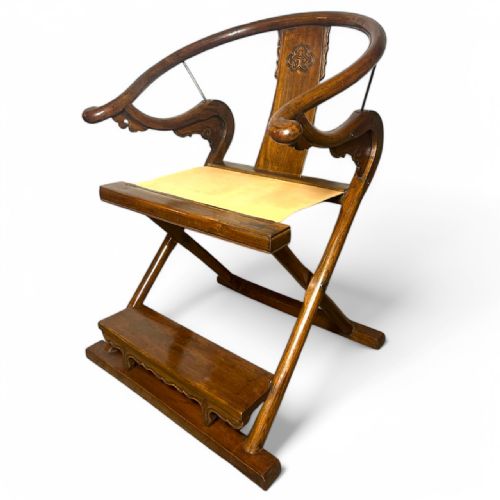
A 19th century folding chair encompasses an array of portable and X-frame seating solutions designed for travel, campaign use, or flexible domestic living. Buyers encounter diverse regional interpretations, from British colonial campaign furniture to intricate Chinese horseshoe-back thrones and European Gothic revival seating.
The most common examples on this page are campaign chairs and X-frame armchairs originating from Victorian Britain, France, and Spain. These pieces often feature adjustable backrests, leather upholstery, and clever pivoting mechanisms that allow the frame to collapse flat.
Beyond standard campaign models, the selection includes regional specialities such as Middle Eastern nacre-shell inlaid armchairs, Black Forest carved wooden seats, and Chinese hardwood folding chairs. Each variety reflects the specific social habits and woodworking traditions of its origin.
Materials and construction
Cabinetmakers utilised dense timbers such as walnut, mahogany, oak, teak, and rosewood to ensure the folding frames could withstand regular transport and assembly. Hardwoods provided the structural rigidity necessary for slender X-frames and pivoting joints to function securely.
Surface decoration frequently involved traditional techniques including bone button inlays, carved crest rails, fluting, and mother-of-pearl or nacre-shell inlay. Metal components, particularly brass hinges and pins, were integrated to strengthen the pivot points of the folding mechanism.
Upholstery materials ranged from fitted leather and velvet to woven textiles and cane panels. These elements were chosen for comfort and durability, complementing the polished timber frames of campaign and garden chairs.
Materials recorded across the inventory include walnut, mahogany, oak, teak, rosewood, brass, leather, velvet, and nacre-shell.
Assessing quality and execution
The standard of a 19th century folding chair depends heavily on the precision of its moving parts and the integrity of its timber joints. Superior examples maintain structural stability and smooth folding action without excessive looseness in the pivot points.
Artisanal execution separates standard utility seating from exceptional decorative works, particularly in carved or inlaid pieces. Finer items display crisp detailing in bone buttons, hand-carved crest rails, and precisely fitted nacre-shell sections that remain flush with the surrounding wood.
J. Herbert McNair
The 19th Century Folding Chair Glossary
- Campaign chair
- A portable folding chair designed for military officers or travellers, typically constructed to pack flat into a compact case. These chairs utilise hinged frames and removable upholstery for ease of transit.
- X-frame
- A structural form where two intersecting pieces of timber cross in the shape of an X to form the primary support of the chair. This geometry allows the seat to collapse inward.
- Glastonbury chair
- A traditional folding chair design with a panelled back and slanted seat, often associated with ecclesiastical or Gothic revival styling. It relies on interlocking wooden components that dismantle easily.
- Crest rail
- The top horizontal member of a chair back, frequently shaped, carved, or inlaid with decorative motifs in 19th century seating. It provides a focal point for stylistic attribution.
- Metamorphic furniture
- An adaptable piece designed to transform from one furniture type into another, such as library steps that convert into a chair. This engineering demonstrates 19th century ingenuity in domestic space-saving.
19th Century Folding Chair: Frequently Asked Questions
How do campaign folding chairs operate?
Most campaign models utilise a pivoting X-frame or hinged wooden supports that allow the side rails to draw together. The leather or textile seat simply folds as the frame closes.
Pins and brass fittings often secure the components in place when open, ensuring the chair remains stable during use.
Were these chairs intended for outdoor use?
Certain variations, such as garden chairs constructed in teak or rosewood, were built to withstand outdoor environments. Their simpler folding frames made them suitable for lawns and verandahs.
Finer indoor models featuring delicate inlays, silk velvet, or leather were strictly designed for domestic parlours, libraries, or campaign tents.
How can I identify the regional origin?
Regional attribution relies on timber choice, decorative motifs, and construction style. Middle Eastern examples often display intricate nacre-shell inlay on walnut, while Chinese iterations utilise hardwood horseshoe-backs.
European pieces frequently incorporate regional revival styles, such as Spanish hip-joint framing or Black Forest carved motifs.
Are these chairs comfortable for daily seating?
Many campaign and armchair versions offer surprisingly supportive seating due to adjustable backrests and ergonomic leather slings. Their original purpose required functional comfort during extended periods.
However, delicate antique joints and historic upholstery materials mean they are best used with care rather than as heavy daily seating.