



Birdseye Maple Furniture
Birdseye maple furniture brings remarkable natural figure and golden warmth to interiors, ranging from Regency elegance to sleek Art Deco forms.
Birdseye Maple Furniture
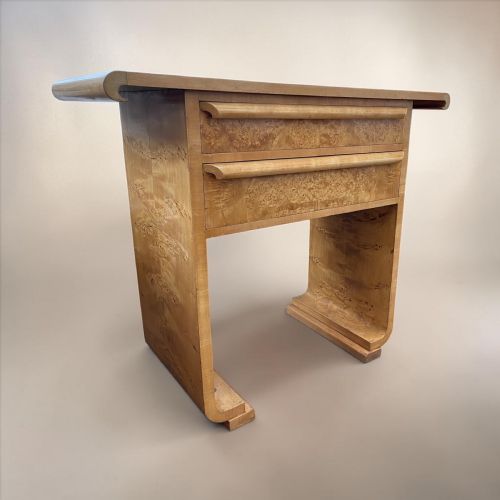
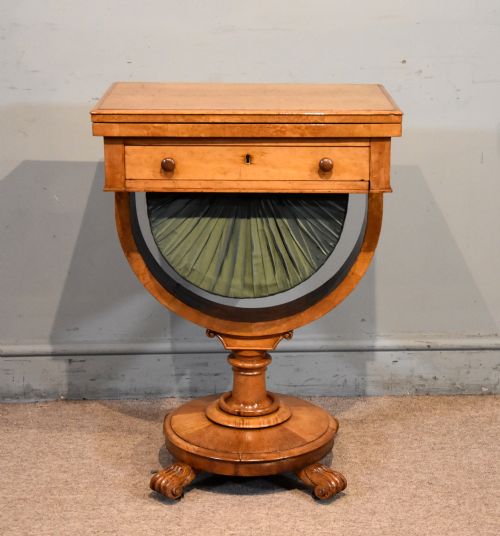
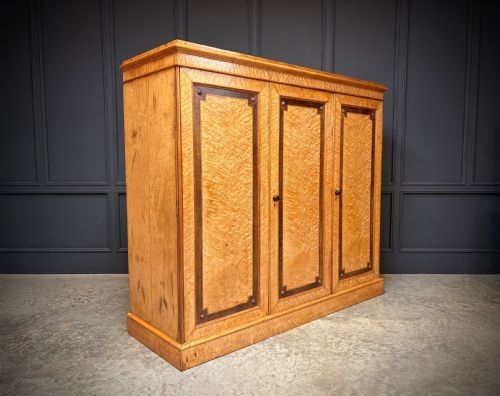
Birdseye maple furniture encompasses a diverse selection of pieces, from compactum wardrobes and dressing tables to occasional tables and double beds. Buyers seeking birdseye maple furniture will encounter items spanning the eighteenth century through to the 1940s, with notable concentrations in the Regency period and the Art Deco era.
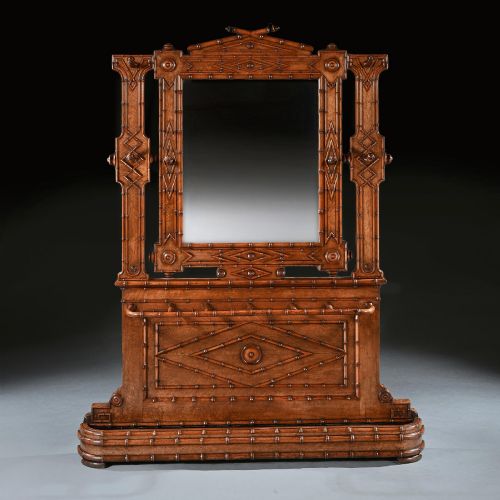
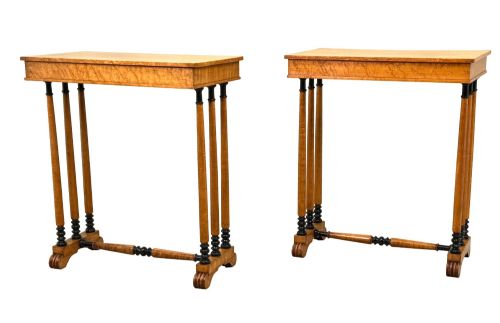
The objects available range widely in function and scale, including console tables, hall stands, work tables, and dining suites. Styles shift from the classical lines of George IV and Biedermeier to the striking geometries of Swedish Grace and French Belle Epoque, alongside nineteenth-century Aesthetic Movement and Victorian designs.
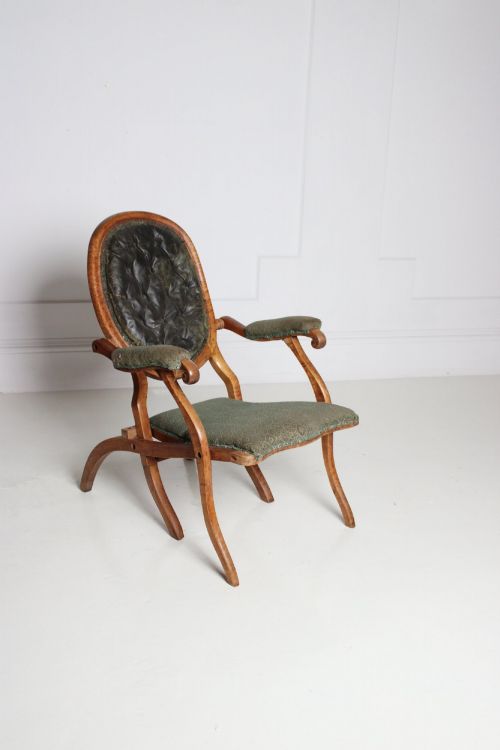
Pieces frequently combine the signature timber with contrasting materials such as ebonised wood, rosewood, glass, metal, fabric, and marble. This variety ensures that whether one desires a singular campaign chair or a matching bedroom suite, the selection demonstrates the enduring appeal of the timber across multiple decades of design.
Assessing Quality and Execution
The quality of these pieces rests largely on the selection and matching of the veneer. Superior examples feature dense, evenly distributed figure across every visible surface, with grain patterns carefully aligned on drawers, doors, and tabletops.
Construction integrity and the successful integration of secondary materials define the upper tier of the range. Finer items exhibit precise parquetry or stringing in contrasting timbers like ebonised wood and rosewood, alongside robust joinery that withstands daily use in wardrobes and dining tables.
Materials paired with the maple include ebonised wood, rosewood, glass, metal, fabric, and marble.
Fortnum and Mason·Harry and Lou Epstein·The Hille Furniture Company·H.L. Epstein Brothers
The Birdseye Maple Furniture Glossary
- Birdseye maple
- A figure in maple wood where the grain swirls in small circles around 'eyes', caused by unfavourable growing conditions or latent bud formations. It creates a speckled, decorative surface highly prized by cabinetmakers.
- Compactum
- A large fitted wardrobe or multi-compartment clothes press designed for efficient storage. It typically combines hanging space with interior drawers and shelving.
- Japonisme
- A nineteenth-century European fascination with Japanese art and aesthetics. It heavily influenced furniture design, introducing asymmetrical forms and bamboo-turned details.
- Campaign chair
- A portable folding chair historically designed for military use in the field. These pieces combine sturdy folding mechanisms with lightweight timber frames.
- Biedermeier
- A Central European style dating from the nineteenth century characterised by utilitarian comfort and clean lines. It relies on the natural beauty of blonde veneers rather than heavy carving.
Birdseye Maple Furniture: Frequently Asked Questions
How do I care for birdseye maple?
Keep these pieces away from direct sunlight and excessive heat to prevent the pale timber from darkening or the veneer from drying out. Regular dusting with a soft, dry cloth preserves the polished surface.
Avoid using harsh chemical sprays or abrasive cleaners on the wood. A gentle application of microcrystalline wax occasionally will maintain the lustre without harming the finish.
Are Art Deco pieces durable?
Art Deco items, particularly wardrobes and beds, utilise sturdy timber carcasses beneath their decorative veneers. They are built for practical daily use in modern homes.
Care should be taken not to overload shelves or drawers beyond their intended capacity. The veneered surfaces remain robust provided moisture is kept away from the joints.
How do I date a piece?
Dating relies on stylistic clues, construction methods, and the types of secondary woods used alongside the maple. Regency and George IV items display classical proportions, whilst 1930s pieces favour streamlined geometric forms.
Hardware such as handles, hinges, and ormolu mounts also offer strong indicators of the period. Examining the interior construction reveals whether hand-cut joinery or later manufacturing methods were employed.
Can I mix periods in a room?
Combining different eras allows the distinctive blonde timber to bridge contrasting interior schemes. A Regency occasional table sits comfortably alongside minimalist modern seating or Art Deco cabinets.
The unifying factor is the bright, speckled grain of the maple itself. Balancing the pieces by scale and placement prevents any single item from overwhelming the space.