


Streamline Moderne Nightstands
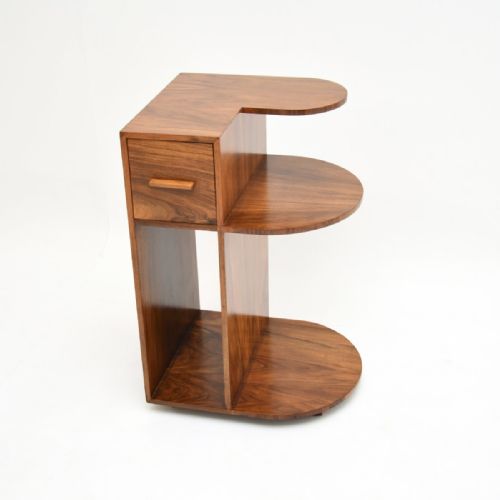
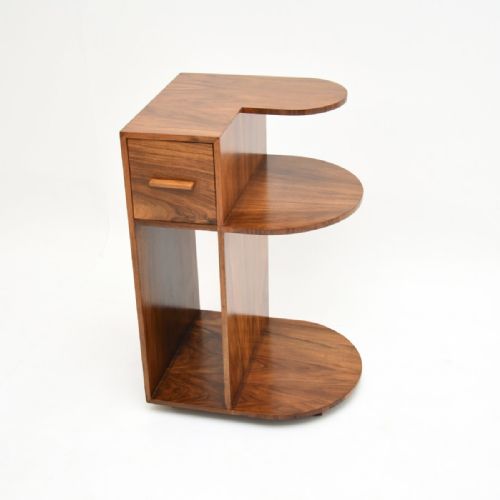
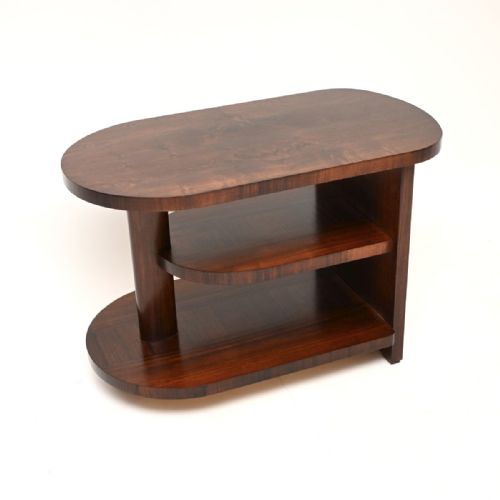
Streamline moderne nightstands bring sculptural 1930s elegance and practical bedside storage to a room.
Streamline Moderne Nightstands
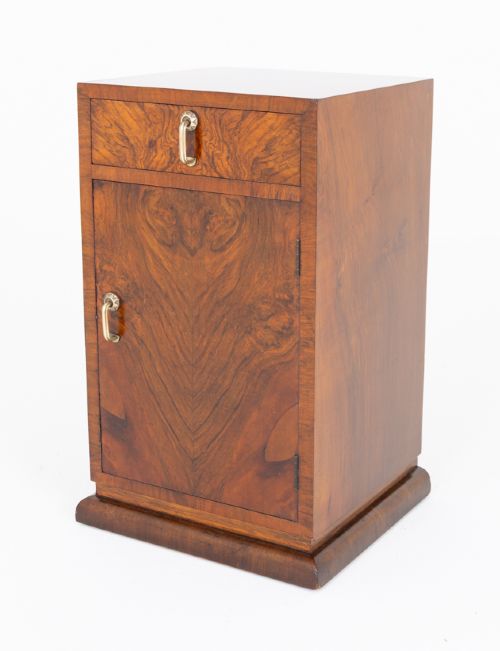
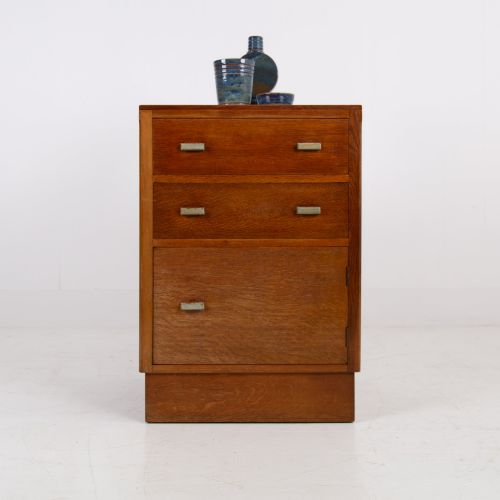
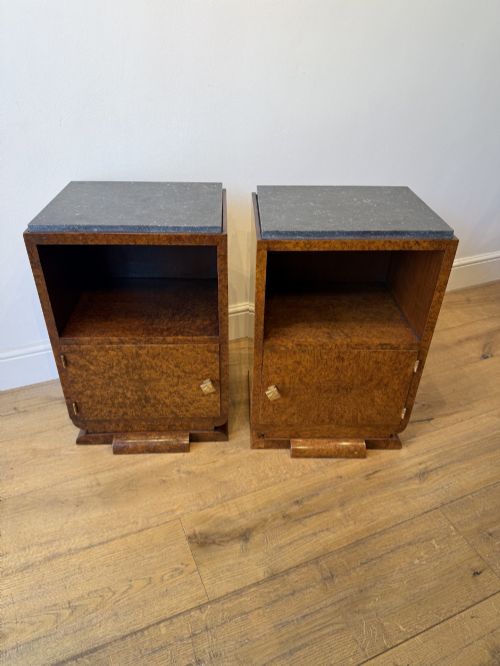
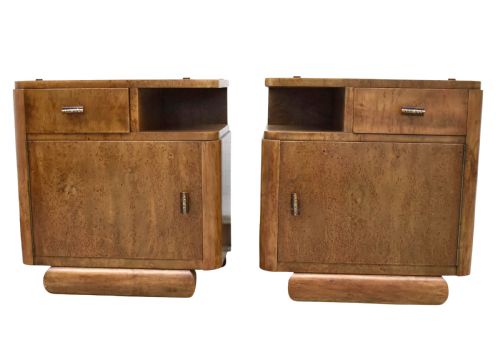
Streamline moderne nightstands encompass bedside cabinets, bedside tables, and side tables dating primarily from the 1930 and 1920 periods. Buyers searching for streamline moderne nightstands will most frequently encounter compact wooden cabinets and tables designed to sit beside a bed.
The forms span individual bedside cabinets with doors and drawers as well as matching pairs designed for dual placement. These pieces reflect the broader Art Deco and Art Deco Modernist design movements associated with the interwar decades.
Originating from British workshops and makers of the era, the examples found here rely on traditional cabinet-making adapted to modern geometric tastes. They serve as functional surface areas and enclosed storage spaces within a bedroom scheme.
How they were made
Makers utilised solid timbers alongside decorative veneers to achieve striking grain patterns on curved and flat surfaces. Walnut, burr walnut, burr elm, rosewood, oak, mahogany, and birdseye maple form the primary wooden constructions.
Metal and brass components appear as structural framing, handles, or rolling casters to provide mobility and contrasting industrial shine. Bakelite surfaces occasionally feature as durable, synthetic detailing characteristic of the period's material palette.
Some tables roll smoothly on casters, ready to escape if the bedroom decor changes its mind.
What varies in quality
The sophistication of the timber selection and veneer matching defines the upper tier of these pieces. Matched pairs with symmetrical grain patterns command greater interest than mismatched single cabinets.
The integration of hardware, such as brass fittings and original casters, distinguishes standard production from finer workshop output. Construction integrity in the drawer joints and cabinet doors dictates the enduring utility of each table.
Gomme·Betty Joel
The Streamline Moderne Nightstands Glossary
- Veneer
- A thin layer of figured wood applied to a stable core timber. This technique allows craftsmen to display dramatic grain patterns like burr walnut without exhausting scarce solid lumber resources.
- Art Deco
- A design style spanning the 1920s and 1930s characterised by sleek geometric shapes and modern materials. It moves away from heavy historicism toward streamlined forms.
- Casters
- Small wheel attachments fitted to the base of furniture legs for ease of movement. They are frequently cast in brass during this period.
- Bakelite
- An early form of synthetic plastic utilised for handles and decorative elements. Its introduction marked a significant technological shift in manufacturing.
- Burr
- A tree growth resulting in distorted grain patterns that create intricate, swirling figures when sliced. It remains highly prized by cabinet-makers for decorative surfaces.
Streamline Moderne Nightstands: Frequently Asked Questions
Are these nightstands sold as pairs?
Many of the bedside cabinets and tables available are offered as matching pairs intended for placement on either side of a bed. Single cabinets also appear frequently for individual bedroom layouts.
Buyers should examine the listings to determine whether a specific item is part of a matched set or a standalone piece.
What woods were used for these cabinets?
The listings feature a variety of rich timbers including walnut, burr walnut, burr elm, rosewood, oak, mahogany, and birdseye maple. Veneers were frequently applied to showcase dynamic natural grain patterns.
Metal and brass elements often complement these wooden structures alongside occasional bakelite details.
How do I care for a vintage nightstand?
Maintain the polished wood surfaces by dusting gently with a soft, dry cloth and avoiding harsh chemical cleaning products. Keep wooden furniture away from direct sources of heat and strong sunlight to prevent veneer cracking.
Protect the top surfaces from moisture by using coasters beneath glasses or bottles.
What period do these tables come from?
These bedside cabinets and tables date primarily from the 1930s, aligning with the Art Deco and Art Deco Modernist movements. Some examples trace their origins back into the 1920s.
Design characteristics from this interwar era emphasise clean lines, geometric forms, and modern material pairings.
Can these tables be used in modern rooms?
Their compact proportions make these bedside cabinets and tables well-suited for contemporary bedroom layouts requiring practical surface and storage space. The warm tones of walnut and maple integrate easily into diverse interior schemes.
Their distinct architectural silhouette adds a focal point without dominating smaller rooms.