

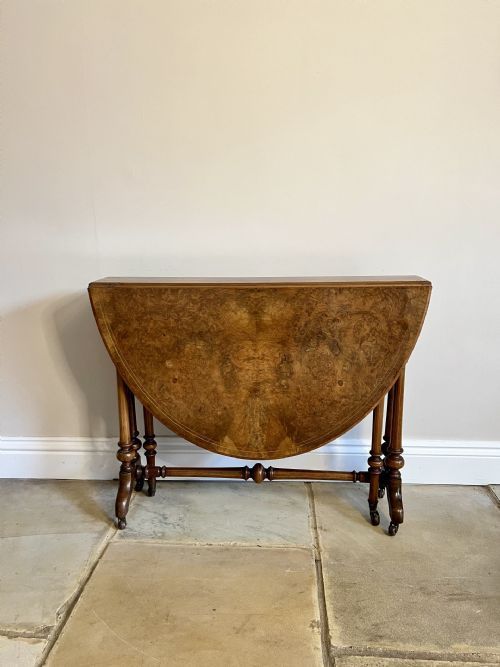


Folding Leaf Tea Table
A folding leaf tea table transforms a modest footprint into a generous surface, offering centuries of timber craftsmanship for daily domestic life.
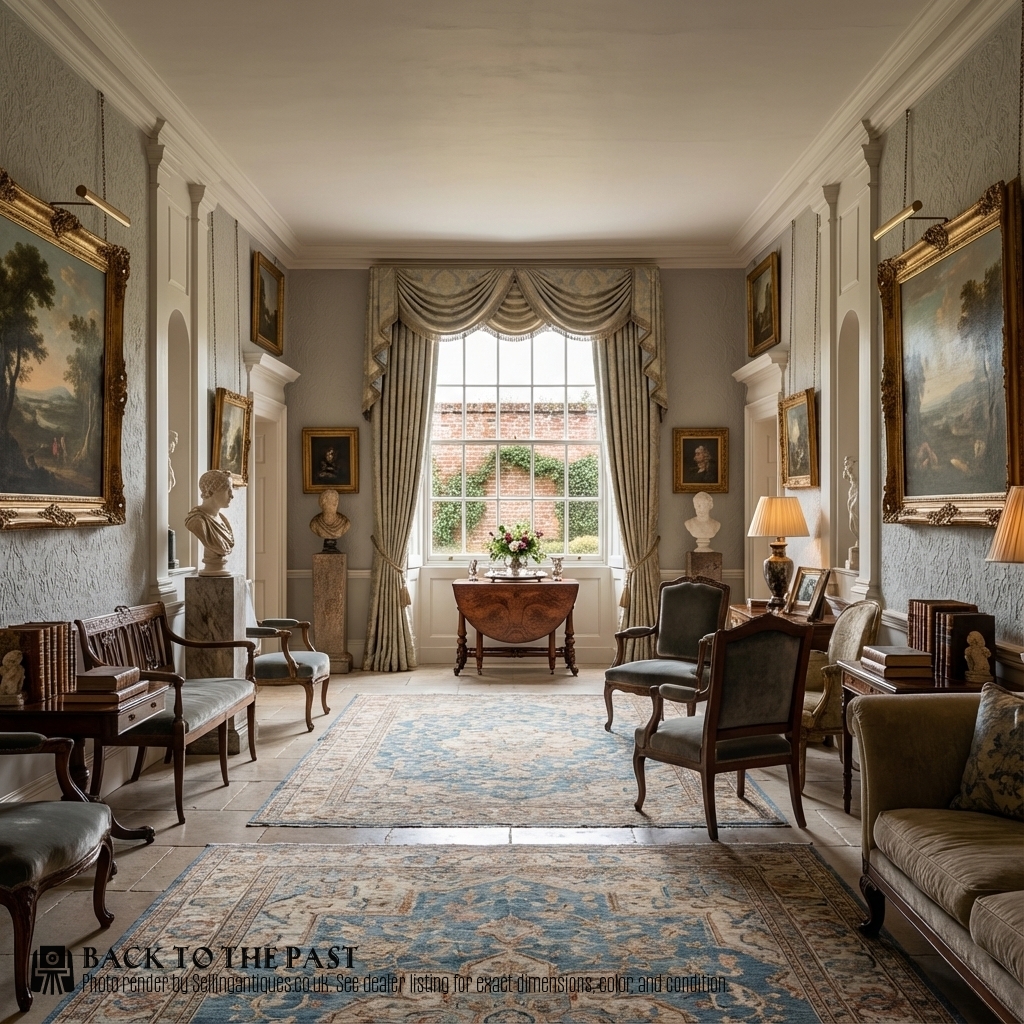
Folding Leaf Tea Table
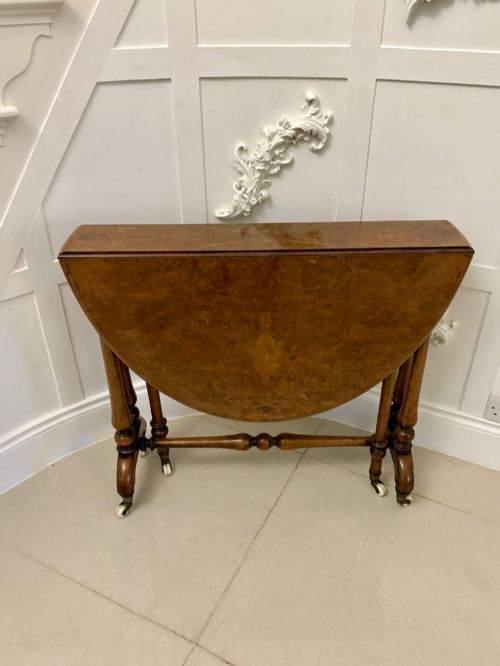
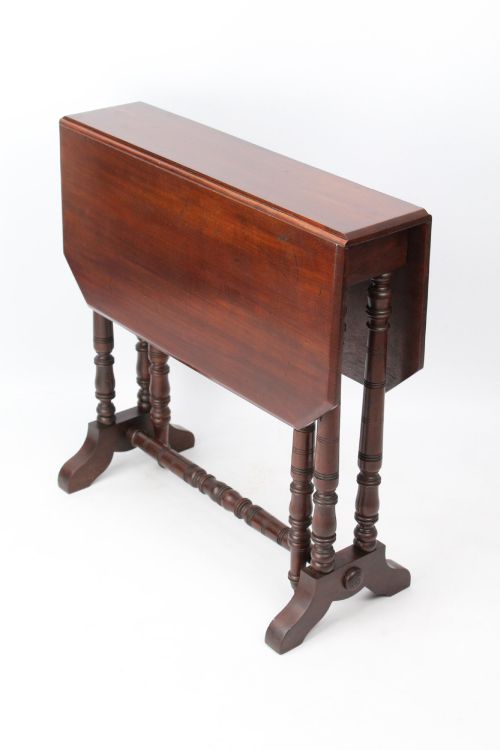
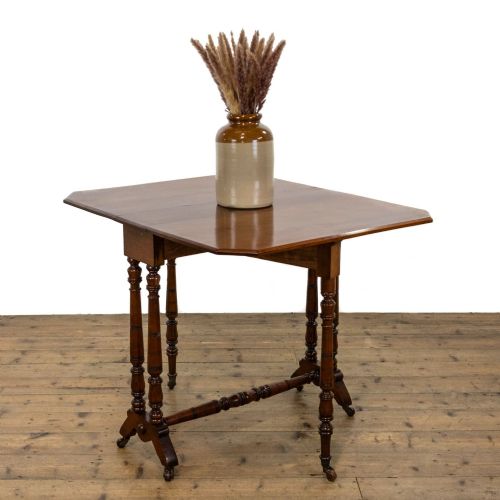
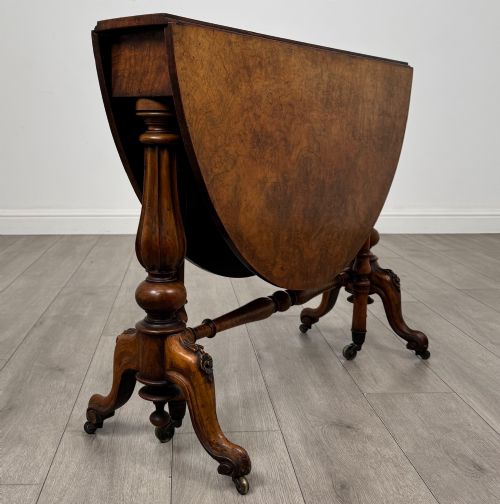
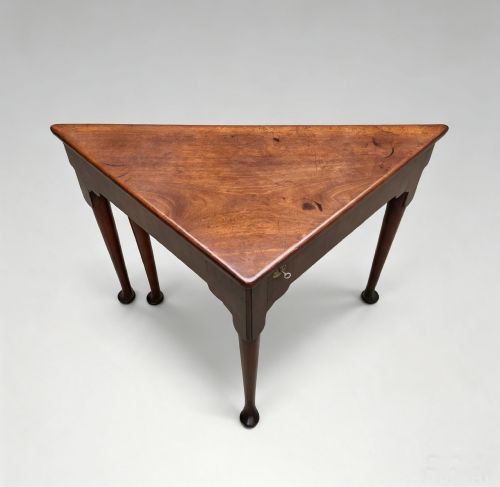
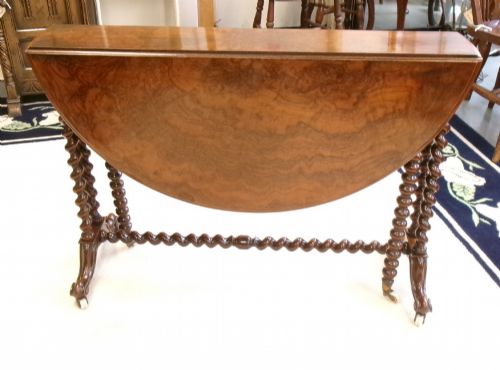
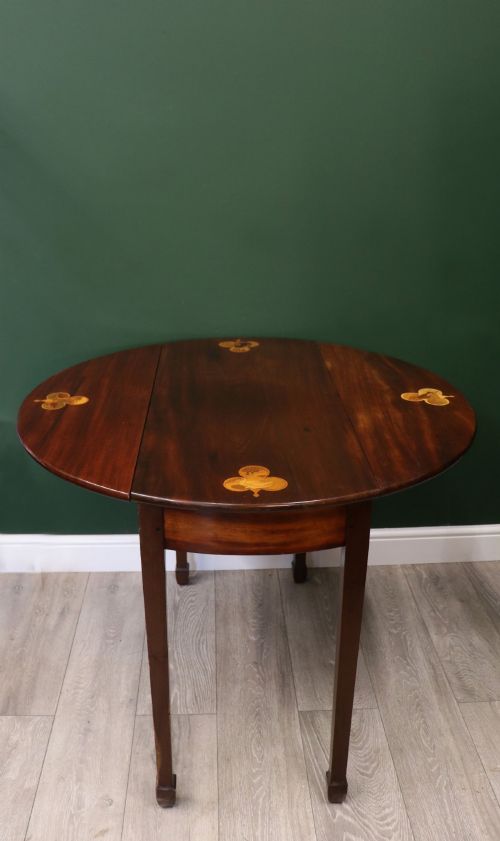
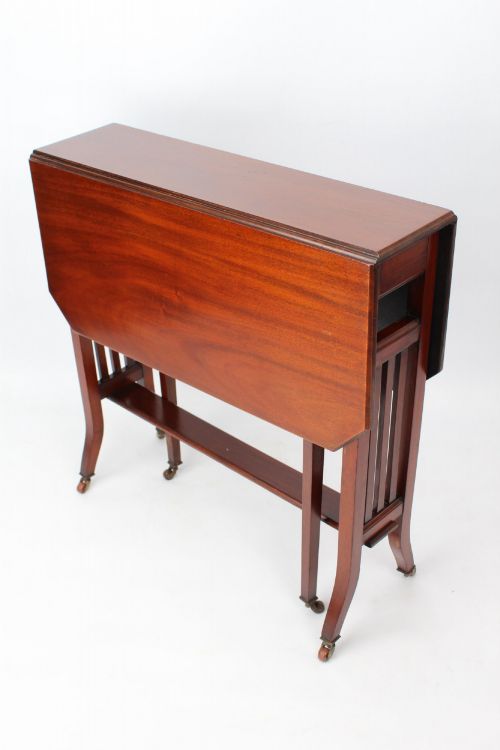
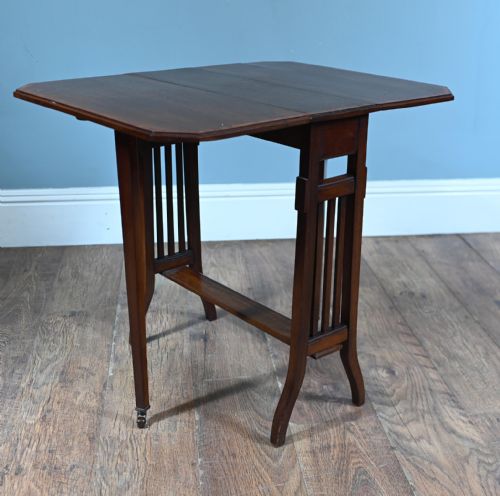
A folding leaf tea table encompasses various drop-leaf, envelope, and card formats designed to expand when needed. The evidence shows these pieces appearing most frequently as Victorian and Edwardian Sutherland tables, alongside Georgian and 19th-century Pembroke, card, and occasional designs.
Makers utilised rich timbers including mahogany, burr walnut, and rosewood, often enhanced with satinwood or boxwood inlay. These tables served intimate drawing rooms and parlours across the 18th, 19th, and early 20th centuries.
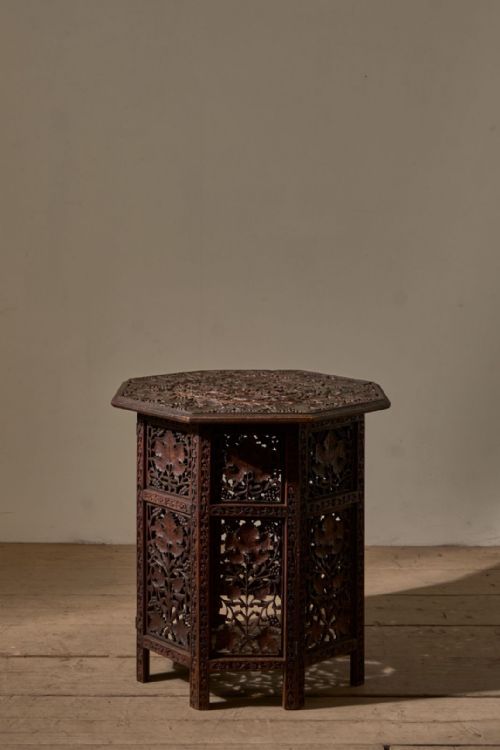
Buyers browsing this page will most commonly encounter mahogany and burr walnut examples featuring drop leaves or scissor actions. The selection spans distinct periods from George II and George III through to Arts and Crafts and Anglo-Indian colonial iterations.
Materials and Technique
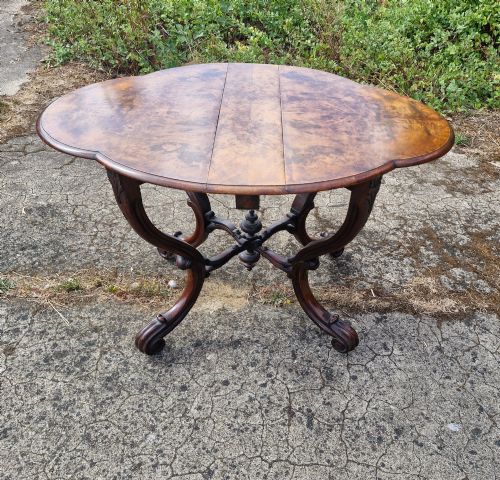
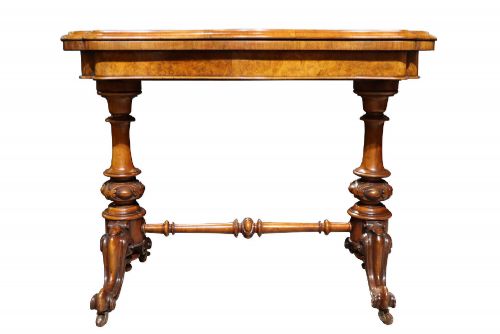
Cabinetmakers selected solid hardwoods such as mahogany and rosewood for structural integrity, applying burr walnut veneers to tabletops for striking visual grain patterns. Inlays of satinwood and boxwood created delicate geometric or floral borders.
Complex mechanical joints, including scissor actions and folding gateleg supports, allowed narrow drop leaves to fold flat or lift securely. Brass hinges and castors frequently facilitated smooth movement and stability across diverse table configurations.
Some Edwardian tables offered four separate flaps, ensuring nobody at tea lacked a stable landing spot for their cup.
Judging the Standard
The distinction between ordinary and exceptional pieces rests upon the crispness of carved details and the precise matching of wood veneers. Master workshops invested care into invisible structural joints and the fluid operation of folding leaves.
Surface finish and the preservation of original inlay work dictate the visual depth of the timber. Tables bearing documented workshop signatures or refined marquetry demonstrate higher standards of period craftsmanship.
Maple & Co·Jenks & Woods·Liberty & Co
The Folding Leaf Tea Table Glossary
- Sutherland table
- A narrow drop-leaf table featuring exceptionally slender legs and leaves that fold down almost vertically. This form gained popularity during the Victorian era for its space-saving versatility.
- Pembroke table
- A small occasional table equipped with two hinged drop leaves on opposite sides, frequently incorporating one or two drawers. It emerged in the 18th century as a convenient breakfast or writing surface.
- Marquetry
- The art of applying decorative pieces of veneer to a structure to form intricate floral or geometric designs. Craftsmen utilised contrasting timbers like satinwood and boxwood to achieve tonal variety.
- Envelope table
- A square card table with a fold-over top divided into four triangular flaps that swivel and open outward like an envelope. This clever mechanism reveals a baize-lined playing surface.
- Scissor action
- A cross-leg folding mechanism that expands outward to support drop leaves when raised. It functions smoothly through pivoted wooden members.
Folding Leaf Tea Table: Frequently Asked Questions
How do I use a Sutherland table?
A Sutherland table functions primarily as an occasional tea or reading surface that stores compactly against a wall. Raising the slender drop leaves transforms the narrow top into a wider board supported by pivoting gatelegs.
Dropping the leaves returns the piece to its minimal footprint, making it suitable for smaller rooms or tighter spaces where permanent large tables prove impractical.
How do I date a mahogany drop leaf table?
Dating relies on observing structural characteristics, timber selection, and decorative techniques such as inlay work or leg turning styles. Georgian pieces often display denser Cuban mahogany and simpler gateleg framing, while Victorian and Edwardian examples incorporate burr veneers or marquetry.
Hardware components like brass hinges and castors also provide chronological clues when combined with the overall stylistic evidence of the period.
Where should I place a folding leaf table in my home?
These tables adapt well to living rooms, hallways, or studies where surface area requirements change throughout the day. Positioned with leaves down against a wall, they occupy minimal space while displaying rich walnut or mahogany grains.
Opening the leaves creates an immediate impromptu desk, card playing surface, or small dining space when guests arrive.