
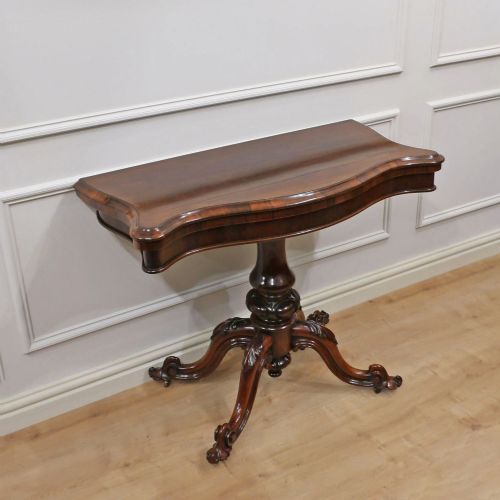
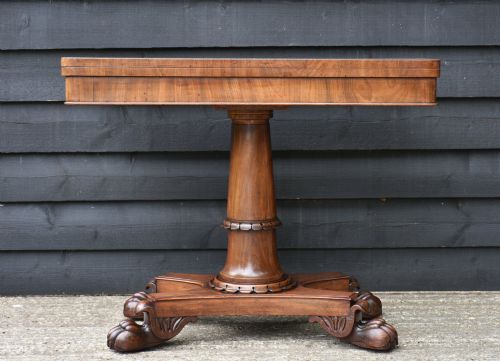
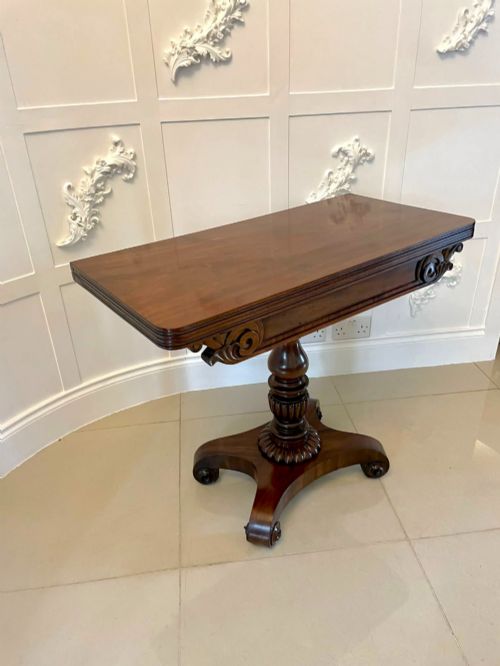
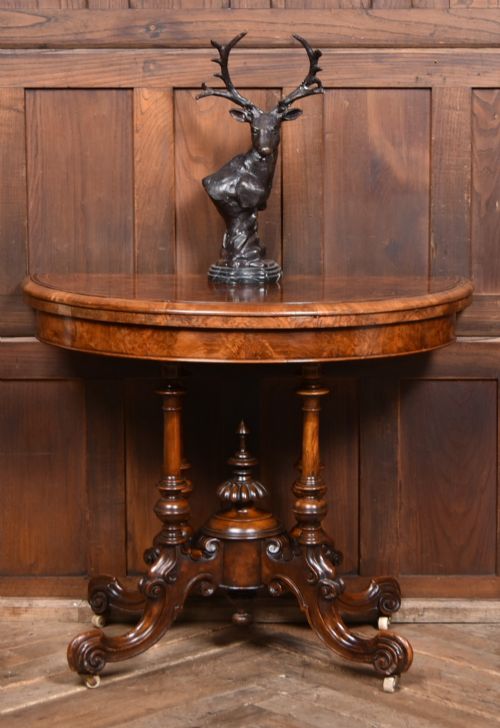

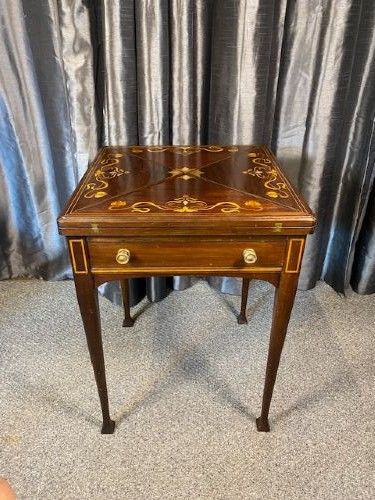
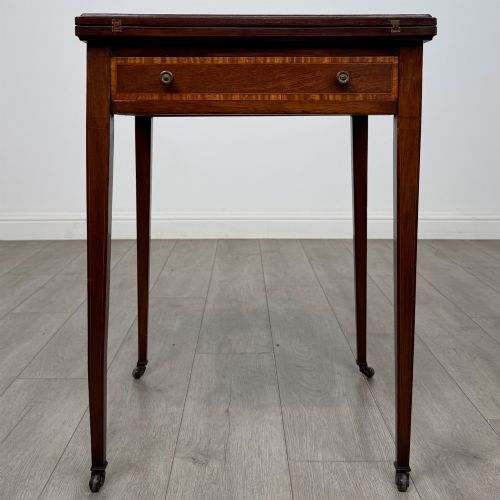
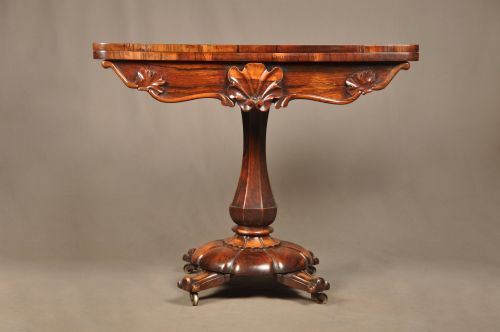
Fold Top Games Table
These fold top games table examples combine clever engineering with fine cabinet-making, offering a versatile surface that transforms from a compact console into a playing area.
What They Are
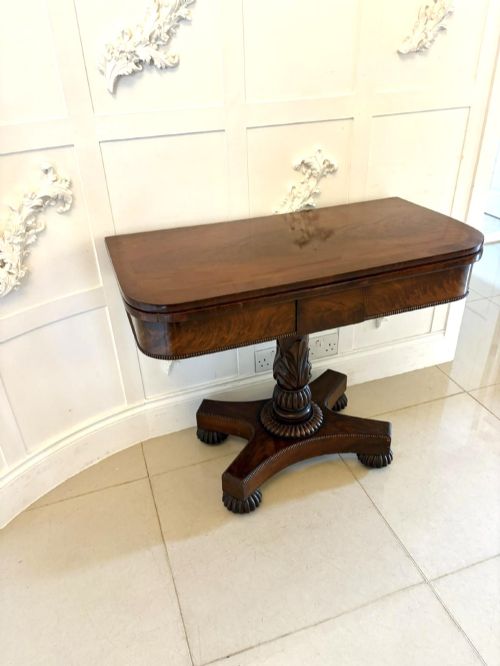
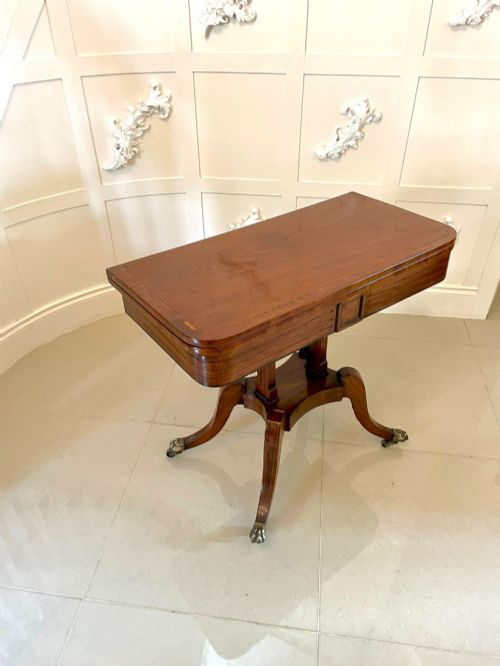
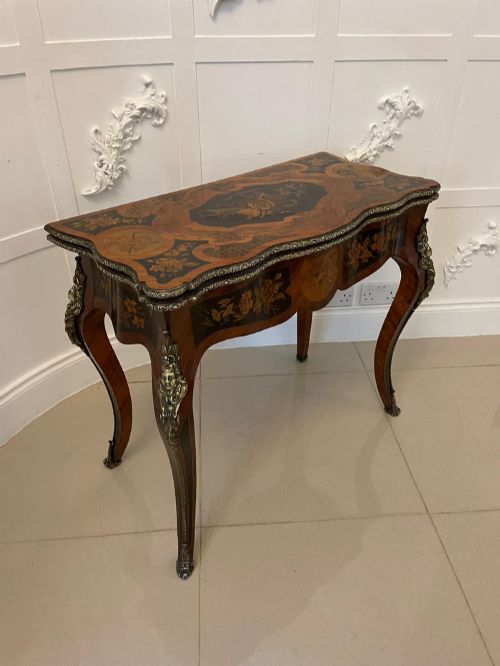
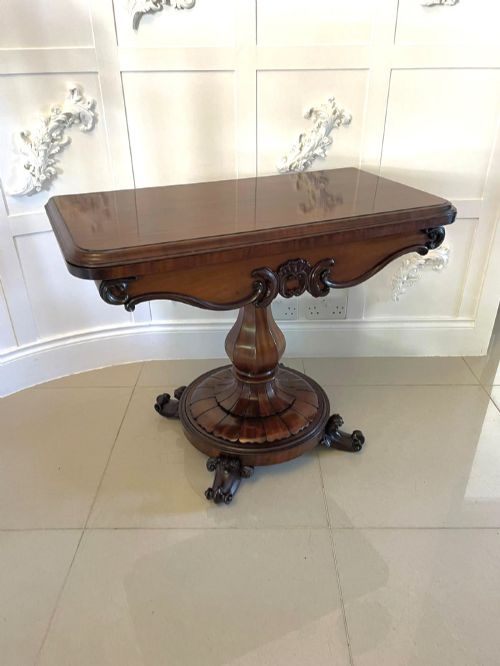
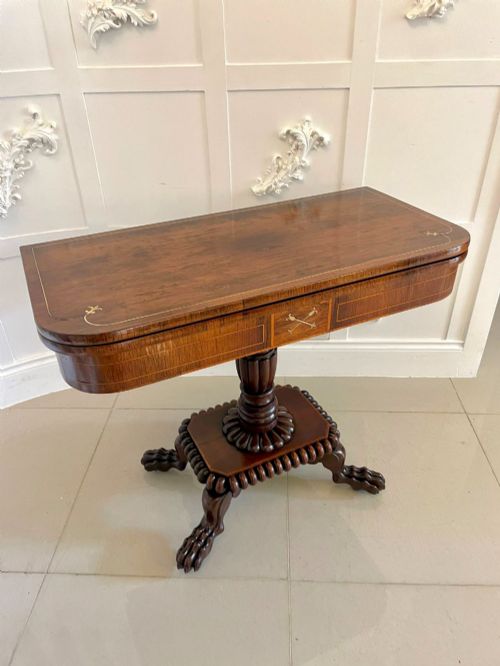
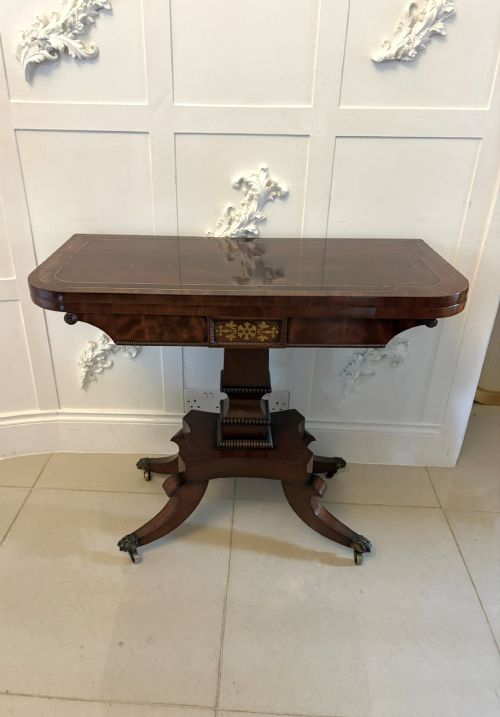
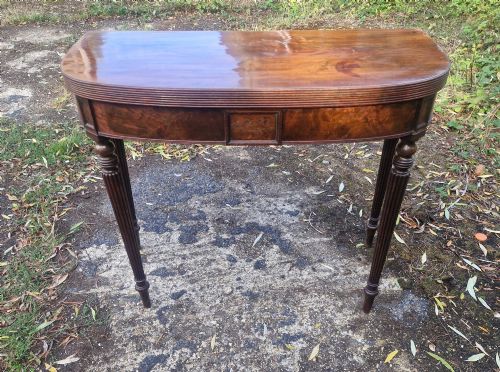
A fold top games table is a piece of furniture designed for leisure and display, appearing in forms such as card tables, side tables, and occasional tables. The evidence shows pieces originating from the Georgian and Regency periods, alongside later 19th Century examples including William IV and Aesthetic Movement designs.
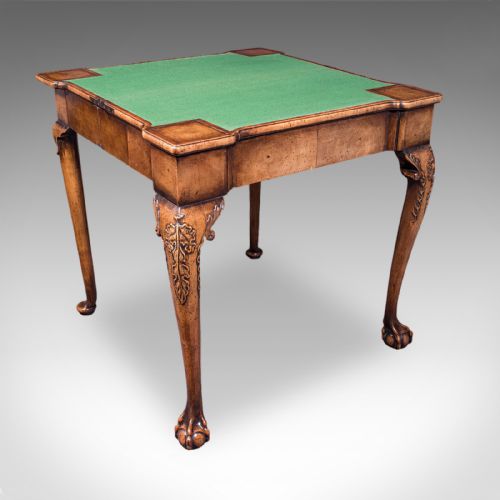
The most common version met on this page is the card table, typically constructed with a hinged top that folds open to reveal a baize-lined or polished playing surface. These items double as side or tea tables when closed, making them adaptable for domestic interiors across different centuries.
How They Were Made
Cabinet-makers utilised a range of dense timbers, with mahogany and rosewood appearing frequently alongside burr walnut, walnut, satinwood, and ebonised wood. These woods were chosen for their durability and rich grain patterns, often paired with brass detailing.
Construction relied on precise joinery to ensure the folding mechanism operated smoothly without warping the timber. Tops were hinged to rotate and fold flat, supported by pivoting frames or swing legs that concealed compartments for cards and counters.
Retail Price Guide 2026
Typical UK retail prices for fold top games table, calculated from the Sellingantiques database of over a million retail prices indexed since 2003. This retail price guide relies exclusively on Sellingantiques data; no external sources or auction records are used, so the figures do not describe the wider market.
Listings feature mahogany, rosewood, burr walnut, and satinwood across Georgian, Regency, William IV, and Aesthetic Movement periods.
What Varies in Quality
Superior examples distinguish themselves through the selection of highly figured timber veneers and the precision of their internal pivot mechanisms. The cabinet-maker's skill is evident in how seamlessly the top aligns with the frieze when closed.
At the lower end, simpler constructions employ plain secondary woods with minimal decoration and heavier, stiffer hinges. The grade of timber and the sophistication of the folding action define the distinction across the range.
The Fold Top Games Table Glossary
- Mahogany
- A durable, reddish-brown tropical hardwood favored by cabinet-makers for its stable grain and suitability for carving. It forms the primary material for many traditional English tables.
- Rosewood
- A heavily grained, dense timber with dark streaks, often utilised during the Regency and Victorian eras for high-status formal furniture. Its striking appearance requires minimal embellishment.
- Regency
- A British design period spanning the early 19th century, characterised by classical revival motifs and refined proportions. Pieces from this era often feature elegant reeded legs and brass inlay.
- Aesthetic Movement
- A late 19th century design style emphasising visual beauty over narrative content, often incorporating ebonised wood and minimalist lines. It rejected heavy Victorian ornamentation in favour of lighter, more artistic forms.
Frequently Asked Questions
What is a fold top games table used for?
These tables served primarily for card games, social gatherings, and evening entertainment in middle and upper-class homes. When closed, they functioned as side tables or tea tables against a drawing room wall.
The clever dual-purpose design allowed households to maximise space while maintaining formal entertaining standards. The interior surface often featured baize or leather to provide a suitable texture for playing cards.
How do I identify a Regency fold top games table?
Regency examples typically date from the early 19th century and exhibit classical architectural influences, such as brass stringing, sabre legs, and rosewood or mahogany veneers.
The construction relies on precise pivoting mechanisms that swing out to support the doubled-over top section. Proportion and restraint separate these pieces from the heavier, more heavily carved Victorian furniture that followed.
Are all fold top tables meant for card games?
While many were specifically designed for cards with baize-lined interiors, some served multiple functions including tea and occasional use. The internal cavity beneath the folding top frequently doubled as storage for game pieces, counters, and packs of cards.
Descriptions in the evidence note tea tables, card tables, and general games tables sharing the same mechanical fold-over format. The distinction often lies in the interior lining rather than the exterior shape.
How do I care for antique wood furniture?
Maintain these pieces by keeping them away from direct sunlight and sudden temperature changes, which can cause timber to split or veneers to lift. Regular dusting with a dry, soft cloth preserves the polished surface without building up chemical residues.
Avoid placing damp items directly onto the antique wood or the interior playing surface. Gentle waxing with traditional beeswax helps nourish the grain of timbers like mahogany, walnut, and rosewood.