
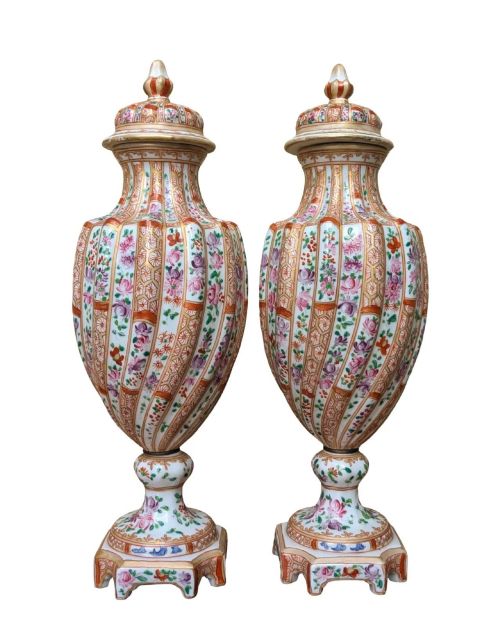


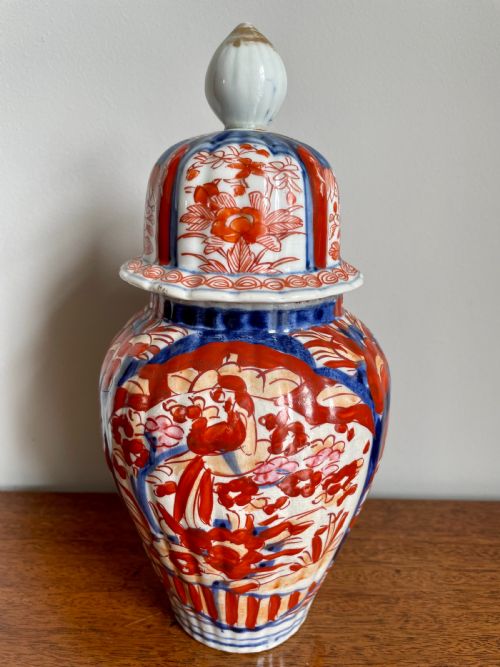

Fluted Porcelain Vase
A fluted porcelain vase brings refined vertical movement and rich texture to a room, offering an elegant vessel for display or floral arrangement.
Fluted Porcelain Vase
When you search for a fluted porcelain vase, you encounter a variety of decorative vessels defined by their characteristic vertical ridges and grooves. These pieces draw the eye upward and create distinct plays of light across the glazed or painted surface.
The selections available here span several distinct cultural traditions and eras, most notably late nineteenth-century European interpretations and traditional Japanese wares. You will frequently find Japanese Imari pieces alongside French porcelain works from the same period.
Forms range from simple flared necks and bottle shapes to monumental lidded pairs designed for prominent placement on mantelpieces or cabinets. Each style reflects the specific aesthetic priorities of its origin, whether European revivalism or East Asian export craftsmanship.
How they were made
Makers shaped these vessels from fine ceramic paste, throwing or moulding the clay while wet to establish the signature vertical fluting. Artisans then applied glazes, including smooth celadon or glossy clear coats, before firing the body at high temperatures.
Decoration often involved intricate hand painting using enamel colours, supplemented by gold leaf or gilding to highlight the raised contours of the fluted body. Some variants combined porcelain with lacquer over black paint to achieve contrasting surface textures.
Listings feature 19th-century European and Japanese works, incorporating porcelain, earthenware, lacquer, and gold leaf.
What varies in quality
Quality rests upon the precision of the moulding and the crispness of the fluted channels, which should maintain consistent depth and spacing from rim to base. Superior examples display balanced proportions that support the vertical momentum of the design without heaviness.
The execution of the surface decoration marks a clear division between standard production and finer studio work. Skilled brushwork, well-fired enamels, and cleanly applied gilding elevate a vessel, while hasty painting or uneven glazing diminishes the visual impact.
Samson of Paris·Sevres
The Fluted Porcelain Vase Glossary
- Celadon glaze
- A transparent green or grey-green glaze applied to porcelain, often crackled or smooth. This finish imitates jade and provides a subtle, restrained surface that accentuates the underlying fluted form.
- Imari
- A traditional Japanese style of porcelain decorated in underglaze blue and overglaze red, gold, and other colours. Pieces in this style are typically ornate and highly patterned.
- Gilding
- The application of gold leaf or gold paint to parts of the ceramic surface. It is often used on rims, handles, or raised flutes to catch the light.
- Meiji Period
- The era in Japanese history lasting from 1868 to 1912, known for significant craft production aimed at export markets. Works from this time often combine traditional motifs with ambitious scale.
- Fluted body
- A ceramic surface formed with parallel vertical grooves or ridges. This technique adds structural rigidity and catches the light to create tonal variation.
Fluted Porcelain Vase: Frequently Asked Questions
How do I date a fluted porcelain vase?
Dating relies on examining the characteristics of the glaze, the style of the painted decoration, and any visible marks or wear on the base. European revival pieces often imitate earlier Asian forms, so stylistic details help distinguish nineteenth-century production from older originals.
Material composition and manufacturing techniques also provide clues, as nineteenth-century European and Japanese export pieces each employed distinct clay bodies and firing methods that changed over time.
Where should I place a fluted porcelain vase?
These vessels suit prominent surfaces where their vertical lines and decorative schemes can be appreciated, such as sideboards, entrance tables, or mantelpieces. Placing them away from heavy foot traffic protects delicate enamel and gilding from accidental knocks.
Consider the lighting in the room, as natural daylight highlights the subtle textures of celadon glazes and the metallic sheen of gold leaf detailing.
Can I use these vases for fresh flowers?
While many of these vessels were originally made as decorative objects rather than functional water holders, most glazed porcelain bodies are fully waterproof. However, antique pieces with delicate overglaze enamel or gold leaf require careful handling when washing.
It is wise to inspect the interior for any historical hairline cracks before filling an antique vase with water to prevent unexpected leaks.
How do I clean an antique porcelain vase?
Dust the surface regularly with a soft, dry brush or a clean microfiber cloth to prevent dirt from settling into the fluted grooves. Avoid harsh chemical cleaners or abrasive sponges that can damage aged glazes and delicate hand-painted enamels.
If deeper cleaning is necessary, use lukewarm water with a mild soap, rinse gently, and dry thoroughly with a lint-free cloth.