



Samson Edme Paris Porcelain
Samson Edme Paris porcelain brings the brilliant mimicry of historic European ceramics into your rooms with remarkable nineteenth-century skill.
Samson Edme Paris Porcelain
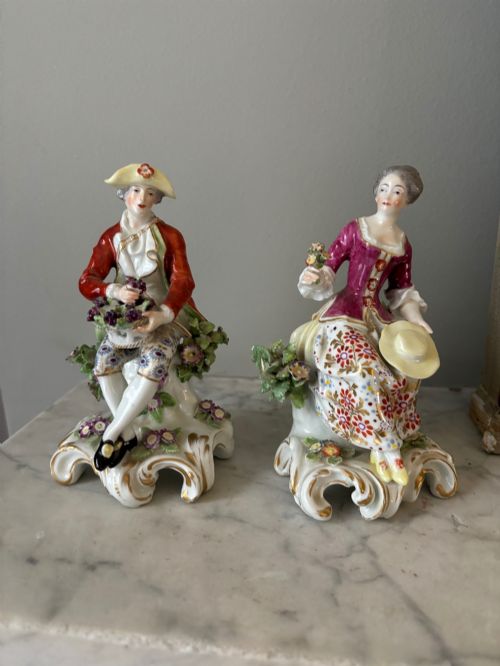
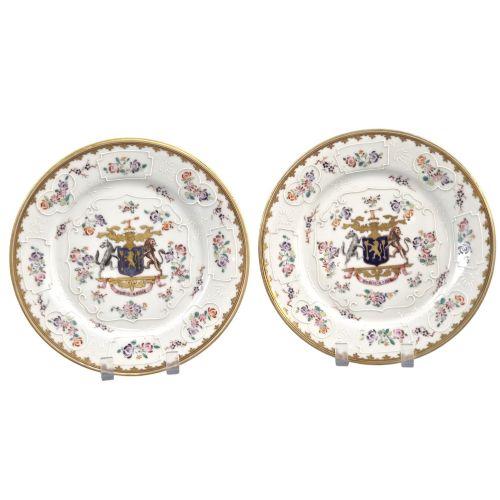
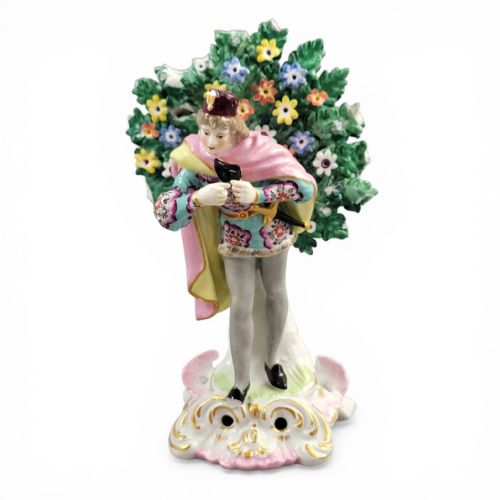
Samson Edme Paris porcelain comprises nineteenth-century decorative pieces produced by the Parisian firm to emulate earlier factories like Chelsea, Derby, and Meissen. When you search for samson edme paris porcelain, you encounter figures, vases, armorial plates, and decorative trays created during the Victorian era. These objects span styles such as Rococo Revival, Neoclassical Revival, and specific historical tastes.
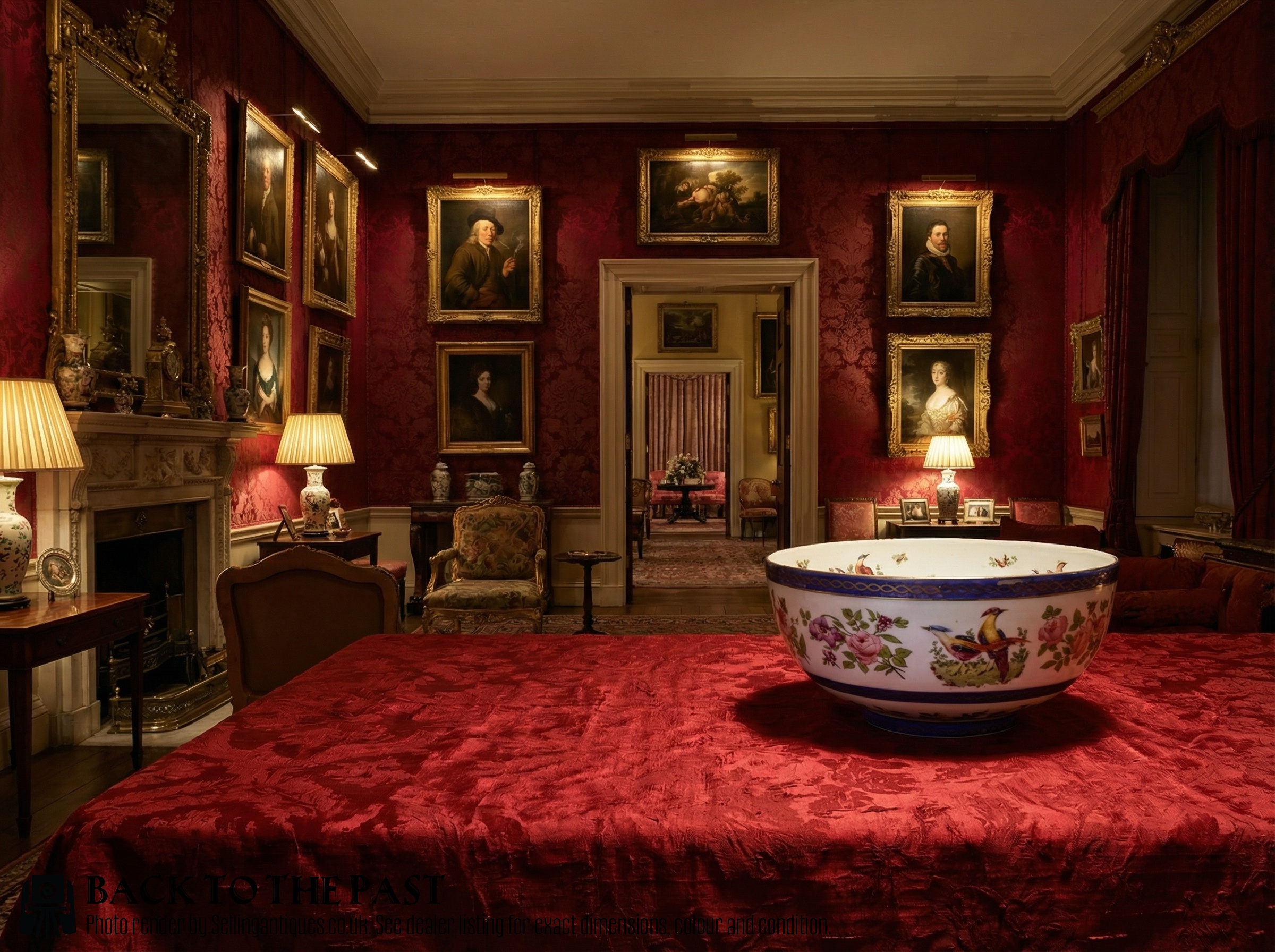
The objects available on this page include pairs of figures depicting actors, musicians, street vendors, and mythological scenes like Venus and Cupid. Vases, bonbonniere boxes, and bowls painted with polychrome enamel and gilt details appear frequently among the listings. Most date from the mid-nineteenth century through to around nineteen hundred, reflecting the height of the firm's revival output.
How they were made
The pieces rely on a white porcelain body shaped through moulding or hand-modelling, depending on whether the object is a sculptural figure or a functional tray. Artisans then applied polychrome enamel pigments by hand to render botanical, figural, and armorial scenes across the surface. Gold leaf and gilding provide rich metallic highlights that define the decorative schemes.
Gilt metal mounts occasionally complement the porcelain components on decorative objects and boxes. The firing process fixed the enamel colours and the underlying glaze, ensuring a glossy finish that emulates eighteenth-century prototypes. Artisans paid close attention to surface detail, from feathered bird plumage to elaborate Rococo scrolls.
Nineteenth-century Parisian artisans happily recreated eighteenth-century Chelsea sheep, even when the sheep looked remarkably worldly.
What varies in quality
Quality rests upon the crispness of the modelled detail and the precision of the hand-painted enamels. Finer examples display delicate brushwork on figural faces and armorial crests, whereas simpler pieces show broader, less refined application. The richness and preservation of the gilding also distinguish the output, with heavy gold leaf retaining more lustre than thin washes.
The ambition of the form plays a significant role, as large campana vases and complex multi-figure groups demand greater technical mastery than single street vendors or small trinket boxes. Successful emulation of Chelsea or Derby styles requires a deft balance of modelling and colour that marks out the superior productions of the Paris workshop.
Edmé Samson and Cie
The Samson Edme Paris Porcelain Glossary
- Armorial
- Bearing a heraldic coat of arms. These painted crests often commemorate specific families or imitate historic dinner services.
- Campana
- A bell-shaped vessel form associated with classical antiquity. These vases feature flared rims and pedestal bases.
- Bonbonniere
- A small ornamental box designed for sweets or trinkets. They often feature hinged lids and detailed figural motifs.
- Polychrome
- Decorated in multiple colours. This technique defines the hand-painted enamel scenes found across nineteenth-century porcelain.
- Gilding
- The application of gold or gold-like materials to a surface. It provides the metallic borders and highlights characteristic of revival ceramics.
Samson Edme Paris Porcelain: Frequently Asked Questions
What is Samson porcelain?
Samson porcelain refers to the nineteenth-century wares produced by the Parisian firm established by Edmé Samson. The workshop specialised in replicating historic ceramics from famous factories like Chelsea, Meissen, and Sevres.
These pieces were made as scholarly tributes or high-end decorative items rather than outright forgeries, often bearing subtle marks to distinguish them from original eighteenth-century creations.
How can I date Samson porcelain?
Dating relies on stylistic clues, factory marks, and the types of paste and enamel used during the Victorian period. Most pieces date from the mid-nineteenth century through to the early twentieth century.
Comparing the modelling style to known eighteenth-century prototypes helps establish whether a piece belongs to the Neoclassical or Rococo Revival movements of the 1800s.
Where were these pieces made?
The objects were produced in Paris by the Samson workshop, which operated extensively throughout the nineteenth century. The firm drew inspiration from public museum collections and private cabinets across Europe.
Parisian artisans utilised traditional ceramic techniques to recreate the aesthetic of British and continental factories from earlier generations.
How do I care for gilt porcelain?
Maintain the porcelain by dusting gently with a soft, dry cloth to protect the delicate enamel and gold leaf. Avoid harsh chemical cleaners and abrasive materials that can wear away the hand-painted details.
Keep pieces away from direct sunlight to prevent fading in the polychrome enamels over time.