


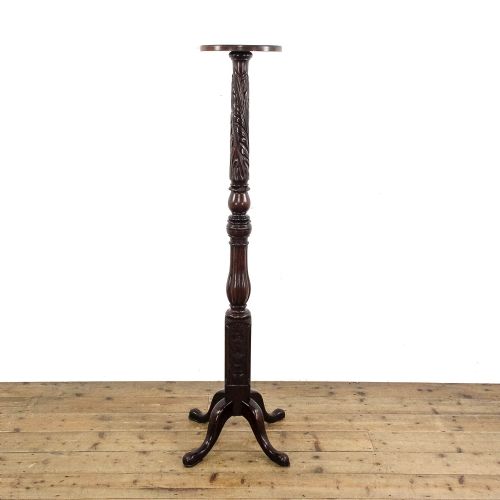
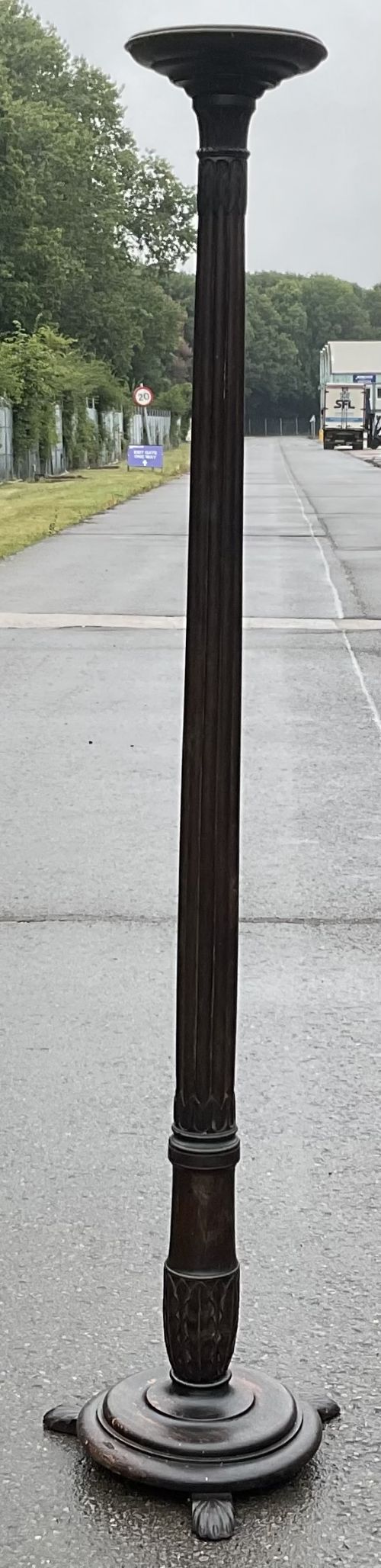


Fluted Mahogany Plant Stand
A fluted mahogany plant stand raises foliage and light to eye level, bringing architectural presence and rich grain into a room.

Fluted Mahogany Plant Stand
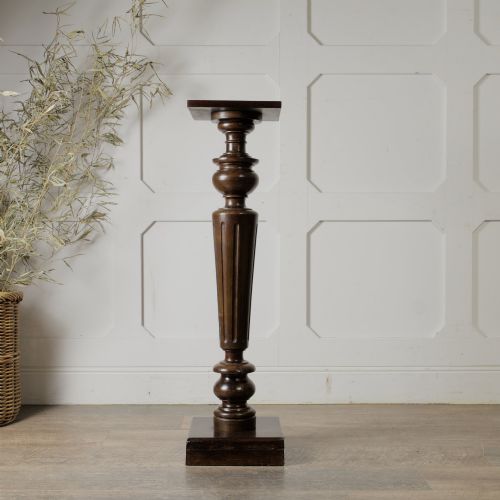
When you search for a fluted mahogany plant stand, you encounter tall, slender supports designed to elevate urns, jardinieres, lamps, and busts above the floor. The examples available on this page span from the Georgian period through the Victorian and Edwardian eras, encompassing diverse forms such as torcheres, pedestals, columns, and plinths.
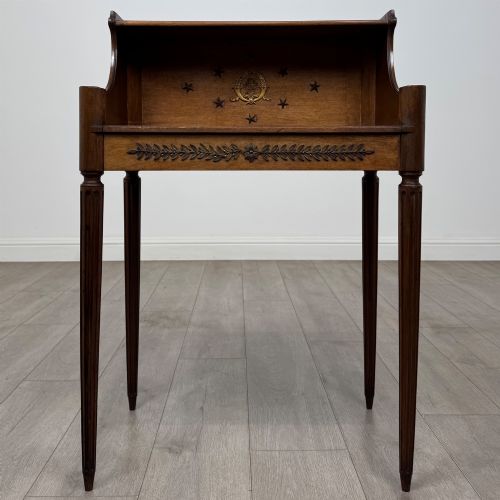
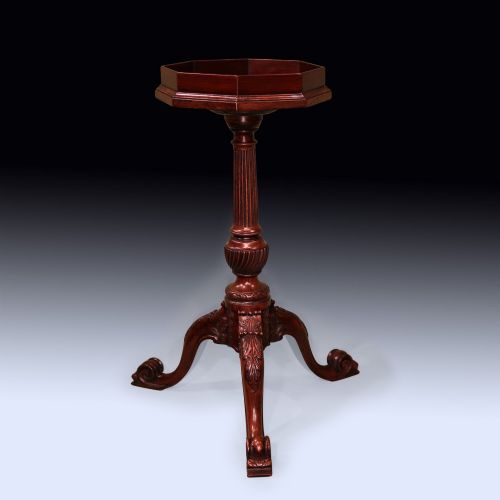
You are most likely to meet Victorian and Edwardian iterations on this page, often featuring turned or carved shafts and tripod or circular bases. Alongside traditional plant stands, the selection includes related pedestal forms and occasional tables constructed from rich timbers.
Materials and construction
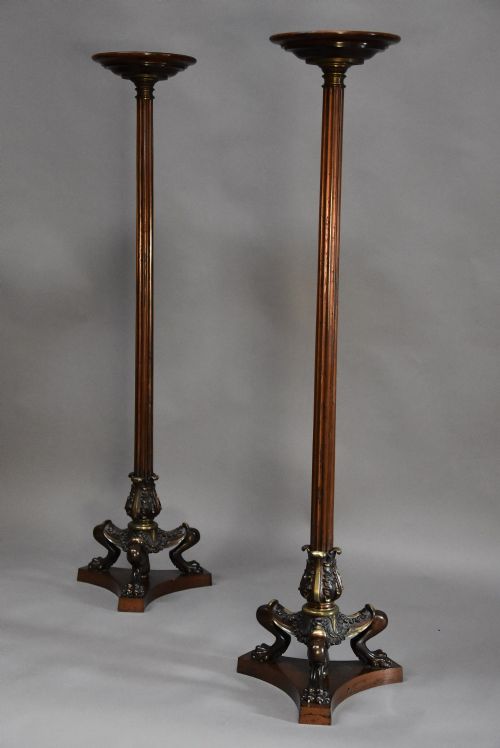
Makers utilised solid and veneered mahogany as the primary timber, sometimes pairing it with contrasting woods like satinwood and rosewood for inlay. Metal elements such as brass, ormolu, and bronze appear as mounts, collars, and decorative details on French Empire and revival pieces.
Structural integrity relied on seasoned hardwoods, with carved columns, turned pillars, and tripod bases joined to provide steady support for heavy pots and decorative objects.
At least one Victorian mahogany pedestal on this page includes a hidden compartment.
What separates the finest examples
Quality rests in the crispness of the carving, the depth of the mahogany grain, and the stability of the central column. Hand-carved fluting and well-proportioned capitals distinguish superior workshop production from simpler turned pieces.
The integration of secondary materials, such as cast ormolu mounts or intricate marquetry inlay, marks out pieces made for refined interiors.
The Fluted Mahogany Plant Stand Glossary
- Torchere
- A tall, slender stand designed to hold a light or a decorative object. These pieces frequently feature circular tops supported by carved columns.
- Plinth
- A heavy base or block supporting a statue, vase, or column. In plant stands, it provides a stable platform for heavy pots.
- Ormolu
- Gilded bronze used for decorative mounts and accents on furniture. It appears on French Empire and revival pieces to highlight structural joints.
- Jardiniere
- An ornamental pot or stand for plants and flowers. These containers often integrate directly with timber pedestals.
- Etagere
- A piece of furniture consisting of a set of open shelves for displaying small objects. They are constructed in mahogany and related hardwoods.
Fluted Mahogany Plant Stand: Frequently Asked Questions
What were plant stands originally used for?
These tall supports held heavy potted plants, sculptural busts, and oil lamps, raising them above floor drafts and into better light.
In period rooms, they acted as vertical accents that drew the eye upward and filled empty corners.
How do I style a torchere at home?
Place a torchere in an empty corner or beside seating to display a trailing houseplant, a ceramic bowl, or a reading lamp.
Because they occupy minimal floor space while adding height, they work well in rooms with limited area.
How can I tell Victorian stands apart from Georgian ones?
Georgian stands typically display deeply hand-carved classical details, such as acanthus leaves and restrained classical proportions.
Victorian and Edwardian versions often incorporate machine-turned elements, revival styling, and broader variations in height and base design.
Are these stands stable enough for heavy pots?
Tripod bases and weighted pillars were specifically engineered to counterbalance heavy jardinieres and marble tops.
Checking the weight distribution at the base ensures the stand remains secure under load.