
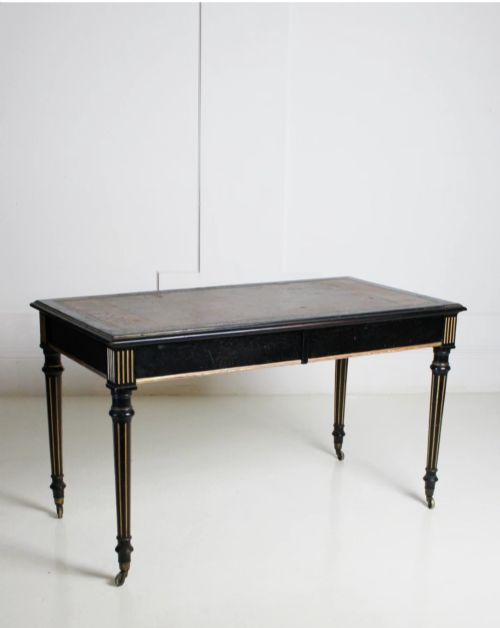
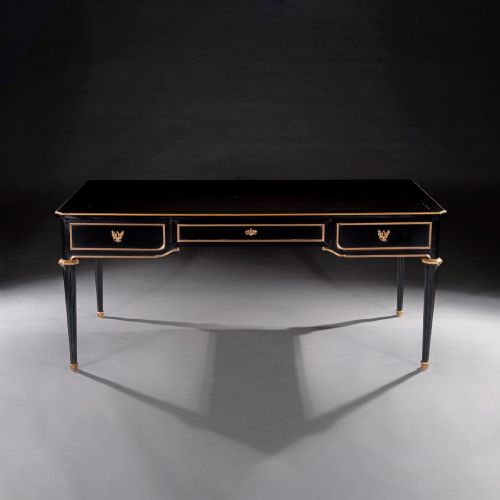


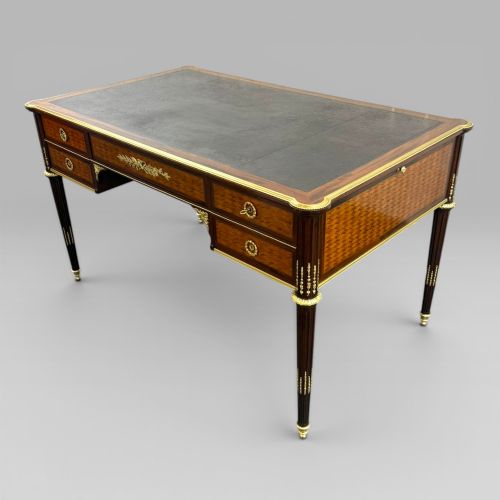

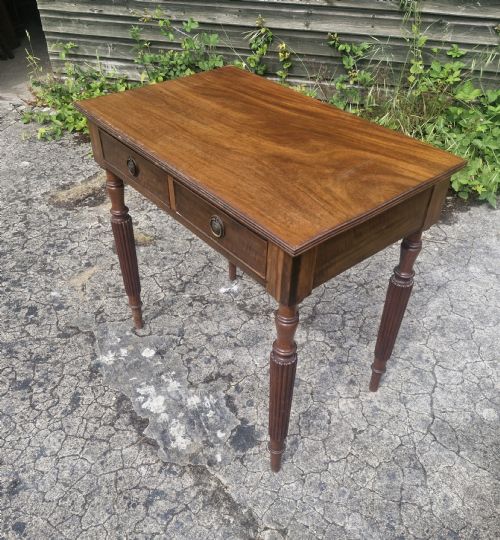


Fluted Leg Writing Desk
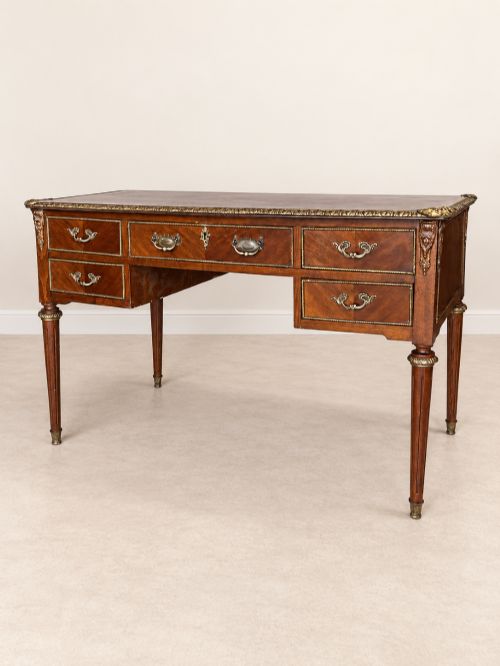
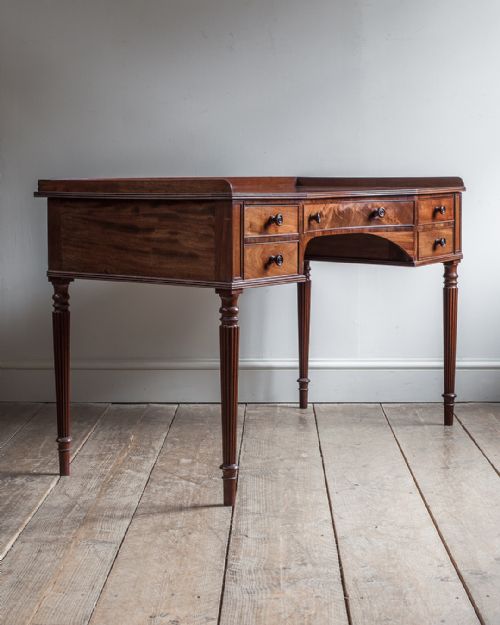
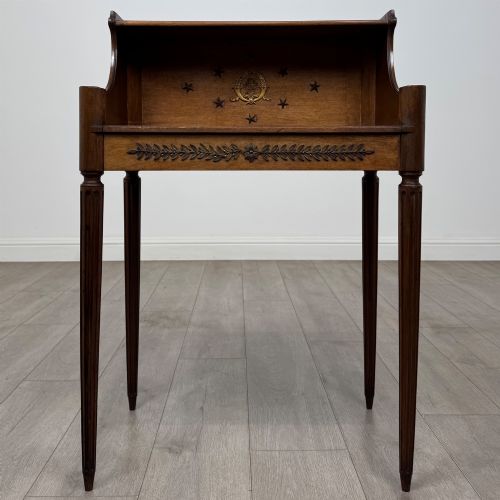
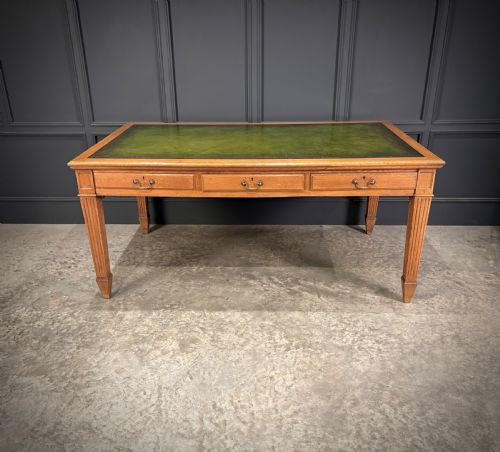
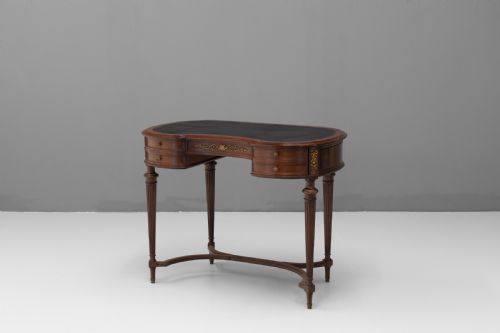
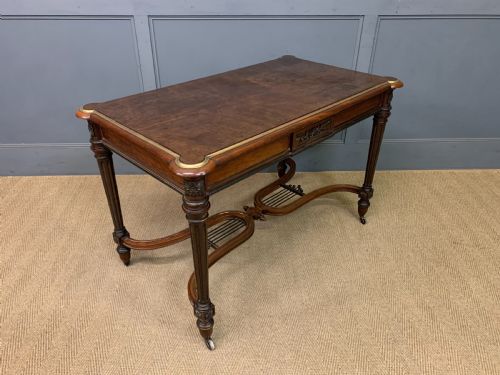
A fluted leg writing desk brings architectural discipline to the room, offering a surface of mahogany or satinwood raised on neatly channelled supports.

Fluted Leg Writing Desk
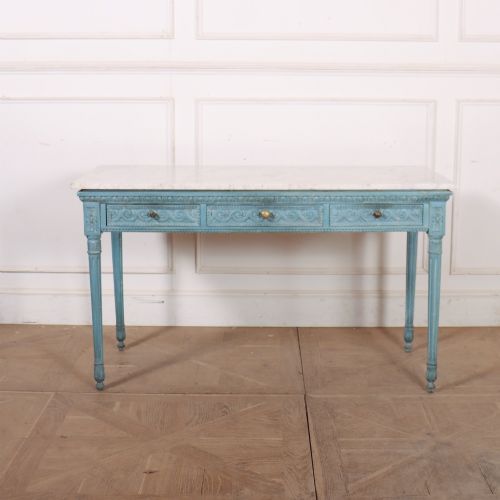
A fluted leg writing desk is a form of workspace designed for correspondence and study, typically found in mahogany, oak, or painted wood. When searching for a fluted leg writing desk, buyers most frequently encounter examples from the Georgian, Victorian, and Edwardian periods, alongside continental pieces executed in the Louis XVI style.
The format spans several related table types that double as writing surfaces, including side tables, library tables, and bureau plat models. Makers across the eighteenth, nineteenth, and early twentieth centuries adapted the classical fluted column to support these domestic writing spaces.
Origin points vary between English workshops and continental makers working in French or Swedish traditions. The structural vocabulary relies on precise vertical channels carved into the legs, lifting the writing surface above the floor.
Judging the standard of execution
The crispness of the carved fluting on the legs determines the initial tier of quality, as shallow or softened channels indicate rushed production. Sharply defined edges along each groove show the hand of a confident cabinetmaker.
Timber selection and grain matching across the writing surface reveal the maker's intent, with well-figured mahogany commanding greater presence. The integration of bronze or brass mounts, fitted flush to the timber rather than crudely surface-mounted, separates standard work from superior output.
Internal drawer construction, using dovetailed joints rather than simple butt joints, underscores the structural integrity built beneath the exterior. The quality of the leather insert and the precision of its surrounding border tooling complete the evaluation.
Listings feature mahogany as the dominant timber, accompanied by satinwood, oak, and painted wood surfaces.
François Linke·W. Priest·Gillow Lancaster·Holland & Sons
The Fluted Leg Writing Desk Glossary
- Fluting
- A series of shallow, parallel concave grooves carved vertically into the shaft of a column or leg. This classical motif draws the eye upward and adds visual rhythm to the support structure.
- Bureau plat
- A freestanding double-sided writing table with drawers in the frieze, developed in France during the seventeenth century. It is finished on all sides so it can stand away from the wall.
- Ormolu
- Gilded bronze applied as decorative mounts, feet, or handles on furniture. The technique involves a mercury-gilding process that produces a deep, lasting golden lustre.
- Partners desk
- A large writing table designed for two people to use simultaneously, featuring drawers accessible from both sides. These pieces often incorporate substantial pedestals or rows of turned legs.
- Marquetry
- The art of applying pieces of veneer to a structure to form decorative patterns and pictures. Craftsmen cut various exotic woods to fit tightly together before gluing them to the carcass.
Fluted Leg Writing Desk: Frequently Asked Questions
How do I distinguish a writing table from a side table?
Writing tables usually feature integrated drawers beneath the top and often retain leather or parchment inserts designed for daily correspondence. Side tables tend to have plain wooden surfaces and shallower profiles without dedicated writing compartments.
Examine the underside and the frieze for evidence of drawer runners and lock mechanisms. These functional elements separate a true writing space from a general serving or display table.
What periods produced fluted leg writing desks?
The form appears across the Georgian, Regency, Victorian, and Edwardian eras, with significant revivals during the late nineteenth century. Makers drew on neoclassical and Louis XVI design vocabularies across these decades.
Identifying the specific era depends on secondary woods, construction techniques, and the sharpness of the carved fluting. Earlier pieces rely on hand-carved detailing, while later revivals incorporate machine-assisted precision.
Where should I place a partners desk?
A partners desk requires a central position in a room rather than a placement against a wall. Because drawers open from both sides, the piece functions best when surrounded by walking space.
Ensure the room dimensions accommodate the extended footprint and matching chairs on opposing sides. This positioning highlights the finished back panels and double-sided utility.
How do I care for a leather writing surface?
Leather inserts benefit from occasional cleaning with a slightly damp cloth followed by a neutral leather cream to prevent drying and cracking. Avoid harsh chemical cleaners that strip the original gold tooling along the borders.
Keep the desk away from direct sunlight and strong heat sources to protect the leather from shrinking or fading over time. Regular maintenance preserves the supple texture of the writing area.