
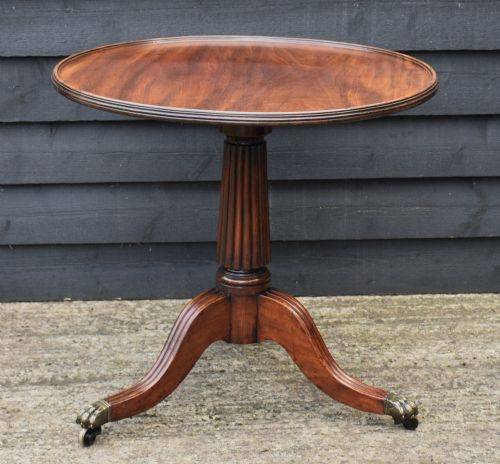
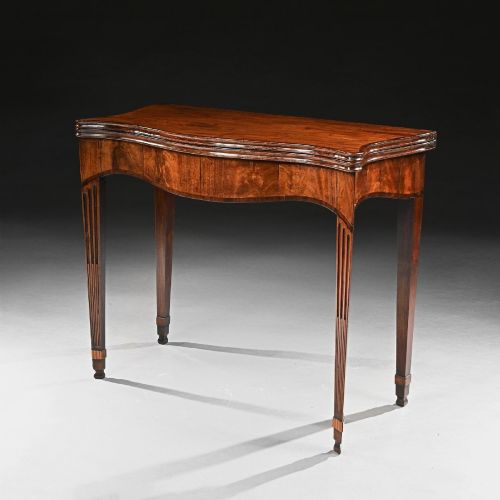
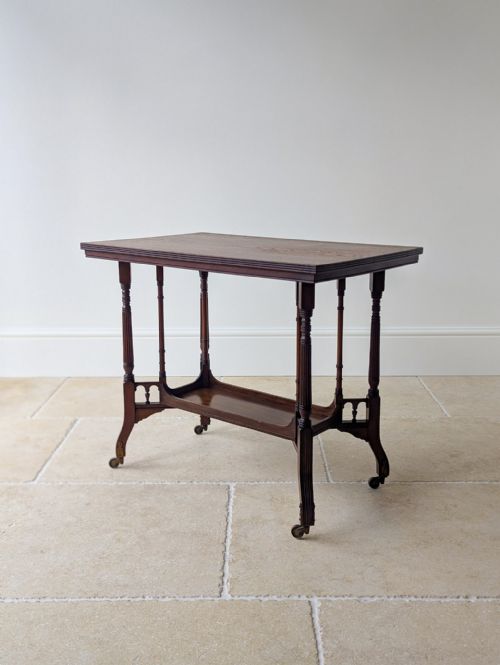
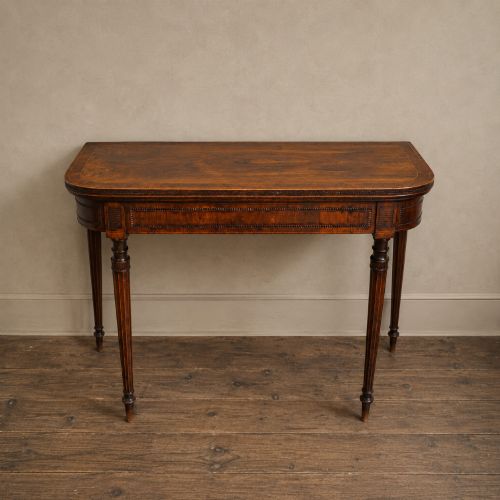


Fluted Leg Tea Table
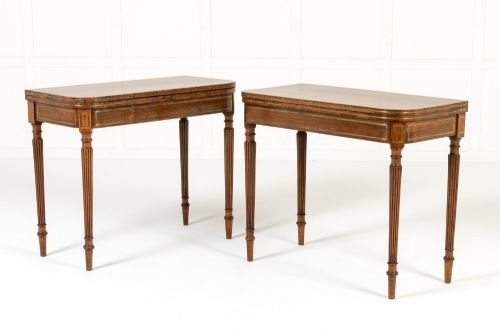
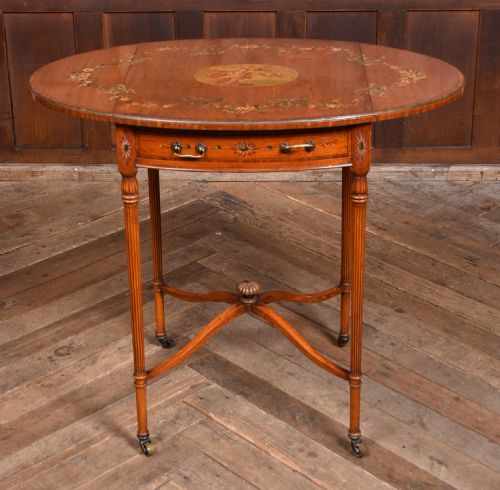
These fluted leg tea table examples span the eighteenth and nineteenth centuries, offering versatile folding surfaces crafted from rich timbers like mahogany and rosewood.
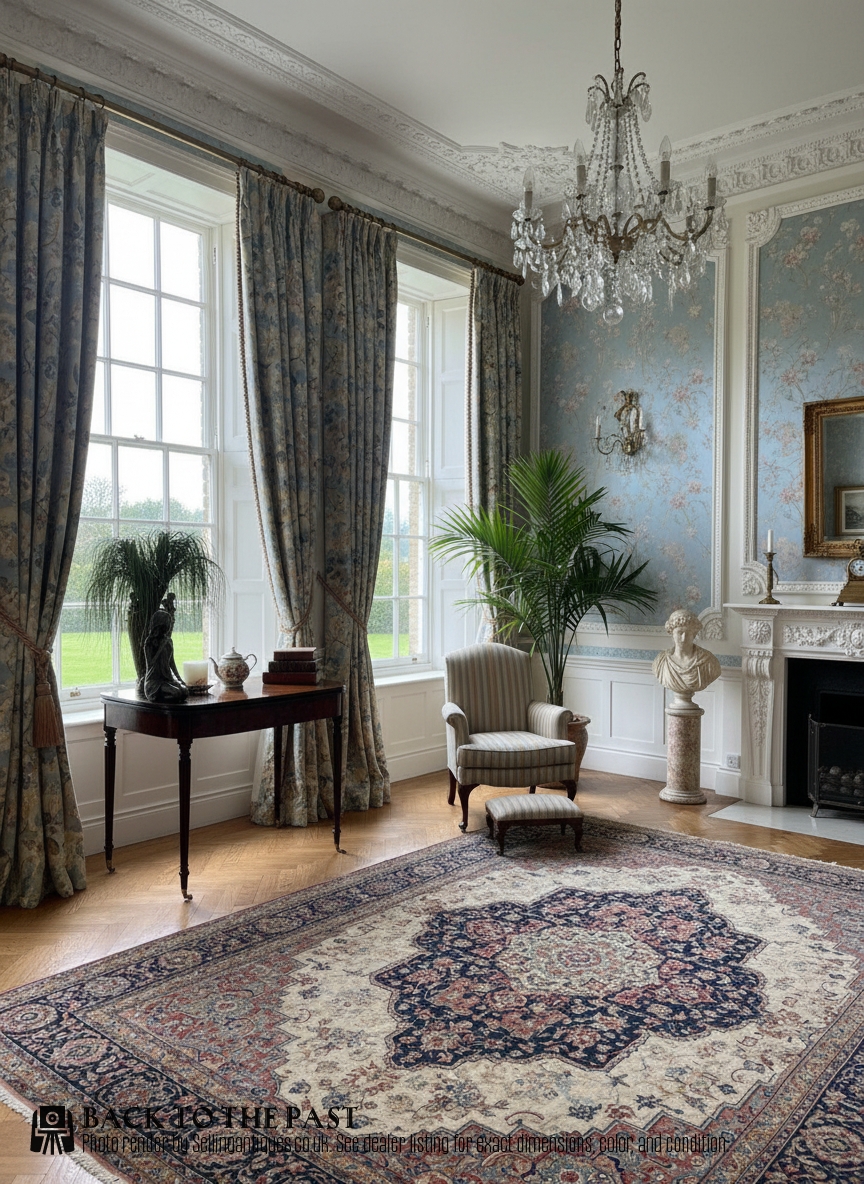
Fluted Leg Tea Table
A fluted leg tea table serves as a folding surface designed historically for hospitality and social gatherings. The selection here brings together pieces spanning the eighteenth century, the Regency era, and the Victorian period.
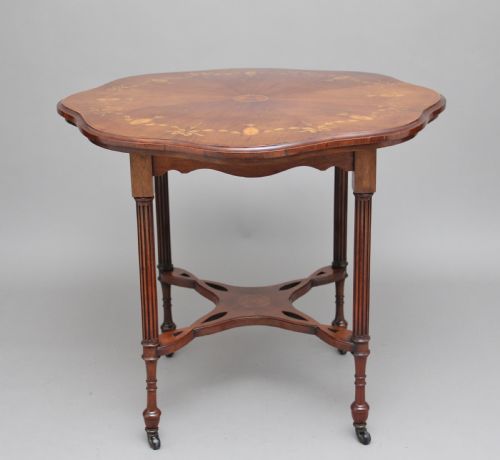
You will encounter various forms including tea tables, card tables, and console tables alongside occasional pieces. Mahogany and rosewood dominate the physical evidence, often enhanced by satinwood, walnut, and burr yew crossbanding.
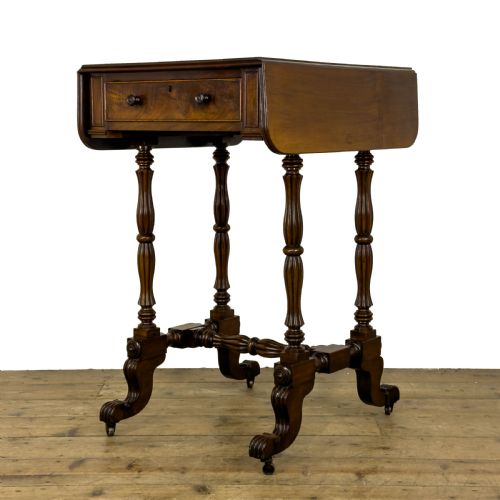
George III, Regency, and Victorian styles appear frequently across these listings. Pieces range from serpentine shapes to D-shaped formats and drop-leaf designs.
How they were made
Cabinetmakers utilised solid timbers and wood veneers over underlying structural woods to construct these tables. Mahogany and rosewood form the primary body of the work, complemented by satinwood and burr yew for decorative crossbanding.
Brass mounts and marquetry inlay provide additional ornamentation on specific examples from the Regency and Louis XVI traditions. Folding mechanisms and drop-leaf joints allow the tops to expand or fold over depending on use.
Makers shaped the supports with distinct fluting along the legs, aligning with George III, Edwardian Neoclassical, and Aesthetic Movement design principles.
Several tables manage a double identity, doubling quietly as card tables when guests arrive for an evening game.
What varies in quality
The refinement of the timber selection and the precision of the crossbanding separate standard examples from finer ones. Superior pieces display carefully chosen grain patterns in woods like mahogany, rosewood, and burr yew.
The execution of the carved fluting on the legs and the crispness of any brass mounts reveal the maker's hand. Well-fitted folding hinges and stable structural joinery determine how gracefully a table survives years of opening and closing.
Gregory & Co·Gillows
The Fluted Leg Tea Table Glossary
- Crossbanding
- A narrow strip of veneer applied perpendicularly to the grain of the main surface, often seen in contrasting timbers such as burr yew.
- Serpentine
- A curved edge or front shaped in a concave-convex-concave wave pattern, frequently found on eighteenth-century tabletops.
- Drop-leaf
- A table design featuring hinged flaps that fold down at the sides when not needed for extended surface area.
- Marquetry
- Decorative patterns created by fitting different wood veneers and other materials into a prepared wooden ground.
- Tripod table
- A small freestanding table supported by a pillar above three radiating feet.
Fluted Leg Tea Table: Frequently Asked Questions
What is a fluted leg tea table used for?
These tables served primarily for serving tea or hosting card games in period drawing rooms. Their folding tops allowed them to sit compactly against a wall when not in use.
Today, they function well as console surfaces or occasional desks in living spaces where adaptable furniture is useful.
How do I identify a George III table?
George III pieces date from the second half of the eighteenth century into the early nineteenth century. They typically feature mahogany construction, clean classical proportions, and restrained decorative elements like fluted legs.
Examine the timber quality and the joinery methods underneath to confirm the period characteristics.
What is the difference between a tea table and a card table?
Tea tables were designed to hold tea service equipment, often featuring rectangular or serpentine tops. Card tables incorporate hinged folding tops that open to reveal a baize or wood playing surface.
Many examples in the records served multiple functions as general side or console tables.
Where should I place a rosewood table at home?
Rosewood tables suit reception rooms, hallways, or living areas where their dark grain and polished finish stand out. Keep them away from direct sunlight and strong heat sources to protect the polished surface.
Allow enough clearance around the piece if you intend to use the folding leaf mechanism.