


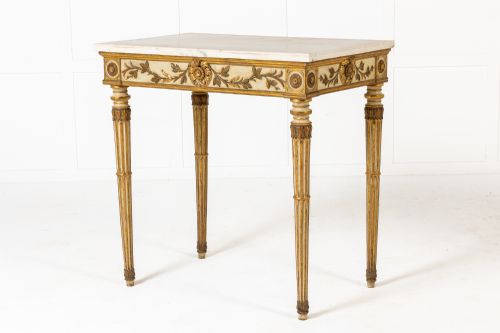

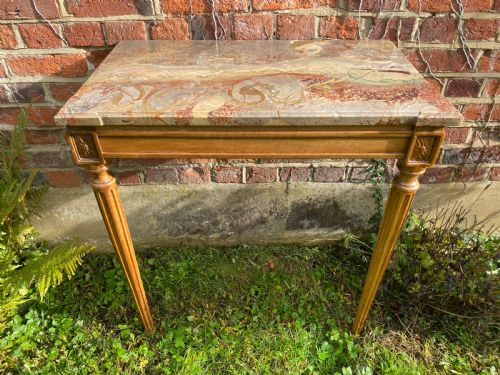


Fluted Leg Entry Table
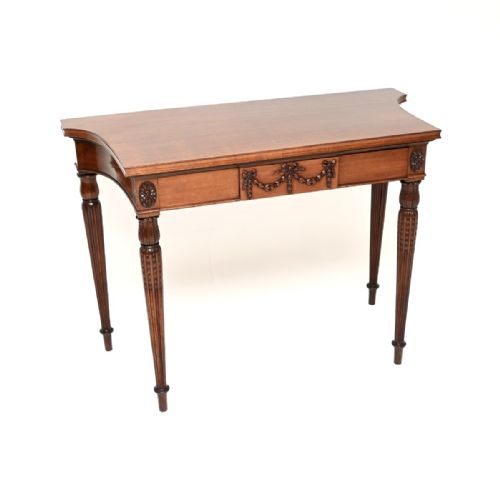
These fluted leg entry table items combine classical proportion with practical surface space, offering an elegant focal point for any hallway.
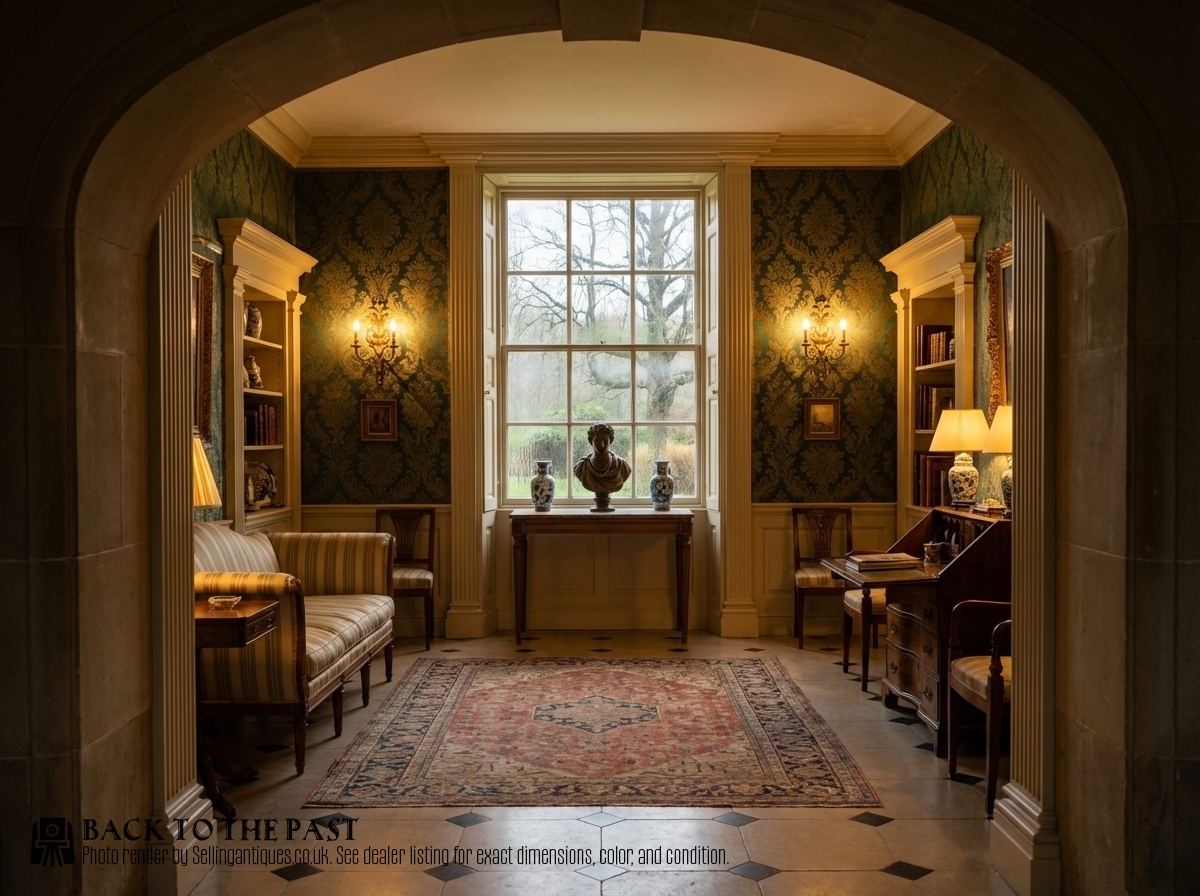
Fluted Leg Entry Table
When you search for a fluted leg entry table, you encounter console tables, side tables, sideboards, and centre tables designed for hallways and reception rooms. These pieces originate across various periods including the eighteenth century, the Regency era, the Victorian period, and the Edwardian era.
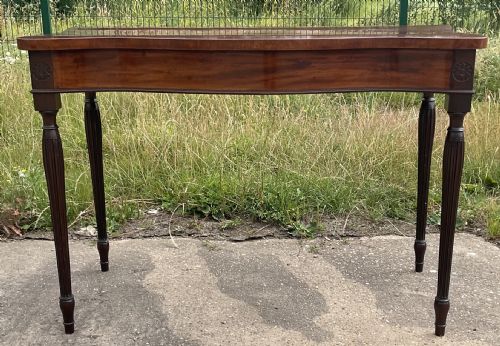
The selections on this page lean heavily toward nineteenth century and twentieth century revivals, particularly Georgian style and Neoclassical designs. Console tables dominate the listings, frequently appearing in forms like demi-lune shapes and serpentine fronts.
How they were made
Cabinet makers utilised solid timbers and veneers, with mahogany and rosewood appearing frequently alongside oak, cherry wood, and painted finishes. Artisans applied sophisticated decorative elements such as gold leaf, gesso, and intricate inlaid details to enhance the visual appeal of the wood.
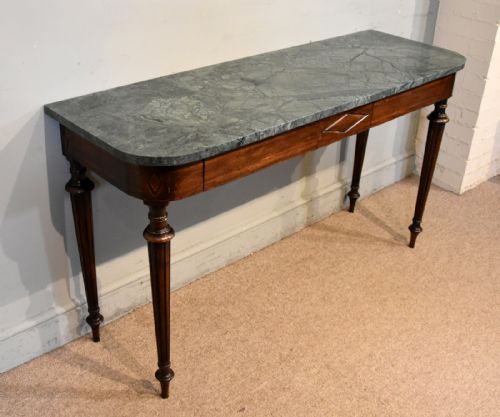
Surface materials also include marble and stone tops paired with wooden frames. Construction techniques follow traditional joinery methods suited to console and side tables intended for prominent display positions.
Materials represented across the inventory include mahogany, rosewood, cherry wood, marble, brass, and gold leaf.
What varies in quality
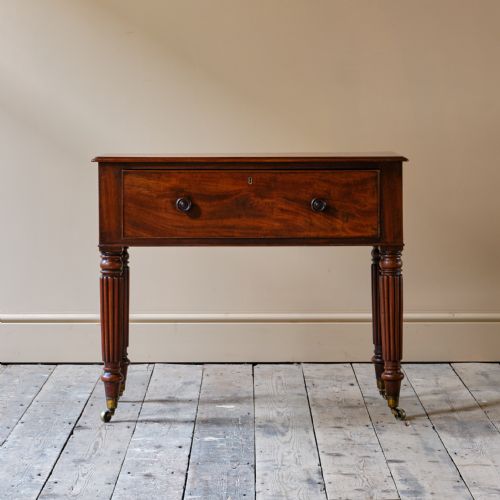
The standard of timber selection and the crispness of carved fluting on the legs distinguish finer examples from simpler workshops. Details such as fine inlay work, original marble tops, and gilding preservation elevate the distinction of individual items.
Proportion and stylistic adherence to periods like the Regency or Neoclassical eras dictate the overall desirability of a table. Tables demonstrating sophisticated execution in styles reminiscent of specific makers carry greater refinement.
Gillows·Robert Adam
The Fluted Leg Entry Table Glossary
- Console table
- A table designed to be fixed against a wall, frequently supported by ornamental brackets or legs at the front. These pieces serve as decorative furniture in entrance halls and living spaces.
- Demi-lune
- A half-moon shape used for table tops and furniture fronts. This curving form suits console tables positioned flat against a hallway wall.
- Gesso
- A plaster-like mixture applied to wood surfaces as a base for painting or gilding. It provides a smooth ground for metallic leaf application.
- Inlay
- A technique where contrasting materials are inserted into a recessed wooden matrix to form decorative patterns. This method appears on Edwardian and Georgian revival pieces.
Fluted Leg Entry Table: Frequently Asked Questions
Where should an entry table go?
These tables fit flat against hallway or reception room walls to create an immediate focal point upon entering a home. Their narrow profiles suit transitional spaces without obstructing movement.
They provide a convenient surface for holding post, keys, or decorative lamps while establishing the stylistic tone of an interior.
How do I identify Regency style?
Regency pieces draw upon classical Greek and Roman motifs, often featuring dark timbers like rosewood alongside brass accents. The lines tend to be clean and architectural.
Fluted legs and symmetrical arrangements are common characteristics that reflect the Neoclassical influence of this period.
Are marble top tables practical?
Stone and marble surfaces offer durability and resistance to everyday wear, making them resilient for high-traffic entryways. They provide a cool, solid texture that contrasts with wooden frames.
These tops require standard care to avoid staining from acidic liquids, maintaining their polished appearance over decades of use.