


French Neoclassical Pier Table
A french neoclassical pier table brings architectural order and refined surface display to a hallway or drawing room.
French Neoclassical Pier Table
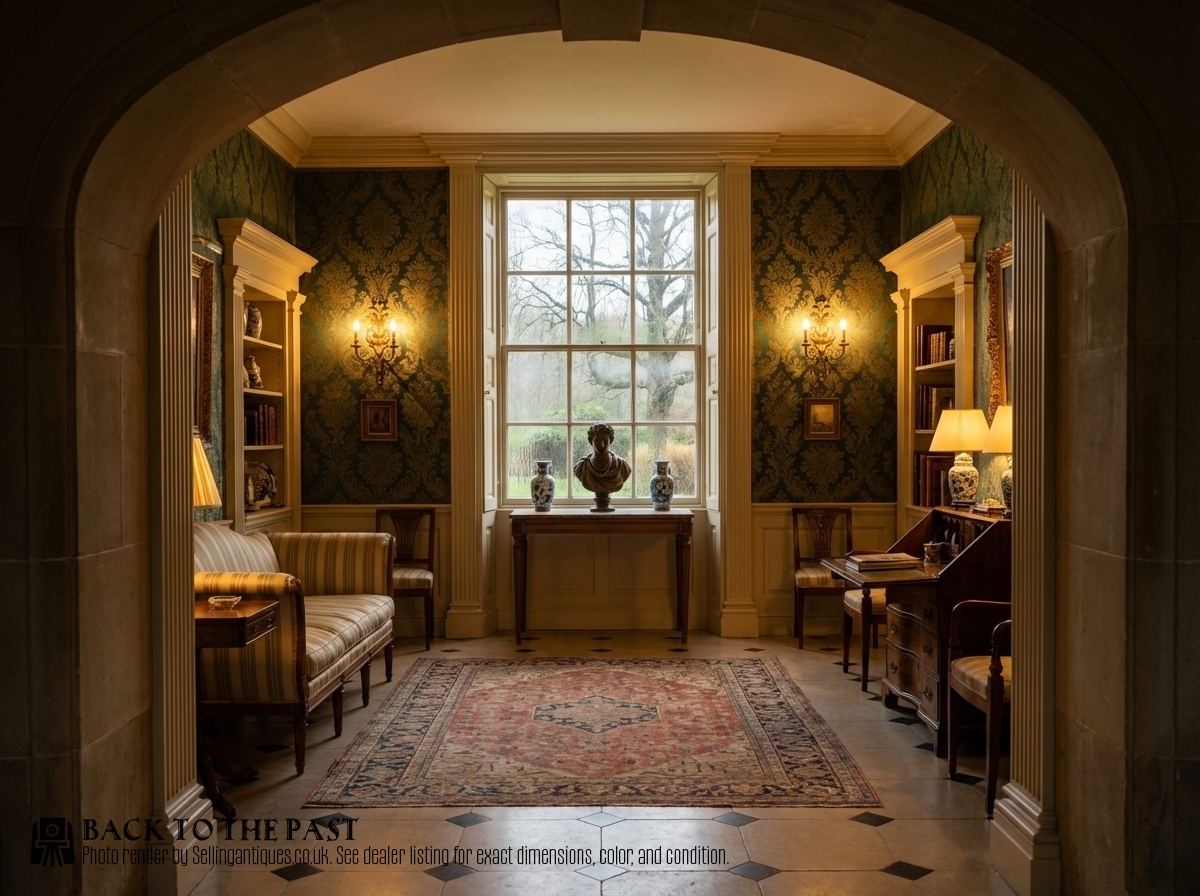
A french neoclassical pier table typically sits flat against a wall, frequently beneath a matching mirror, functioning as a console or side table. These tables emerge primarily in the eighteenth and nineteenth centuries, carrying the architectural symmetry and classical ornamentation characteristic of the movement.
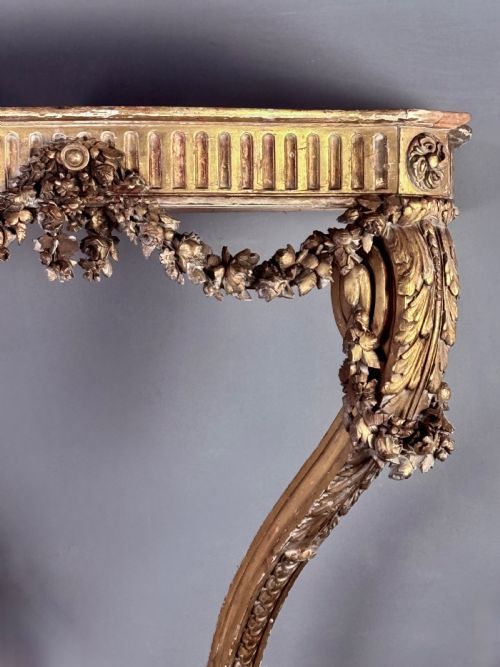
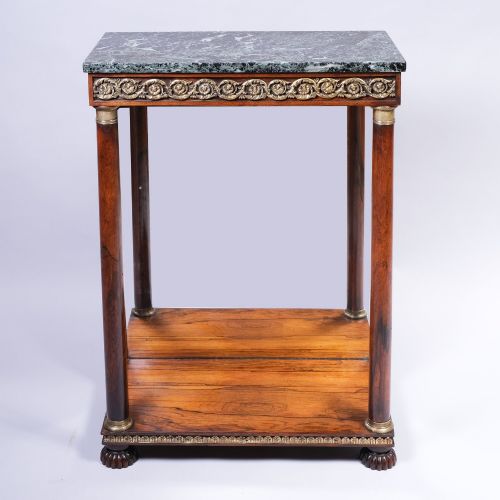
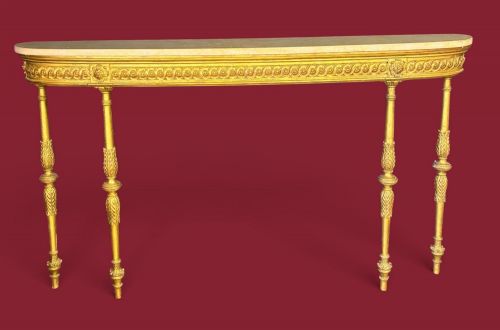
The versions most commonly met on this page combine carved and gilt wood frames with heavy stone tops. Forms range from demi-lune shapes to rectangular console bases, often drawing upon Louis XVI and French Empire stylistic vocabularies.
How they were made
Carpenters and joiners built the primary carcase using woods such as mahogany, walnut, or painted timbers, applying gesso and gold leaf to decorative carved elements. These structural wooden frames required substantial bracing to support the considerable weight placed upon them.
Surface tops consist of marble, fossil marble, granite, or rouge marble, cut and polished to fit the precise profile of the frame. Brass mounts and giltwood detailing complete the classical ornamentation seen across the pieces.
Several tables arrive with fossil marble tops, trapping ancient prehistoric life inside your grand neoclassical hallway.
What varies in quality
Quality reveals itself in the crispness of the hand-carved wood and gesso ornamentation, where deep, sharply defined motifs indicate skilled craftsmanship. Lesser examples rely on soft, shallow moulding that loses definition beneath layers of later gilding or paint.
The selection and treatment of the stone top further distinguish the work, with properly fitted, heavy marble slabs demonstrating superior integration with the wooden base compared to poorly seated replacements.
Felix-Alfred Ternisien·Jean Joseph Chapuis
The French Neoclassical Pier Table Glossary
- Demi-lune
- A half-moon shape used for tables designed to sit flush against a wall. This format is common in painted and mahogany console designs.
- Giltwood
- Timber coated with gold leaf or metallic powder over a prepared gesso ground. This finish provides the bright, reflective surfaces characteristic of neoclassical salon furniture.
- Console table
- A table supported by wall brackets or legs, intended for placement against a vertical surface. They often feature elaborate underframes and stone tops.
- Pier mirror
- A tall looking glass designed to hang on the pier wall between two windows, frequently paired directly with a matching console table below.
French Neoclassical Pier Table: Frequently Asked Questions
Where should I place a french neoclassical pier table?
These tables find their traditional home in narrow entrance halls, entryways, or along a blank drawing room wall beneath a tall mirror.
Because their backs are typically finished to sit flush against plaster, they require a wall anchor for stability, especially when supporting heavy stone surfaces.
How do I care for the marble top?
Wipe the stone regularly with a soft, damp cloth and avoid acidic cleaners that can etch polished marble surfaces.
Use coasters and felt pads beneath objects placed on the table to protect the historic polish from scratches and moisture rings.
Are these tables designed to stand alone?
Many examples function independently as console or side tables against a wall, while others were built specifically to pair with a matching wall mirror.
When acquired as a matched set with a pier mirror, the two pieces share carved motifs and gilding schemes intended to unify the vertical wall space.
What materials make up the frames?
Frames are constructed from solid timbers like mahogany and walnut, or softer woods prepared with gesso for intricate carving.
Surface finishes include gold leaf gilding, painted decoration, and applied brass mounts that reflect neoclassical design principles.