
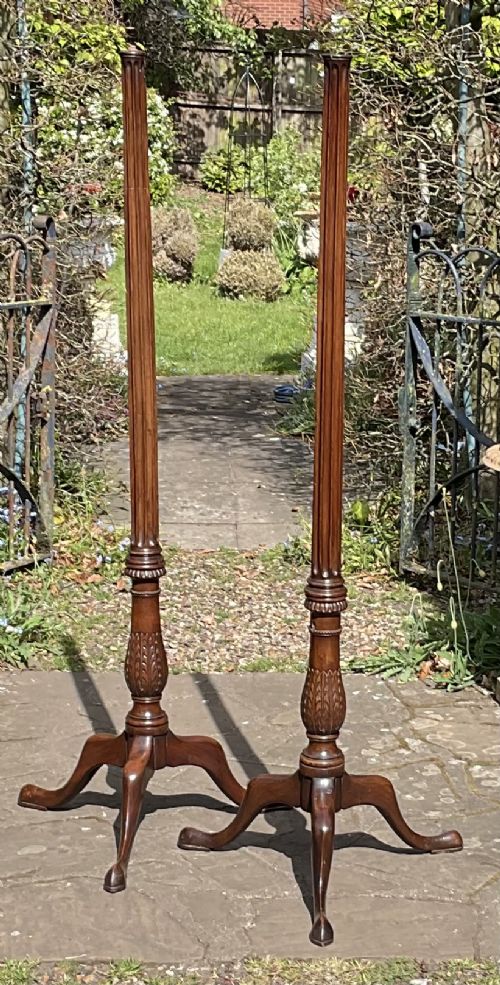


Fluted Column Floor Lamp
A fluted column floor lamp brings upright architectural presence to a room, offering height and downward illumination.
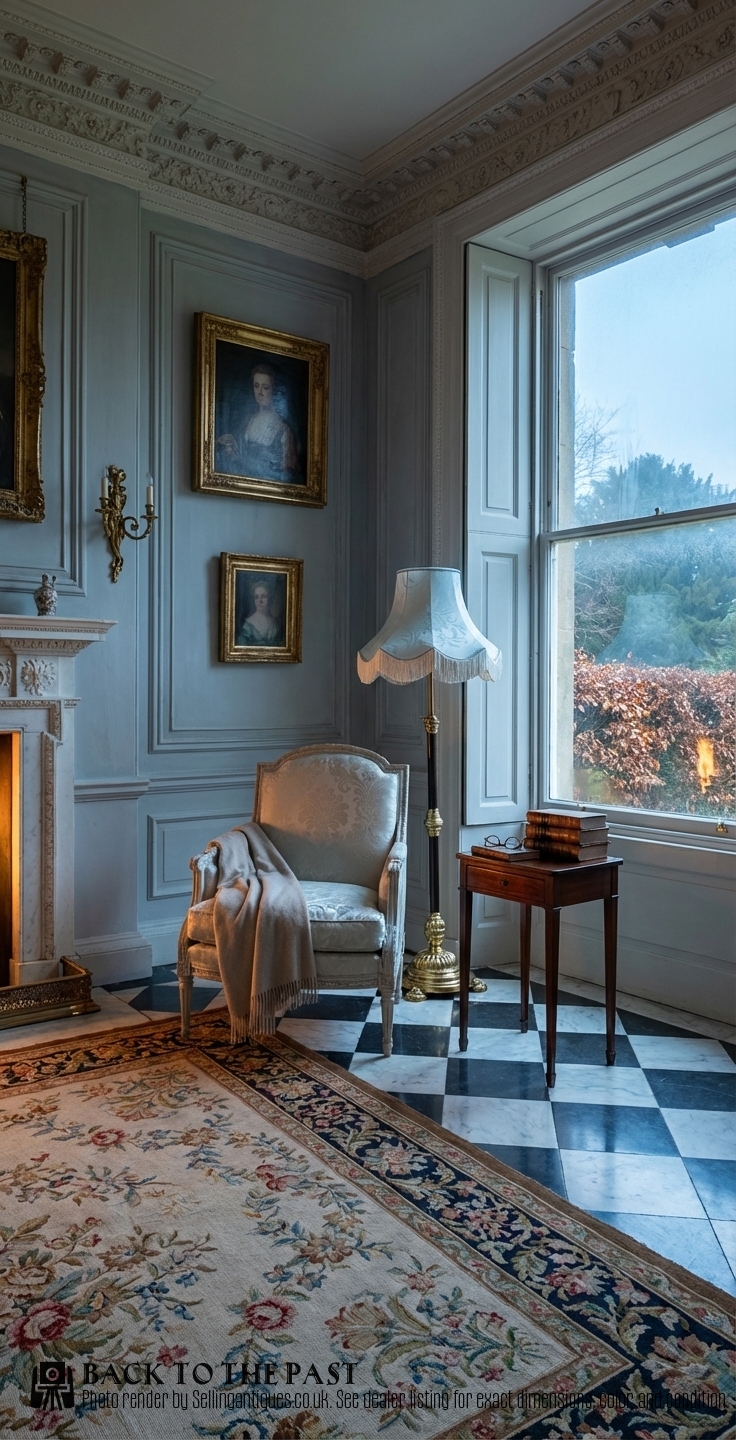
Fluted Column Floor Lamp
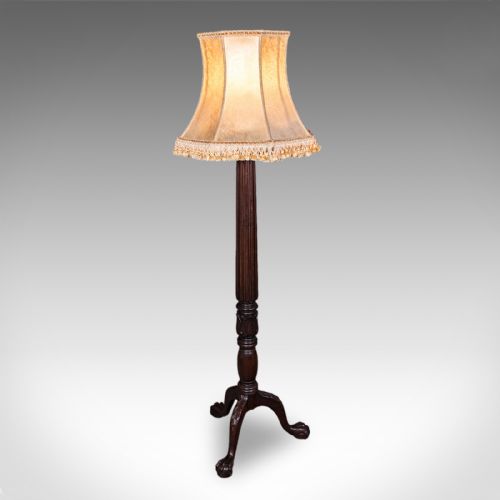
A fluted column floor lamp stands as an architectural lighting piece, taking form as a standard lamp, floor light, or torchere. These upright fixtures trace their lineage through Victorian, Edwardian, and revival periods, drawing upon classical design.
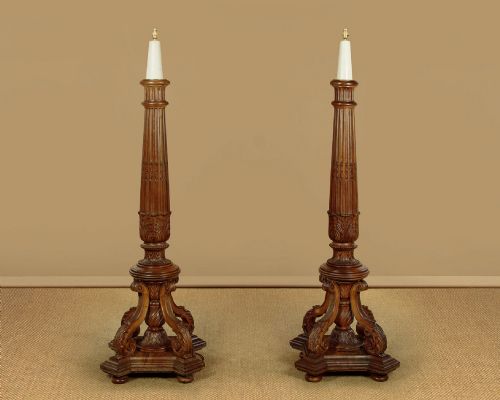
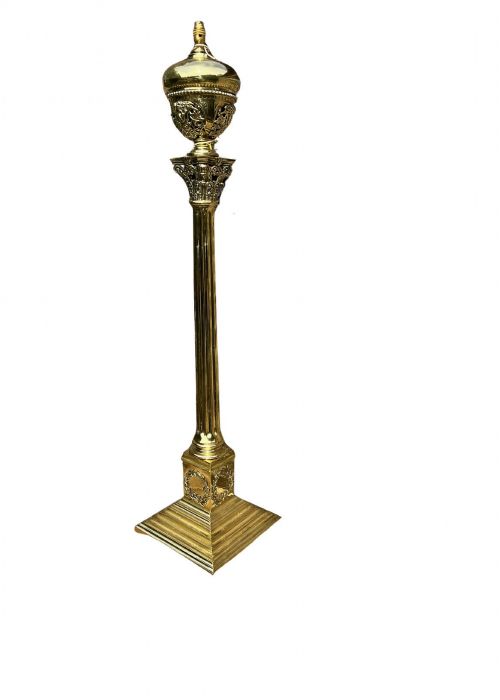
The version most commonly met on this page is constructed from brass, often taking the form of a Corinthian column with telescopic adjustment. Alongside metal examples, variations in mahogany, walnut, and giltwood appear across Georgian, Victorian, and twentieth-century interpretations.
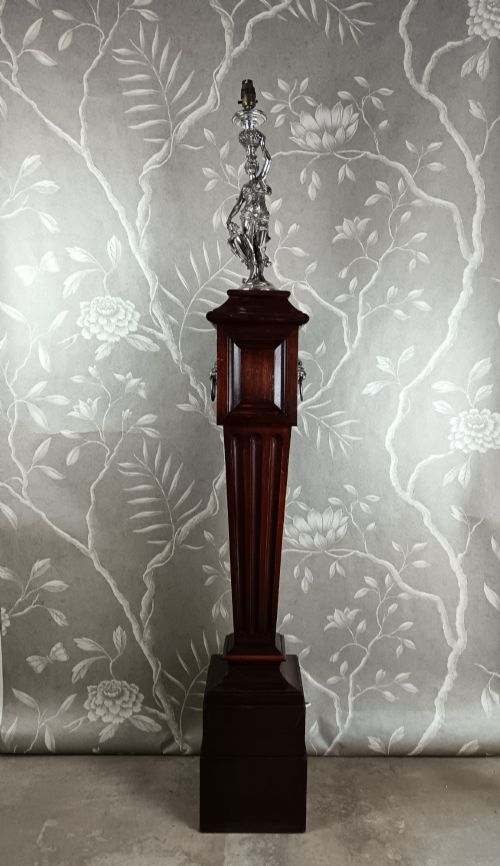
Makers and designers from Humphrey Hopper to Hinks produced these upright standards, incorporating figural statues and twin arms. The overarching neoclassical and revival styles ensure these tall lights anchor a corner with classical proportions.
How they were made
Metal standards utilise cast brass, gilt bronze, and silver-plated elements, often formed into fluted shafts topped with Corinthian capitals. Telescopic mechanisms allow the height to shift, requiring precision engineering within the central brass column.
Timber examples employ turned mahogany, walnut, and carved giltwood or gold leaf finishes. Artisans shaped these hardwoods on lathes to create the vertical fluting, then joined the column to weighted bases for stability.
Fluted Column Floor Lamp Retail Price Guide 2026
Typical asking prices for fluted column floor lamp among the pieces listed under this phrase on Sellingantiques today, from the lower quarter to the upper quarter. They describe what is for sale here now, not the wider market.
Some tall standards doubled as silent valets, holding reading glasses and pocket watches upon their Corinthian capitals.
What varies in quality
The distinction in quality rests upon the crispness of the carving or casting in the fluting and capital. Finer examples display deep, uniform channelling in the brass or timber, whereas simpler production shows softer, shallower lines.
Substance and proportion dictate the standing of a piece, separating substantial architectural standards from lighter utility lighting. The integration of functional adjustments, such as smooth telescopic movement and heavy metal bases, marks the superior tier.
Humphrey Hopper·WMF·Hinks
The Fluted Column Floor Lamp Glossary
- Torchere
- A tall stand or ornamental candlestick adapted as a floor lamp. These tall supports elevate the light source above eye level.
- Corinthian column
- An architectural order featuring an ornate capital decorated with acanthus leaves. This classical motif tops many standard lamp shafts.
- Standard lamp
- A British term for a floor lamp. It denotes an upright lighting standard designed to stand upon the floor.
- Giltwood
- Wood that has been treated with gold leaf or gilt finish. This technique adds a reflective surface to carved wooden lamp columns.
Fluted Column Floor Lamp: Frequently Asked Questions
How do I date a brass standard lamp?
Dating relies upon manufacturing methods, switch types, and stylistic revivals evident in the column and base construction. Victorian and Edwardian examples often feature heavy cast brass components and threaded assembly joints.
Looking closer at the telescopic mechanisms and wiring channels helps distinguish late nineteenth-century pieces from later twentieth-century reproductions.
What is the difference between a torchere and a floor lamp?
A torchere historically held a single light or torch pointing upwards, originating as an ornamental stand. In modern listings, the term often describes slender, decorative floor standards.
Standard lamps tend to have broader applications for general illumination, frequently paired with fabric shades, while torcheres emphasise the upright column itself.
Are these lamps adjustable in height?
Many brass examples incorporate telescopic shafts that allow the overall height to be raised or lowered. This mechanical feature was common in the nineteenth and early twentieth centuries for task lighting.
Wooden torcheres and fixed-column standard lamps remain at one set height, determined by the original turned timber shaft.