


Floral Tapestry Side Chair
These floral tapestry side chair examples bring period needlework and turned timber together into rooms that need character.
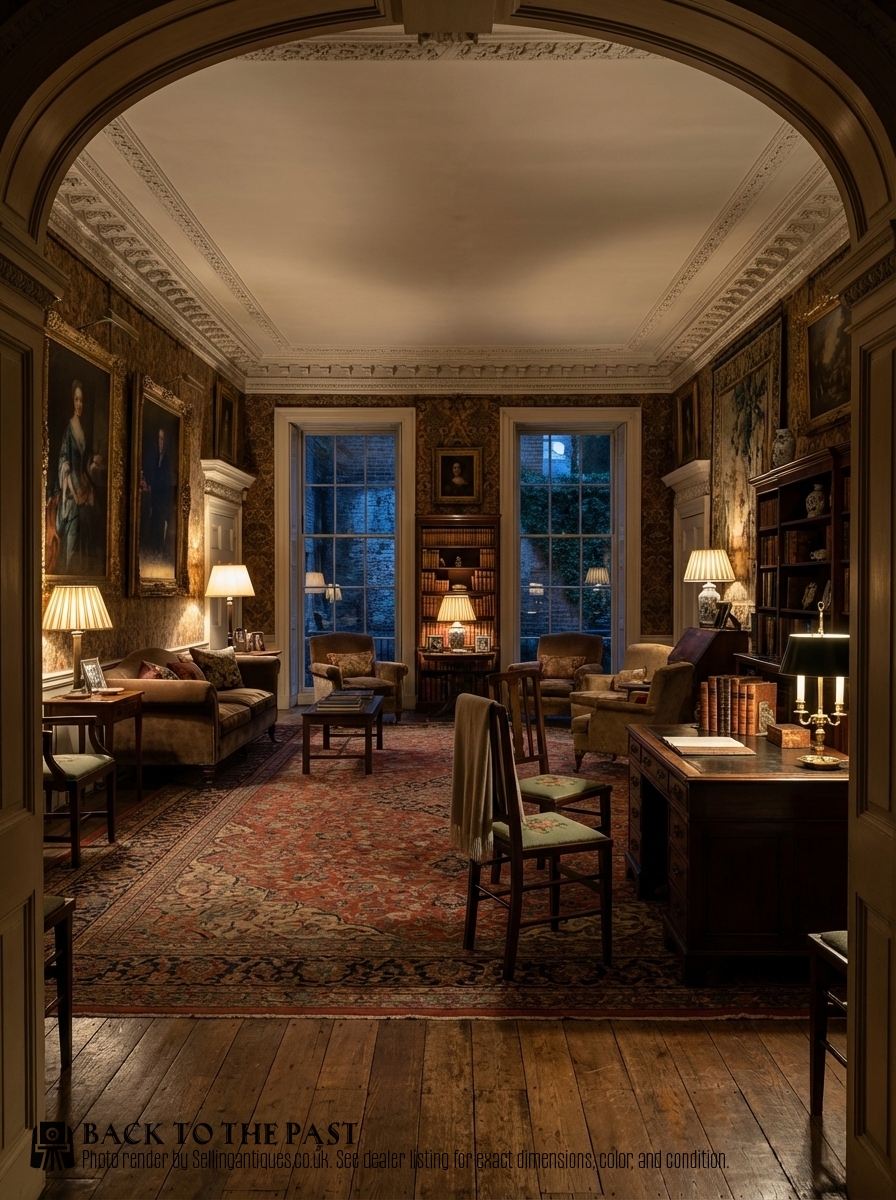
Floral Tapestry Side Chair
A floral tapestry side chair is an occasional or dining seat featuring textile upholstery worked in botanical or floral motifs. You will encounter these pieces across multiple periods including the Georgian era, Victorian period, and Edwardian years, with walnut, mahogany, and oak frames appearing frequently.
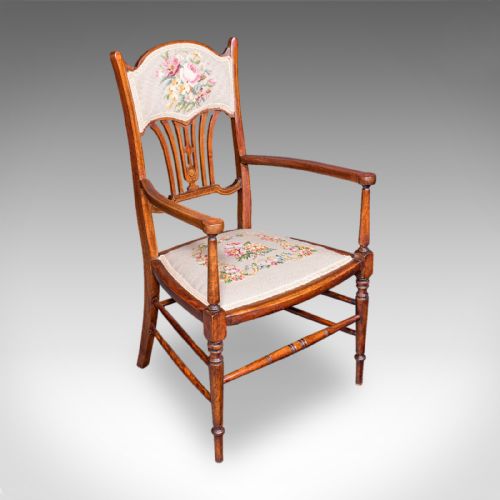
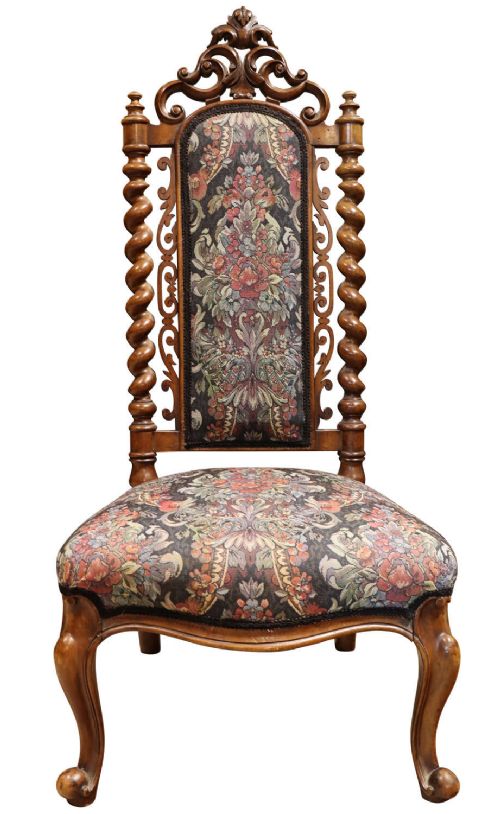
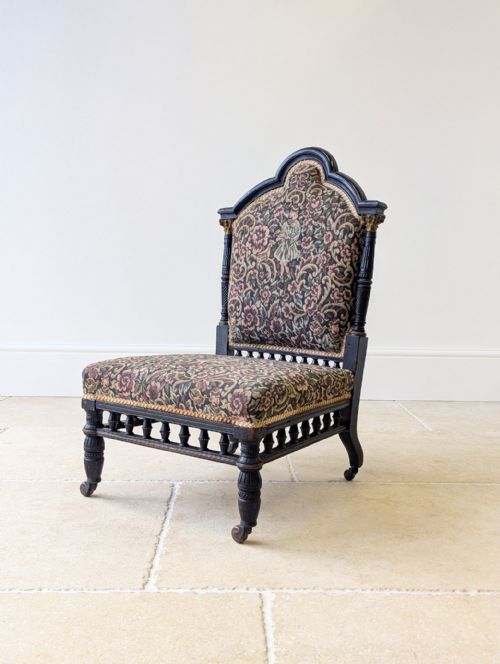
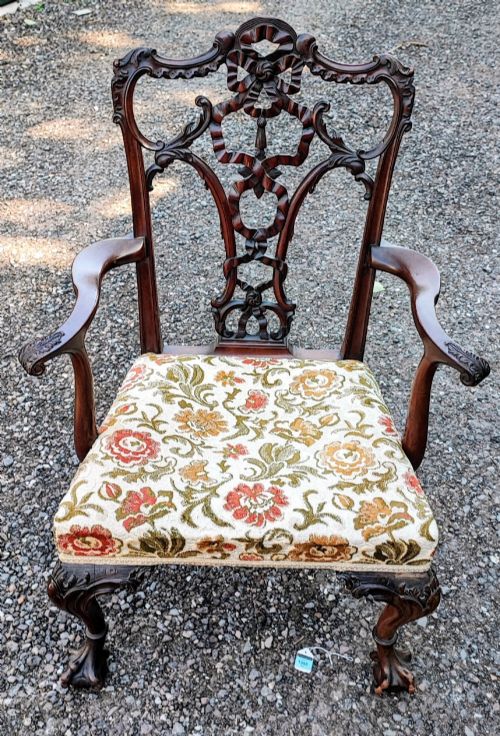
The selection here spans diverse forms such as dining chairs, hall seats, salon chairs, and low nursing chairs. Most examples combine carved wooden frames with needlepoint or wool work seats depicting flowers and foliage.
Makers and workshops ranged from large cabinet-making firms like Gillows to provincial makers working in regional styles. These chairs served utility in morning rooms, bedrooms, and parlours, often surviving as pairs or complete sets.
How they were made
Timbers such as mahogany, walnut, and oak provided the structural frames, often shaped with hand-carved details or ebonised finishes. Joinery methods relied on traditional mortise and tenon construction to ensure stability across decades of use.
Upholstery involved stretching hand-stitched needlepoint, wool work, or woven tapestry fabric over stuffed seat pads and frames. Brass tacks frequently secured the textile edges to the wooden rails.
Craftsmen applied polish or wax to the timber surfaces to protect the grain while retaining a natural lustre. Textile panels utilised dyed wool and silk threads to create floral patterns that endured heavy daily wear.
Some nineteenth-century makers concealed extra layers of horsehair inside seat pads to ensure guests sat tall during long dinner parties.
What varies in quality
Quality rests upon the crispness of the timber carving and the density of the wood grain in frames made of mahogany, walnut, or oak. Pieces from established makers or prominent workshops display superior joinery and refined proportions.
The intricacy and preservation of the needlepoint or tapestry work dictate much of the overall merit. Finer stitching density and original hand-dyed wool yarns separate standard utility seating from finer salon and parlour examples.
R Whytock of Edinburgh·Gillows
The Floral Tapestry Side Chair Glossary
- Needlepoint
- A type of canvas work embroidery executed with wool or silk yarn. It forms the patterned floral seat covers found on many period chairs.
- Side chair
- An upright chair without arms designed for dining or occasional use. These pieces easily tuck against walls or around tables.
- Tapestry
- A form of textile art woven on a loom or worked by hand with needle and thread. It frequently depicts floral or botanical scenes on antique seating.
- Ebonised
- Timber treated with a dark stain or finish to imitate ebony. This technique gained popularity during the Victorian and Aesthetic Movement periods.
- Prie-Dieu
- A devotional chair featuring a low seat and a high padded back rest. They appear frequently in Victorian domestic interiors for private prayer.
Floral Tapestry Side Chair: Frequently Asked Questions
Where did people use these chairs?
These chairs served multiple rooms across the home, including dining spaces, morning rooms, bedrooms, and parlours. Smaller variants functioned as desk seats or occasional spots near a fireplace.
Their portable nature meant staff could easily move them between entertaining spaces as required by daily social activities.
How do I care for antique tapestry?
Protect the fabric by keeping it away from direct sunlight, which fades dyed wool and silk threads over time. Gentle vacuuming through a mesh screen helps remove dust without pulling loose fibres.
Avoid chemical cleaning products unless handled by a textile conservator familiar with period needlework.
Are these chairs comfortable for daily seating?
Most period examples feature firm stuffing made from horsehair or organic materials rather than modern foam. They offer upright support suited to formal dining or reading rather than lounging.
Cushions were often firmer in the nineteenth century to maintain the neat profile of the upholstery.
How do I date a wooden frame?
Examine the timber species, tool marks left by saws, and the construction methods used in the joints. Georgian pieces often show simpler hand-planed surfaces, while Victorian versions incorporate heavier machine-cut elements.
Stylistic cues like carved cabriole legs or ebonised surfaces point toward specific decades of manufacture.