
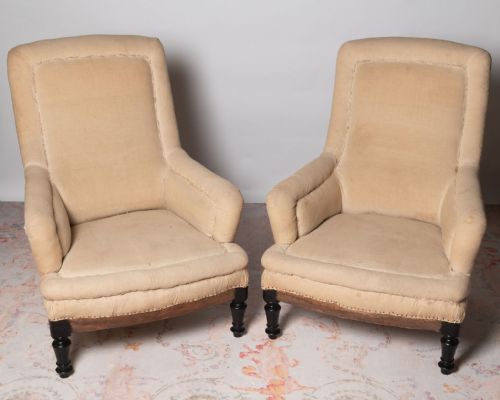
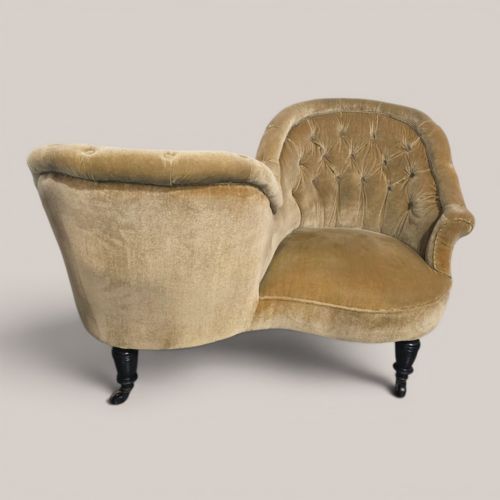


Nineteenth Century Ebonised Chair
A nineteenth century ebonised chair brings dark, dramatic wood finishes and striking period forms to a room, offering both history and decorative impact.
Nineteenth Century Ebonised Chair
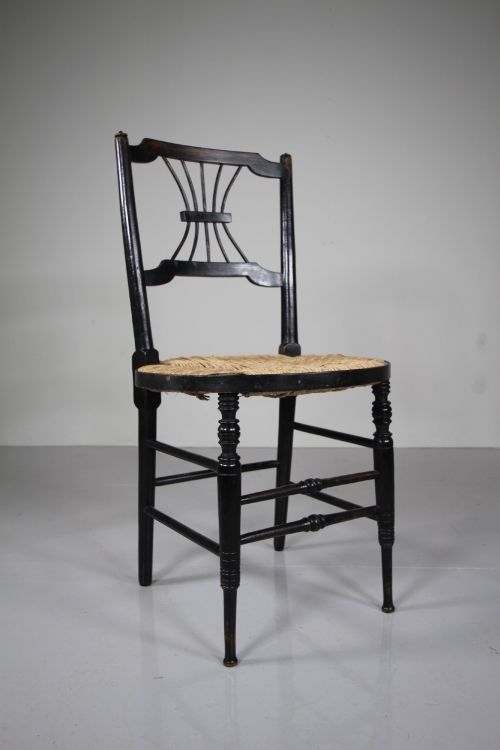
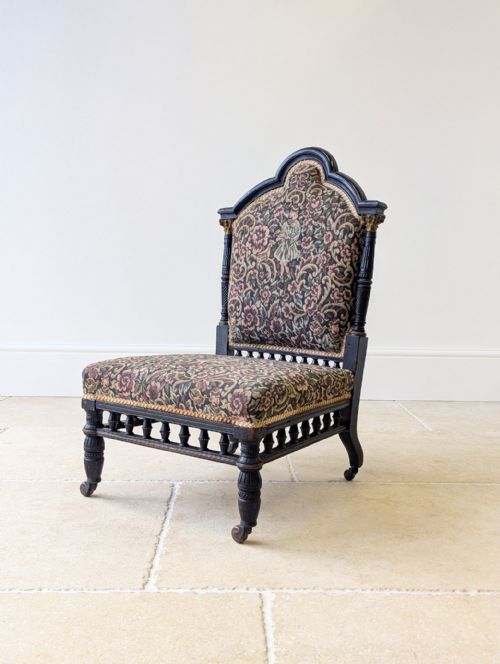
A nineteenth century ebonised chair is a seating piece finished to resemble ebony, spanning various styles from the Regency period through the Victorian era and the Aesthetic movement. These pieces include side chairs, low salon chairs, armchairs, and conversation sofas, often reflecting French, Gothic Revival, or Anglo-Indian influences.
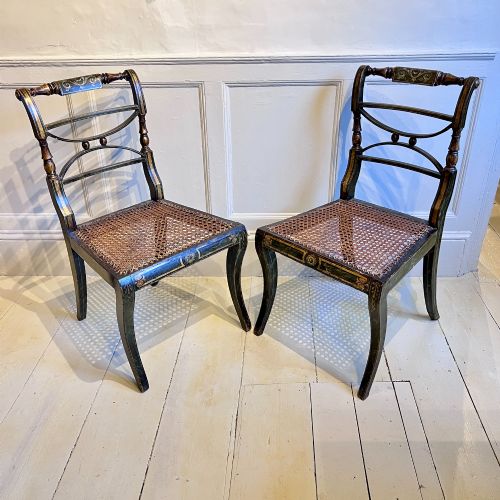
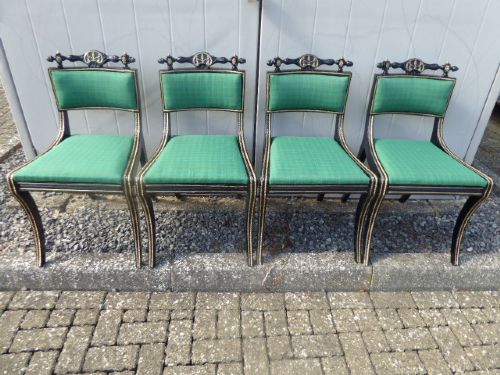
Buyers will encounter single examples alongside pairs and sets, utilising materials like cane, calico, velvet, and parcel gilt. The forms range from simple side chairs to elaborate child chairs and slipper chairs.
Originating from British, French, and Swedish workshops, these seats showcase the diverse aesthetic interests of the nineteenth century, blending dark finishes with traditional and exotic forms.
How they were made
The construction relies on wood treated with a dark ebonised finish or paint to achieve the appearance of costly exotic hardwoods. Many examples incorporate parcel gilt highlights or contrasting brass details to catch the light against the darkened surfaces.
Upholstered versions utilise traditional materials such as calico and velvet, sometimes retaining buttoned backs or requiring new fabric coverings. Other variations feature woven cane seats set within sturdy wooden frames.
A child chair lets very small people sit with exceptionally grand nineteenth-century dignity.
What varies in quality
Quality rests in the crispness of the carving, the integrity of the ebonised finish, and the balance of the proportions across different styles like Regency or Aesthetic Movement. Finer examples display meticulous attention to detail in parcel gilt highlights and structural joinery.
The condition of the underlying frame and any integrated materials, such as cane or upholstery foundations, dictates the long-term integrity of the piece. Authentic period execution distinguishes superior examples from later interpretations.
William Morris
The Nineteenth Century Ebonised Chair Glossary
- Ebonised wood
- Timber treated with stain or paint to achieve a deep, dark finish resembling genuine ebony.
- Parcel gilt
- Wood or decoration partially coated with gold leaf to highlight specific carved details or mouldings.
- Aesthetic movement
- A late nineteenth-century design style emphasising visual beauty and artistic expression over strict historical revival.
- Caning
- Woven rattan material used to form light, flexible seats and backs on chairs.
- Chaise longue
- An elongated upholstered seat designed for reclining, popular in French and Victorian drawing rooms.
Nineteenth Century Ebonised Chair: Frequently Asked Questions
How do I identify a Regency ebonised chair?
Regency ebonised chairs typically display classical lines inspired by ancient Greek, Roman, or Egyptian forms, often featuring faux bamboo turnings or painted details.
These pieces date from the early part of the nineteenth century and predate the heavier ornamentation associated with later Victorian seating.
Where should I place a low salon chair?
Low salon chairs suit drawing rooms, bedrooms, or reading corners where a compact seating option is required without blocking sightlines.
Their reduced height reflects their original nineteenth-century purpose for informal gatherings and relaxed conversation.
Can I reupholster an antique slipper chair?
Many antique slipper chairs are sold ready for new upholstery, allowing owners to select fabrics that match modern interiors.
Retaining the original frame construction while applying fresh calico or velvet preserves the historic integrity of the seat.
What distinguishes Aesthetic Movement seating?
Aesthetic Movement pieces often feature ebonised surfaces combined with gilt details, drawing inspiration from Japanese design and artistic simplicity.
These chairs date to the late nineteenth century and focus on clean silhouettes rather than fussy Victorian carving.