


Aesthetic Movement Side Chair
An aesthetic movement side chair brings disciplined reform design to smaller seating, relying on ebonised wood and crisp linear form.
Aesthetic Movement Side Chair
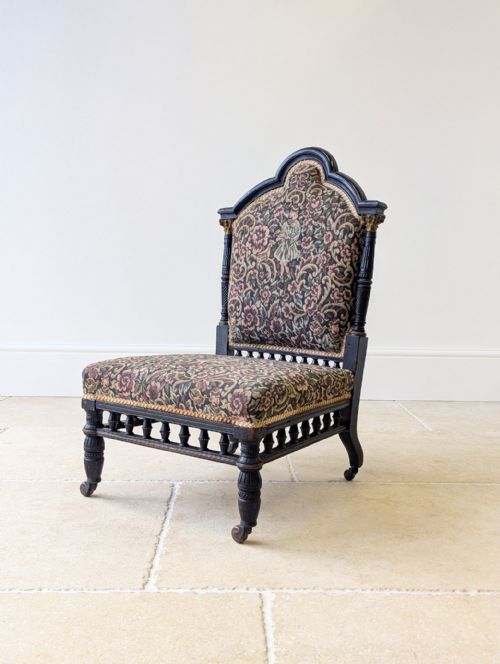
An aesthetic movement side chair is a light, upright seat designed during the late Victorian era, appearing in forms such as dining chairs, low salon chairs, hall chairs, and bedroom chairs. These pieces emerge predominantly from the nineteenth century, specifically spanning the decades around eighteen seventy to eighteen ninety, carrying the distinct reform aesthetic of the period.
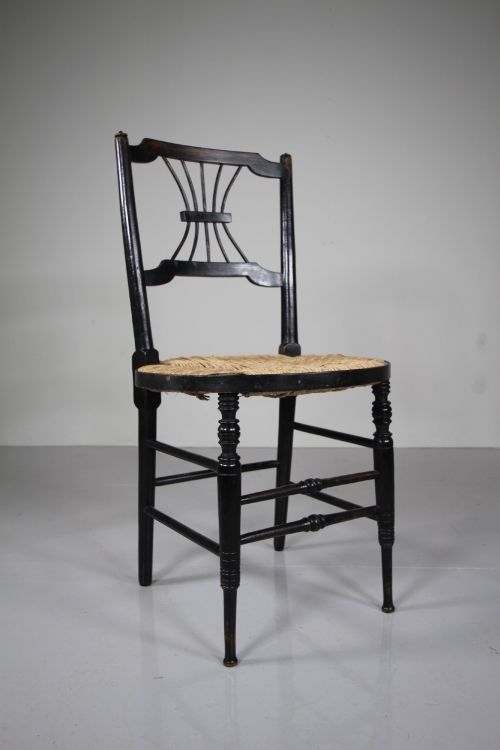
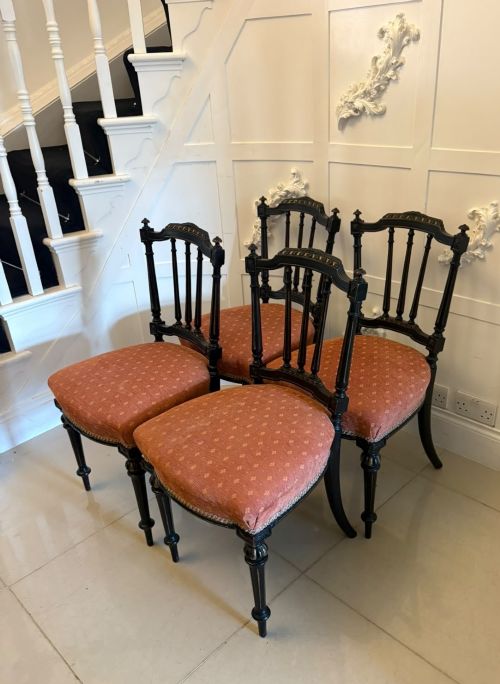
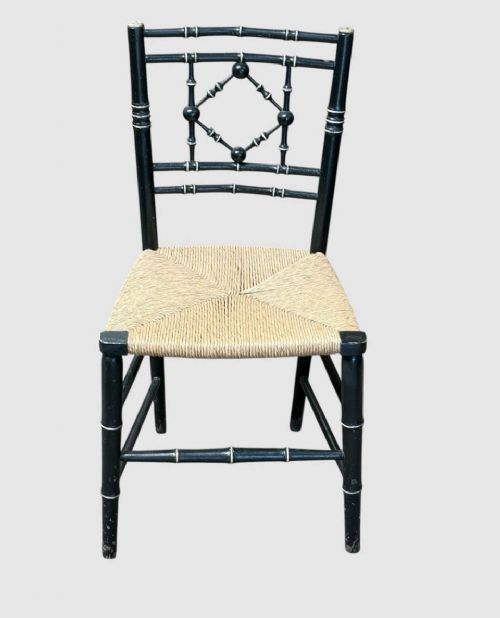
The version most commonly met on this page is the ebonised wood side chair, often finished with brass details, rush seats, or period upholstery fabric. They function well as occasional seating or around a dining table, combining historic revival influences with the simpler geometry favoured by nineteenth-century designers.
How they were made
Makers constructed these chairs primarily using ebonised wood, ebonised beech, oak, walnut, and mahogany, frequently applying gilt accents or brass fittings to highlight the structural lines. Turning and shallow carved wood details define the framework, often reflecting styles such as Arts and Crafts, Gothic Revival, or Moorish Revival.
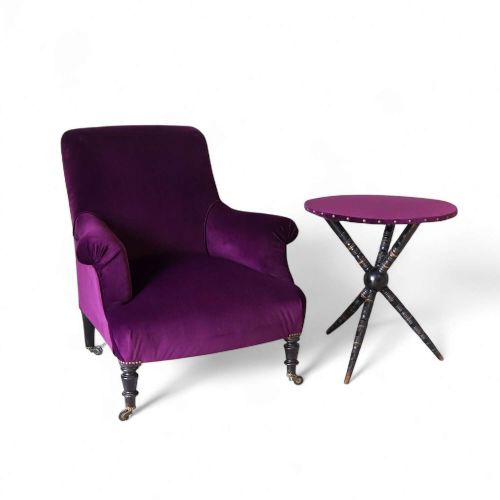
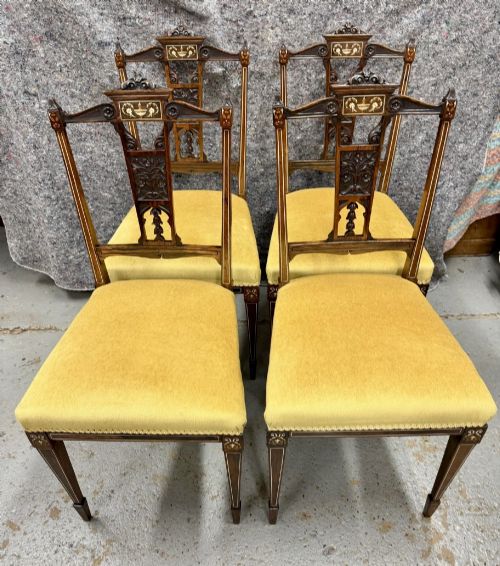
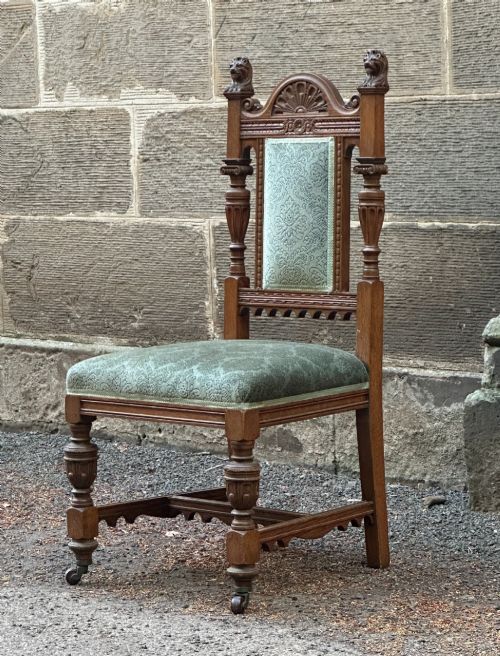
Seating surfaces vary from carved wooden panels and woven rush to padded upholstery covered in velvet or printed fabric. Construction methods balance sturdy joinery with the slender proportions demanded by the aesthetic style.
Listings feature pieces spanning the nineteenth century, with strong representation from eighteen seventy, eighteen eighty, and the broader Victorian period.
What varies in quality
The standard of a piece rests upon the crispness of its carved or turned wooden elements and the integrity of the ebonised finish. Superior examples display precise joinery and sophisticated integration of brass hardware or inlaid details.
Authorship and workshop attribution elevate certain pieces significantly, particularly when associated with known designers or prominent cabinet makers of the nineteenth century. Original upholstery and retained surface patination further distinguish higher-tier examples from simpler commercial production.
William Morris·Bruce Talbert·Gillows·Liberty and Co·Lamb of Manchester·Collier and Plucknett·E W Godwin·Ford Maddox Brown·Charles Bevan·James Shoolbread·Dr Christopher Dresser
The Aesthetic Movement Side Chair Glossary
- Ebonised
- Wood treated with a dark stain or finish to imitate ebony. This dark surface provided a stark contrast to gilt highlights and colourful upholstery fabrics.
- Rush
- A traditional seating material woven from marsh plants. It offers a textured, durable alternative to solid wood or upholstered pads.
- Side Chair
- A small, armless chair intended for dining or occasional use around a room. These pieces form the majority of surviving aesthetic movement seating.
- Gilt
- A thin layer of gold leaf applied to wooden surfaces. It accentuates carved details and structural turnings.
Aesthetic Movement Side Chair: Frequently Asked Questions
What is an aesthetic movement side chair?
An aesthetic movement side chair is a nineteenth-century seat created during the reform design movement, prioritising visual harmony and slender proportions over heavy Victorian revival styles.
These pieces typically feature ebonised wood, turned supports, and decorative motifs drawn from Japanese or Gothic sources, serving as both functional seating and artistic statements.
How do I identify a Victorian ebonised chair?
A Victorian ebonised chair is identified by its dark, blackened wood finish designed to resemble expensive ebony. Makers often paired this dark surface with gilt accents, brass fittings, and patterned upholstery fabrics.
Such chairs date mainly from the eighteen seventies and eighteen eighties, reflecting the height of the aesthetic and Arts and Crafts periods.
Were these chairs used for dining?
Many aesthetic movement chairs were produced specifically as sets of dining chairs, while others served as hall chairs, low salon chairs, or bedroom seating.
Dining variants typically feature sturdy wooden frames with either solid wood seats, rush, or upholstered pads designed to fit beneath a dining table.
How should I live with an ebonised chair?
Living with an ebonised chair involves placing it out of direct sunlight to protect the dark wood finish and delicate gilt details. Regular dusting with a dry cloth keeps the surface secure.
Because these chairs are structurally lighter than earlier Victorian seating, they suit occasional use in reception rooms, bedrooms, or studies.