
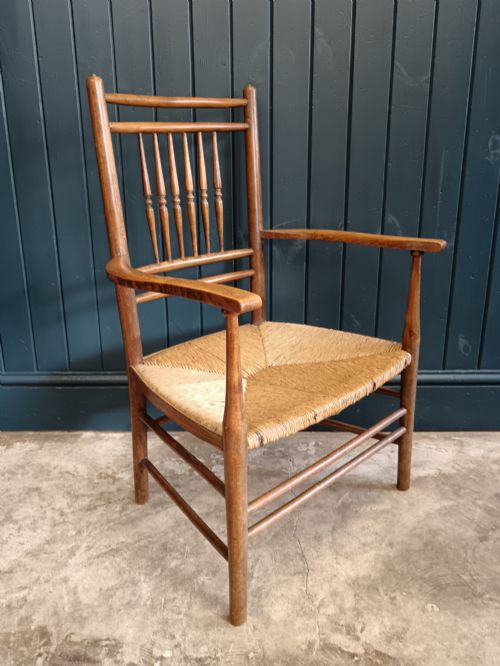
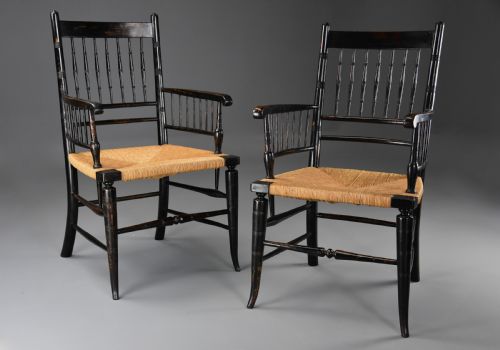


Antique Sussex Chair
An antique sussex chair is an honest, spindle-backed seat born from the Arts and Crafts movement, prized for its simple structural elegance.
Antique Sussex Chair
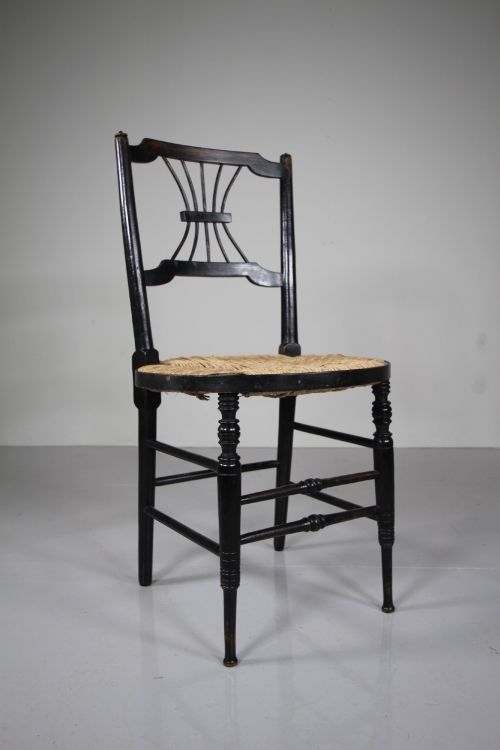
When you examine an antique sussex chair, you look at a lightweight domestic seat derived from traditional country patterns. These pieces belong predominantly to the nineteenth century, often associated with the Arts and Crafts movement or Georgian country vernacular forms.
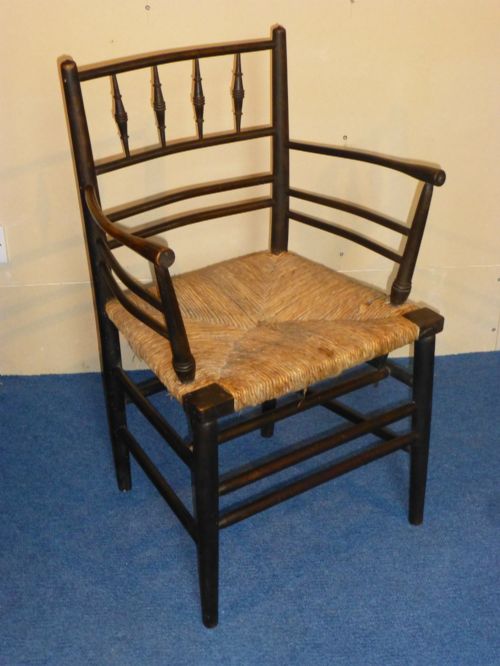
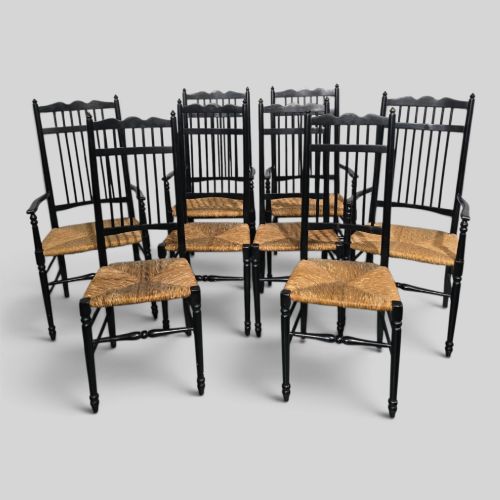
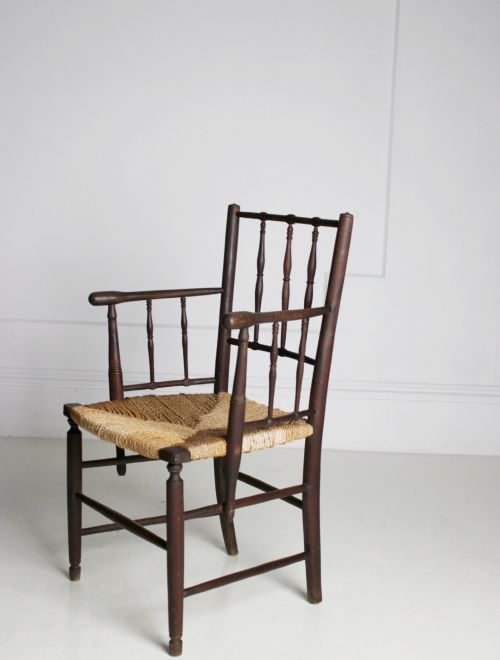
You will encounter armchairs, side chairs, and dining chairs across the listings. The design relies on slender turned members and low-slung profiles suited for everyday use in studies, bedrooms, and parlours.
How they were made
Joiners turned beech, ash, and other woods on a lathe to create the slender uprights and spindles that form the backrests. These wooden components were frequently ebonised or painted, though natural wood surfaces also appear in the record.
Craftsmen wove natural rush into tight, durable seat pads that fit neatly within the wooden frames. The construction prioritises lightness and strength without resorting to superfluous ornamentation.
Listings for the antique sussex chair span the nineteenth century, featuring materials such as rush, ash, beech, and ebonised wood.
What varies in quality
The distinction between ordinary production and superior execution lies in the crispness of the wood turning and the tightness of the rush weaving. Better examples retain their original ebonised finishes or early paint layers rather than later restorations.
Attribution to prominent designers or makers elevates certain pieces above standard vernacular chairs. Structural integrity in the spindle joints also determines whether a chair remains sturdy after generations of use.
Morris and Co·Philip Webb·Rossetti·E W Godwin·Ford Maddox Brown
The Antique Sussex Chair Glossary
- Spindle back
- A chair back constructed from vertical turned wooden rods. This construction method reduces weight while providing steady lumbar support.
- Rush seat
- A seating surface woven from dried marsh grasses. It provides a resilient, textured pad that breathes naturally during use.
- Ebonised wood
- Timber treated with chemical stains or dark paint to imitate expensive ebony. The finish imparts a formal, polished appearance to domestic furniture.
- Arts and Crafts
- A design movement valuing handcraftsmanship and simple vernacular forms over mass production. It shaped much of late nineteenth-century British furniture design.
Antique Sussex Chair: Frequently Asked Questions
How do I identify a genuine sussex chair?
Look for lightweight turned wooden frames combined with woven rush seating. The proportions follow traditional country patterns associated with nineteenth-century makers.
Check for maker marks or stamps where applicable, though many unmarked examples survive from the period.
Are these chairs comfortable for daily use?
The slender spindle backs and woven rush pads offer surprising support for sitting at a desk or dining table. Their lightweight construction makes them easy to move around.
Avoid placing them in damp areas, as natural rush seating reacts poorly to excessive moisture.
What is the difference between an armchair and a carver?
Armchairs feature integrated wooden armrests supported by the front uprights or seat frame. A carver typically serves as a matching armchair intended for the head of a dining table.
Both variants share the same turned spindle construction and rush seat foundations.
Should I restore original painted finishes?
Preserving early paint or ebonised surfaces maintains the historical integrity of the piece. Modern refinishing can diminish the character and collectible value.
Clean surfaces gently with dry cloths rather than harsh chemical solvents to protect the aged wood.