


Floral Tapestry Footstool
A floral tapestry footstool brings a touch of traditional textile art and sturdy timber to a fireside or dressing room.
Floral Tapestry Footstool
When you search for a floral tapestry footstool, you encounter low seats designed for resting feet or sitting before a dressing table. The pieces available span several eras, with Victorian and early twentieth-century examples appearing most frequently.
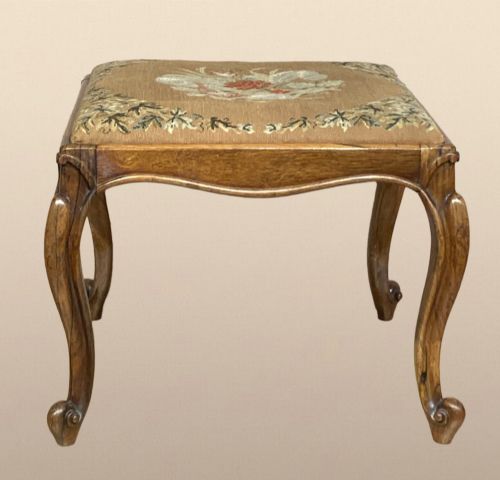
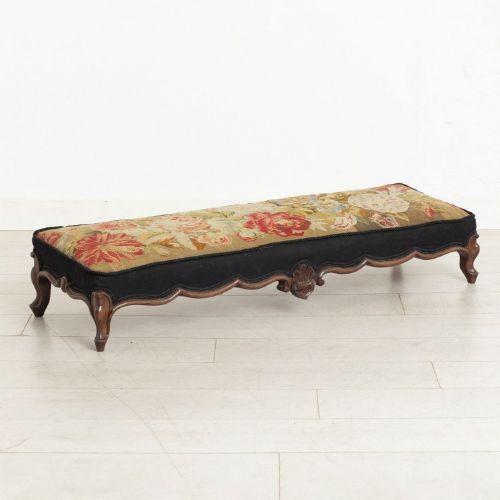
Makers constructed these forms in various timber frames including walnut, mahogany, rosewood and pitch pine. The upholstery ranges from wool needlepoint and beadwork to woven tapestry featuring botanical motifs.
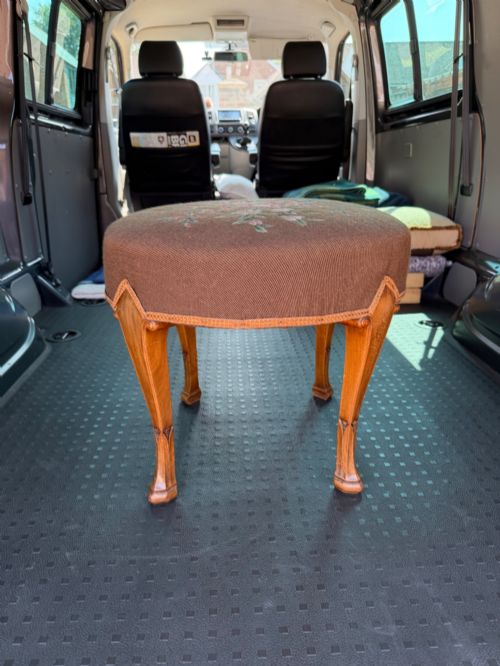
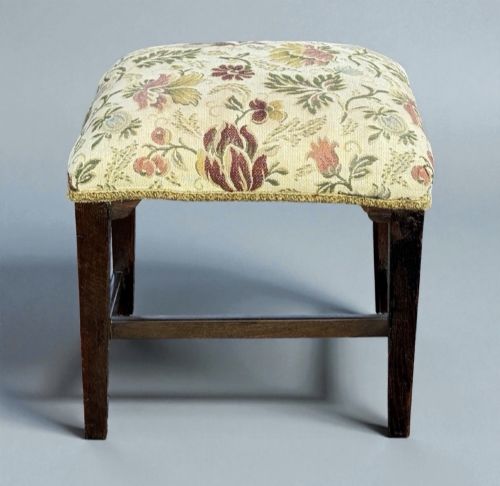
Stylistic influences vary widely across the selection. You find plain low stools alongside examples displaying Queen Anne legs, carved Scottish Baronial details, French revival curves and Regency proportions.
Materials and construction methods
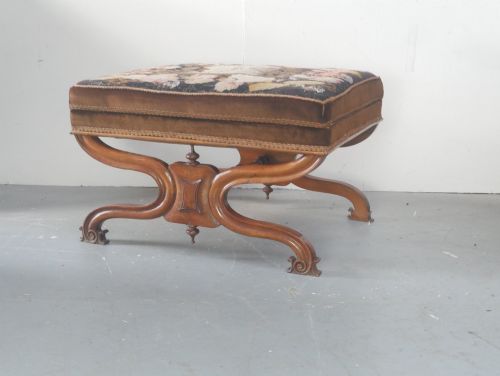
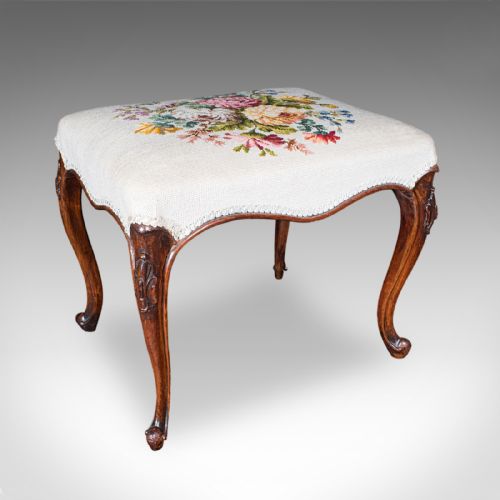
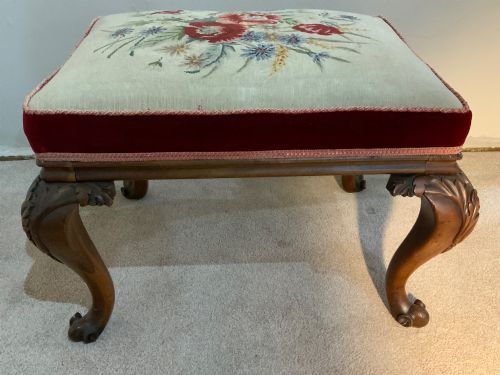
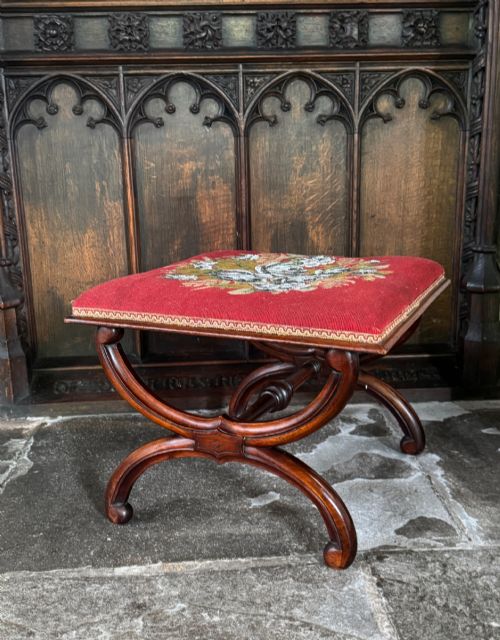
Frames rely on dense hardwoods such as mahogany and walnut, frequently shaped with cabriole legs, turned supports or X-frames. Joinery traditions dictate sturdy construction to support regular use as a seat or footrest.
Upholstery combines textile panels of wool needlepoint or tapestry stretched over padded foundations. Brass tacks frequently secure the perimeter of the fabric to the wooden base of the stool.
Period styles range from Georgian and Regency through Victorian to Scottish Baronial and Louis XV Revival.
What separates the finest examples
Quality rests in the precision of the timber carving and the density of the wood used for the frame. Dense walnut and figured rosewood distinguish superior pieces from simpler pine or painted alternatives.
The fineness of the needlework needlepoint and the integrity of the original fabric elevate an example. Elaborate petit point stitching and well-preserved wool textiles indicate superior workshop output.
Whytock and Reid
The Floral Tapestry Footstool Glossary
- Cabriole leg
- A furniture leg that curves outward at the knee and tapers inward at the ankle. This form mimics animal limbs and appears frequently on walnut and mahogany stools.
- Needlepoint
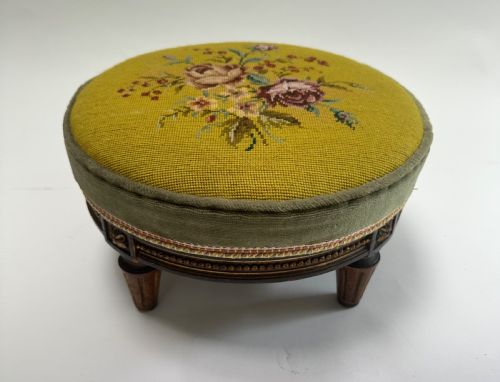
- A type of canvas work embroidery executed with wool yarn. It forms the floral patterns seen on the upholstery of many period footstools.
- Ottoman
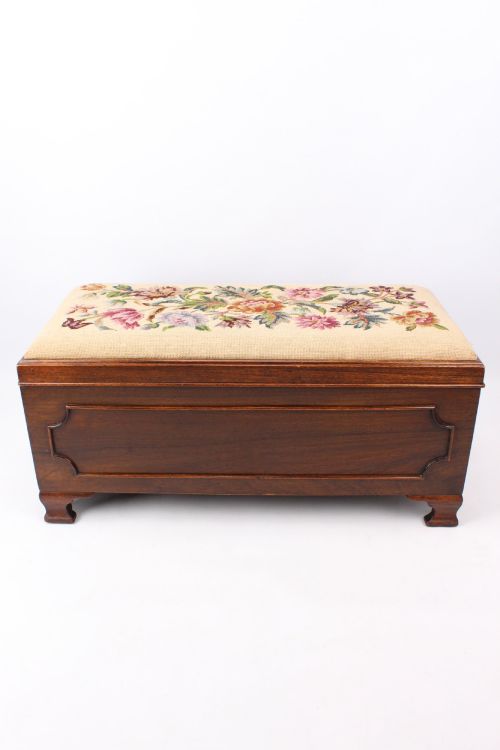
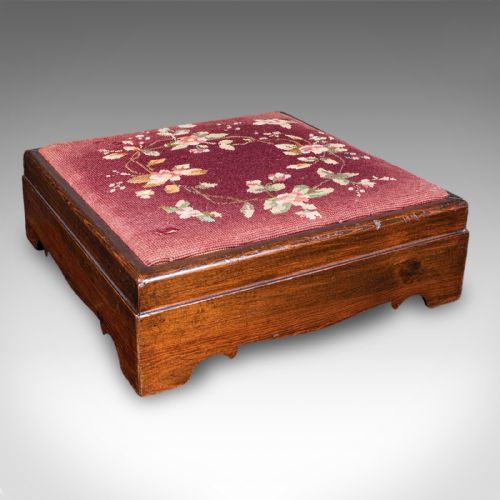
- A low, upholstered seat or bench without a back or arms. These pieces often double as footstools or storage boxes.
- X-frame
- A furniture base formed by intersecting curved or straight wooden members. This structural arrangement provides stability and decorative flair to Victorian stools.
- Petit point
- A fine stitch used in canvas embroidery that allows for intricate detail. It often defines the floral shading on antique tapestry seats.
Floral Tapestry Footstool: Frequently Asked Questions
What periods do these footstools come from?
The selections span the Regency era through the Victorian period and into the early twentieth century. Many pieces date from the nineteenth century.
Craftsmen also produced revival styles referencing earlier centuries such as the Georgian and Queen Anne periods.
How were these stools used originally?
These pieces served primarily as footstools by the fireplace or as dressing table seats in bedrooms. Some larger examples functioned as ottomans or window stools.
Certain variations included internal compartments for sewing equipment or small household items.
What timbers were used for the frames?
Walnut and mahogany dominate the construction of these frames, often selected for their strength and rich grain. Rosewood and pitch pine also appear among the listed pieces.
Selected frames feature painted finishes rather than exposed wood grain.
How do I identify the upholstery work?
The upholstery typically consists of wool needlepoint, tapestry, or beadwork depicting floral and botanical designs. Needlework panels are secured directly to the wooden framing.
Original fabric survives on several examples, though many pieces have received new period-appropriate textiles over time.