

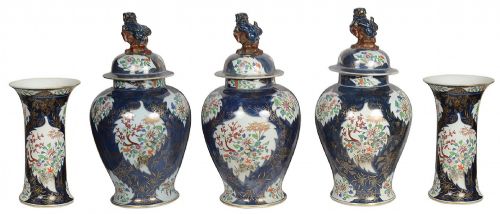


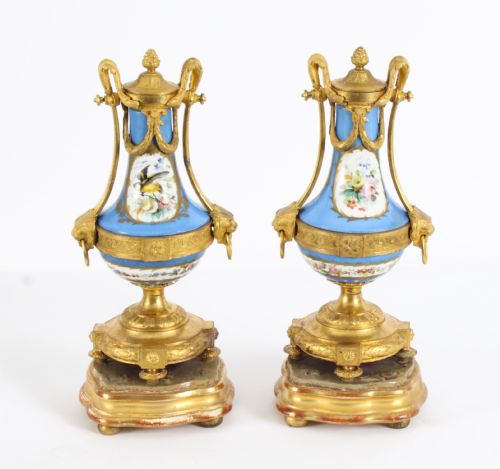


Floral Porcelain Garniture
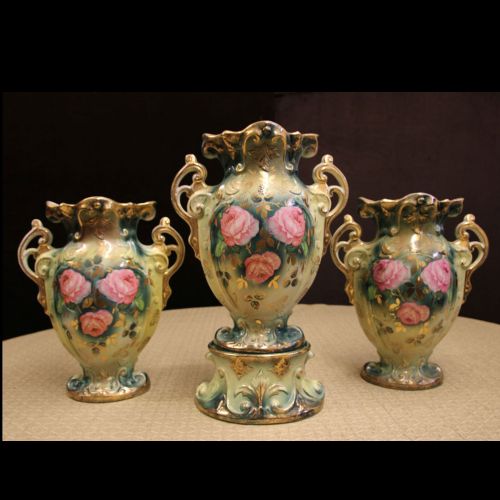
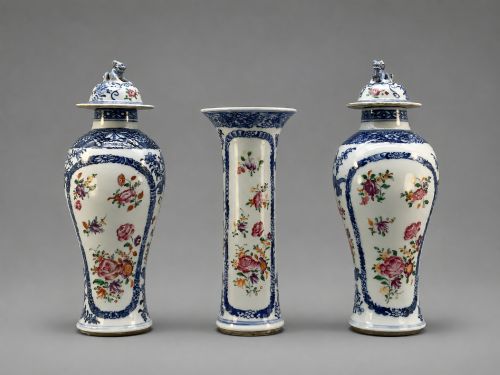
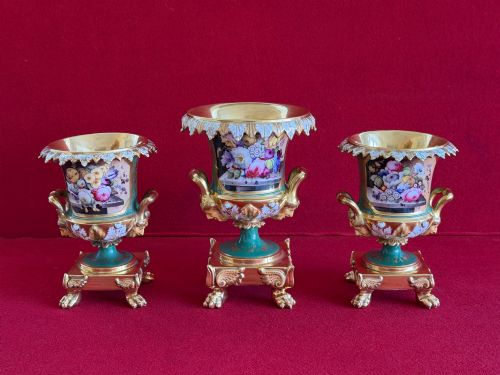
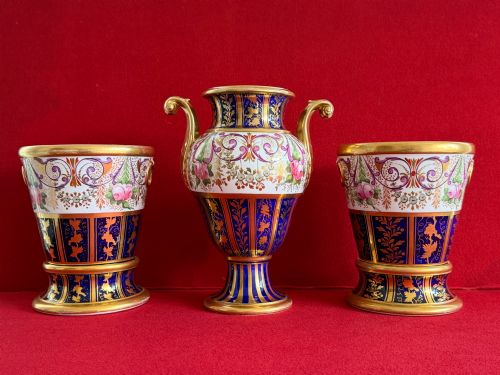
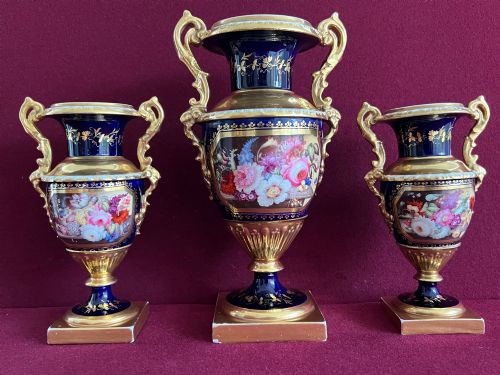
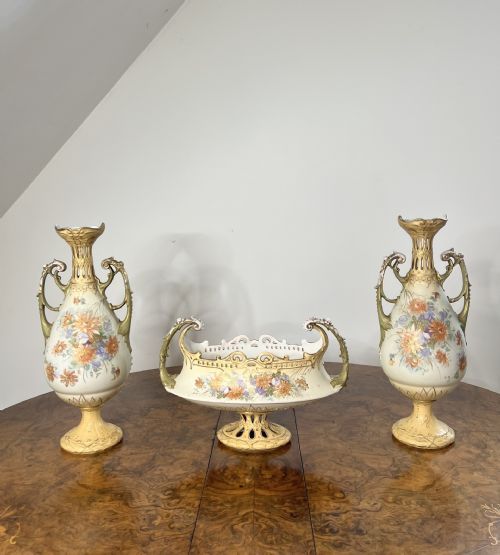
These floral porcelain garniture sets bring symmetry and colour to a mantelpiece, pairing central urns with matching side vases.
Floral Porcelain Garniture
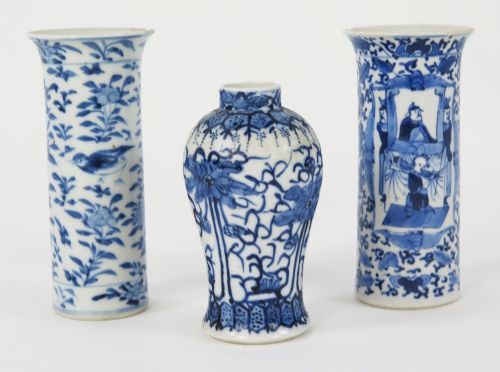
A floral porcelain garniture consists of matched sets of vases, urns, or jars designed to display together as a unified decorative scheme on mantelpieces and furniture tops. These matching groups usually comprise a central vessel flanked by two smaller side pieces, creating balanced symmetry in traditional rooms.
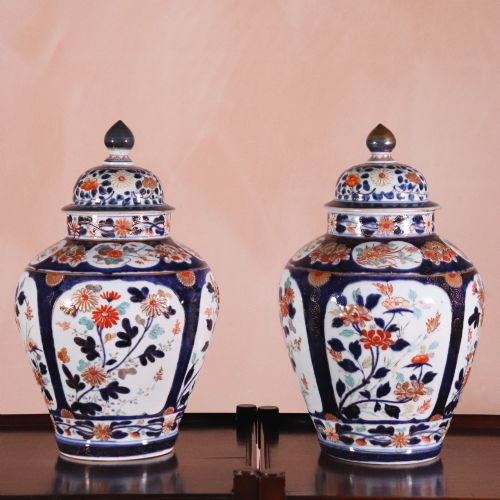
The selections span European and Asian traditions, encompassing English factories, French workshops, German porcelain works, and Japanese export wares. Buyers encounter varied configurations ranging from multi-piece clock sets to pairs of lidded jars and dedicated mantel garnitures.
Dated examples stretch from the eighteenth century through the nineteenth century, covering Georgian, Regency, and Victorian periods alongside revival styles. Makers utilise traditional forms such as campana urns, baluster jars, and shaped vases decorated with hand-painted blooms and rich gilding.
Materials and Construction
Potters shape fine ceramic bodies from hard-paste and soft-paste porcelain before applying white or coloured glazes as a ground for decoration. Skilled artists paint floral motifs using polychrome enamels, often enhancing details with applied gold leaf and heavy gilding.
Mounts in ormolu, brass, and gilt metal frame select pieces, adding structural weight and decorative borders to the ceramic bodies. Certain sets integrate clock movements within central housings, combining functional timepieces with matching side vases.
Floral Porcelain Garniture Retail Price Guide 2026
Typical asking prices for floral porcelain garniture among the pieces listed under this phrase on Sellingantiques today, from the lower quarter to the upper quarter. They describe what is for sale here now, not the wider market.
Nineteenth-century mantelpieces often shook when heavy trains passed outside, making secure clock garniture bases essential for keeping time.
Factors of Quality
The refinement of the painted botanical decoration dictates the distinction between standard production and exceptional studio work. Named artists and prominent factory output display superior brushwork, precise enamel mixing, and careful firing that avoids surface blemishes.
The integrity of the matching set matters significantly, as complete surviving groups retain higher artistic cohesion than assembled pairs. Heavier use of genuine gold leaf, intricate hand-chased metal mounts, and crisp moulding on the porcelain body elevate the standing of a piece.
Spode·Minton·Royal Vienna·Sevres·Meissen
The Floral Porcelain Garniture Glossary
- Garniture
- A set of matched vessels, typically three or five pieces, designed to be displayed together on a mantelpiece or sideboard. They provide visual balance and symmetry in formal interior schemes.
- Porcelain
- A ceramic material made by heating raw materials, generally including clay in the form of kaolin, in a kiln. It is valued for its vitrified, non-porous body and fine white finish.
- Ormolu
- Gilded bronze furniture mounts and decorative ornaments popular in French and English decorative arts. The technique involves applying a finely ground high-carat goldmercury amalgam to copper alloy.
- Enamel
- Vitreous material fused to the surface of porcelain or metal through firing for decoration and protection. It provides vibrant, permanent colour that resists fading over centuries.
- Gilding
- The decorative application of gold leaf or gold powder to porcelain and metal surfaces. This technique highlights raised mouldings and frames painted panels.
Floral Porcelain Garniture: Frequently Asked Questions
What is a floral porcelain garniture?
A floral porcelain garniture is a matching set of ceramic vases or urns painted with flower motifs, designed to sit together for decorative balance.
Traditional arrangements feature a larger central vessel flanked by smaller matching side pieces to anchor a mantel or console table.
How were garniture sets used historically?
These matched sets served as prominent decorative centerpieces in formal nineteenth-century drawing rooms and dining parlours.
Placed atop mantelpieces above fireplaces or upon large cabinets, they demonstrated household taste and added rich colour to the interior.
How do I tell nineteenth-century sets apart?
Distinguishing periods relies on examining base marks, body weight, the style of the enamel colours, and any metal mountings.
Earlier eighteenth-century and Regency pieces often feature softer pastes and hand-potted irregularities, whereas later Victorian sets show tighter manufacturing standards.
Can clock garnitures still keep time?
Many antique clock garnitures retain their original mechanical movements, though working conditions vary across individual pieces.
Buyers often consult specialist horologists to service the internal clockwork while keeping the ceramic housing intact.