


Floral Porcelain Candlesticks
Floral porcelain candlesticks bring painted blossoms and sculptural leaves to the table, uniting practical candle lighting with delicate ceramic art.
Floral Porcelain Candlesticks
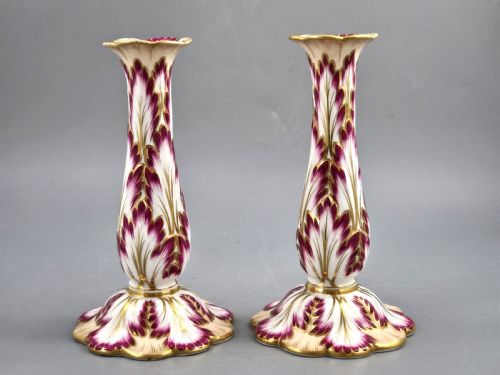
Floral porcelain candlesticks combine functional lighting forms with botanical ornamentation, spanning single chambersticks, paired candlesticks, and multi-armed candelabra. The examples available here encompass English makers from the Georgian and Regency periods alongside continental European factories dating from the eighteenth century through to nineteen hundred.
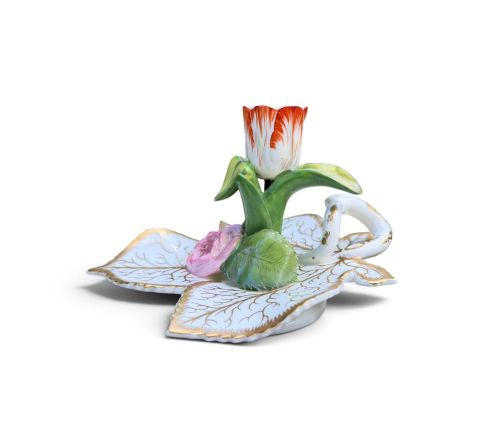
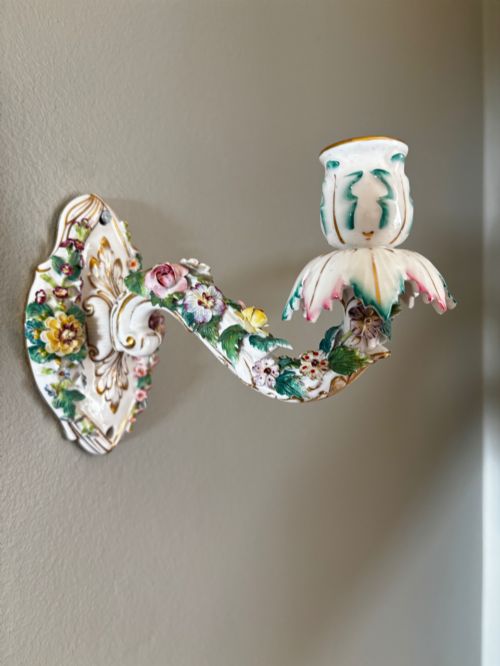
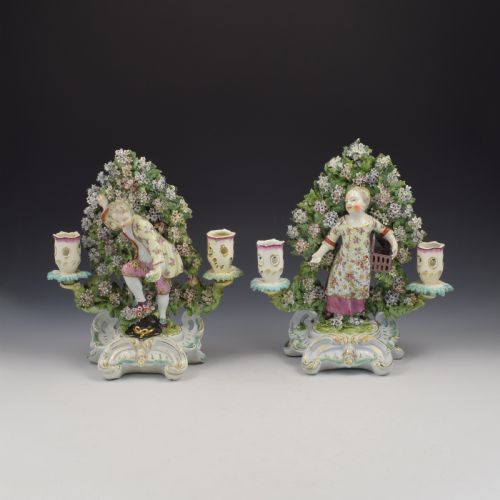
Buyers will encounter various configurations, including figural groups framed by bocage, chambersticks fitted with petal sockets, and wall sconces adorned with enamel flowers. Stylistic influences range from eighteenth-century Rococo revival curves to nineteenth-century aesthetic movement designs and French chateau aesthetics.
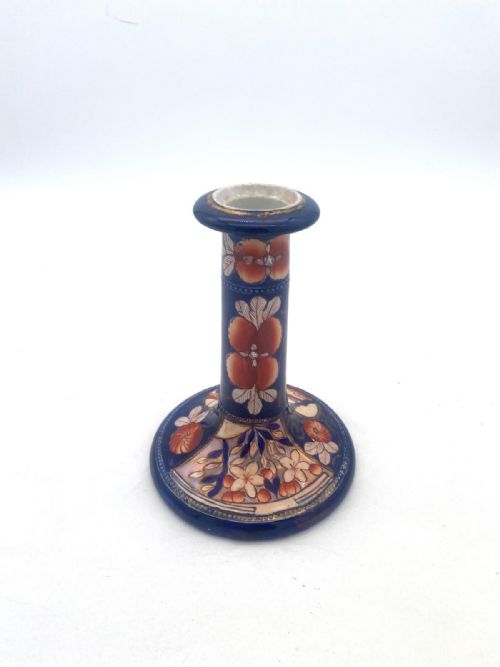
The material evidence demonstrates production across hard-paste porcelain and ironstone, often enhanced with enamel colours, gilding, and brass or ormolu mounts. These pieces function as decorative table centrepieces as well as period lighting fixtures.
Factors determining quality
Quality rests upon the crispness of the porcelain modelling and the delicacy of the applied floral bocage work. Pieces featuring finely sculpted figures and hand-painted enamel details demonstrate superior craftsmanship compared to simpler moulded designs.
The preservation of original gilding and the integrity of fragile porcelain petals and leaves heavily influence the standing of an item. Retaining matching pairs and original brass or ormolu mounts distinguishes the most accomplished pieces in this field.
Children dressed as gardeners and musicians peek out from behind porcelain shrubbery to hold your evening candles.
Masons Ironstone·Ridgway·Meissen·Derby·Sitzendorf·Spode·Minton·Dresden·Helena Wolfsohn
The Floral Porcelain Candlesticks Glossary
- Bocage
- Foliate background ornamentation made of applied porcelain leaves and flowers that frames figures on eighteenth and nineteenth-century candlesticks.
- Chamberstick
- A low candlestick fitted with a handle and a drip pan, designed for carrying from room to room in the evening.
- Candelabra
- A branched candlestick holding multiple lights on a single base, often ornamented with porcelain figures and floral motifs.
- Hard-paste porcelain
- A dense, durable ceramic composed of kaolin and petuntse fired at high temperatures, common in European factories.
- Ironstone
- A heavy, durable English ceramic developed in the early nineteenth century that bridges earthenware and porcelain.
- Ormolu
- Gilt bronze mounts and fittings used to support and embellish nineteenth-century porcelain lighting fixtures.
Floral Porcelain Candlesticks: Frequently Asked Questions
How were floral candlesticks used historically?
People used them to hold wax or tallow candles for lighting rooms before the advent of electricity. Chambersticks included small pans and handles for safe carriage down corridors.
Larger candelabra served as grand table centrepieces during dinner parties, reflecting light from polished surfaces.
How do I live with antique porcelain lighting?
Place them on stable surfaces away from high-traffic areas to protect fragile porcelain petals and leaves from accidental knocks. Keep them out of direct sunlight to preserve the enamel colours.
Clean them gently with a dry, soft brush rather than liquid solutions to avoid damaging the gilding or ceramic body.
How can I tell the period of these pieces?
Examine the paste, glaze characteristics, and any factory marks or pattern numbers painted on the base. Georgian and Regency pieces often show heavier ironstone or distinct English porcelain bodies.
Late nineteenth-century continental pieces frequently feature elaborate Rococo revival moulding and detailed figural work by factories such as Sitzendorf or Meissen.