
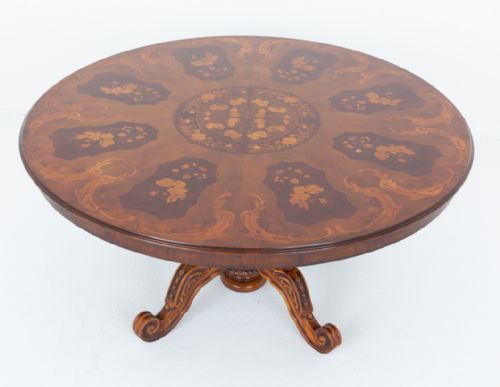


Floral Marquetry Pedestal
A floral marquetry pedestal brings intricate botanical wood inlay to a room, offering a functional surface rooted in nineteenth-century craftsmanship.
Floral Marquetry Pedestal
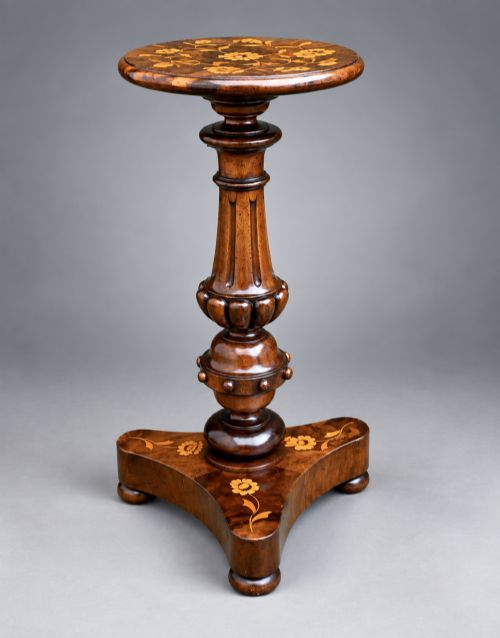
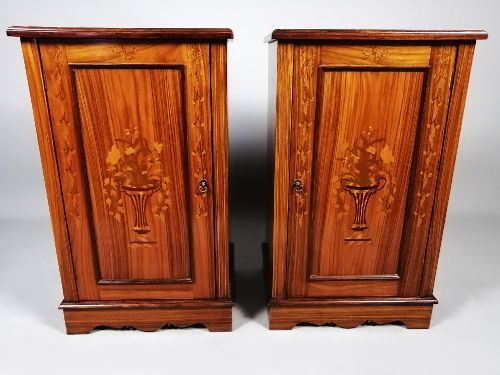
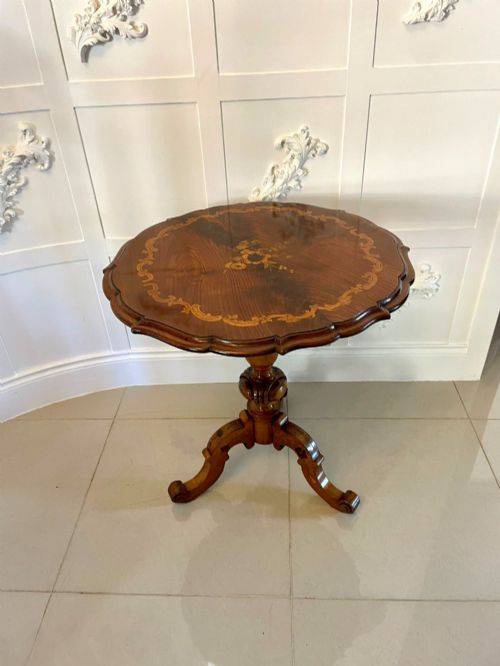
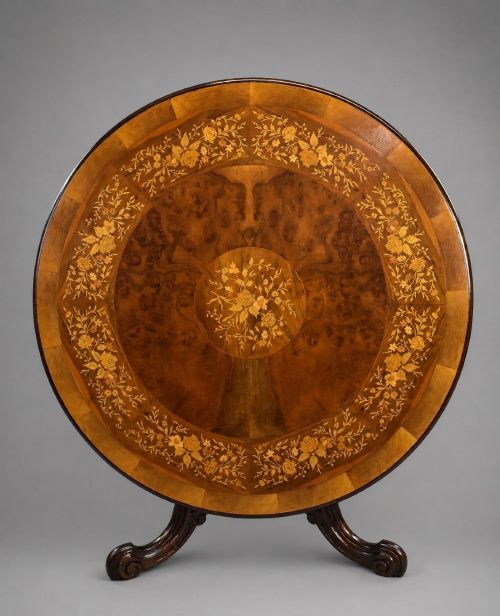
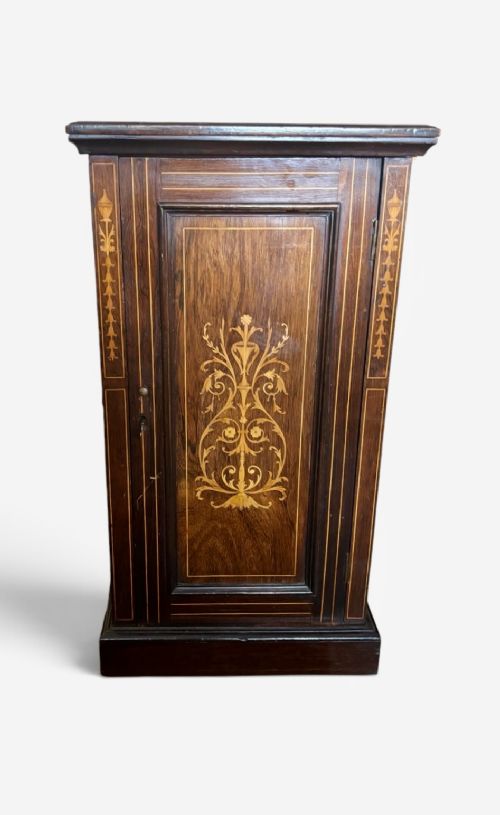
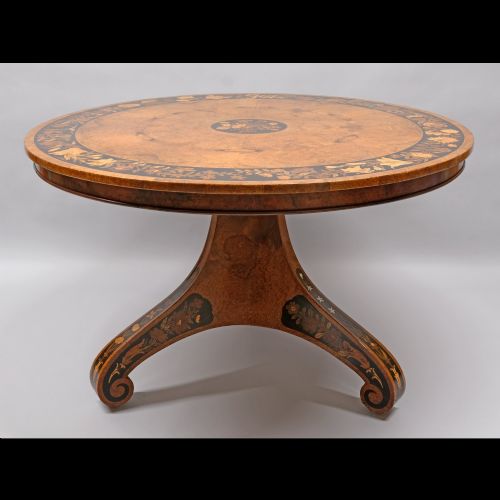
A floral marquetry pedestal is a piece of furniture built to display decorative objects or support daily tasks while exhibiting complex floral wood patterns on its surfaces. The search phrase covers various forms ranging from compact plant stands and occasional tables to larger centre tables, breakfast tables, and bedside cabinets.
The pieces appearing most frequently originate from the nineteenth century, particularly the Victorian period. Walnut, burr walnut, and rosewood form the primary foundations for these items, often paired with contrasting lighter woods used specifically to delineate the petals and stems of floral motifs.
Makers and workshops across England, France, Italy, and the Netherlands produced these items within styles spanning Dutch marquetry, French Rococo Revival, and Sheraton Revival. Buyers encounter single occasional pieces alongside matched pairs of bedside cabinets designed to flank a bed.
Materials and construction methods
Cabinetmakers constructed the carcases of these pieces using solid timbers such as mahogany, walnut, or oak, which were then veneered with highly figured burr walnut, rosewood, kingwood, or olive wood. This technique provided a stable structural base while allowing artisans to showcase dramatic grain patterns across tabletops and cabinet doors.
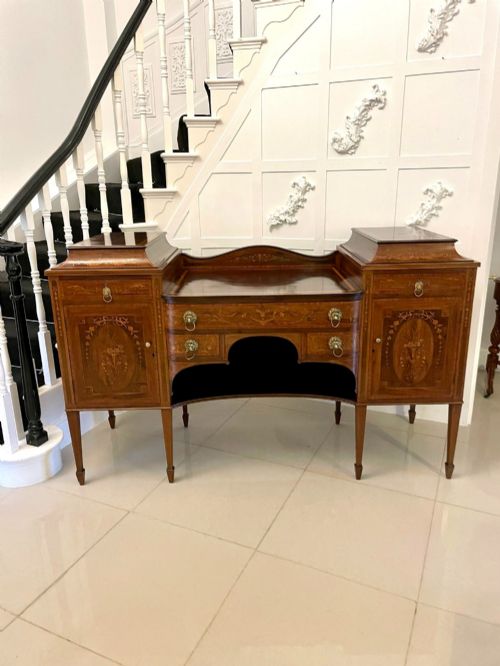
The floral decoration relies on marquetry inlay, where fine veneers of fruitwood, satinwood, and other contrasting timbers are hand-cut and fitted together to form pictorial botanical designs. Craftsmen sometimes incorporated bone or brass stringing alongside the wood veneer to add extra definition and lustre to the floral compositions.
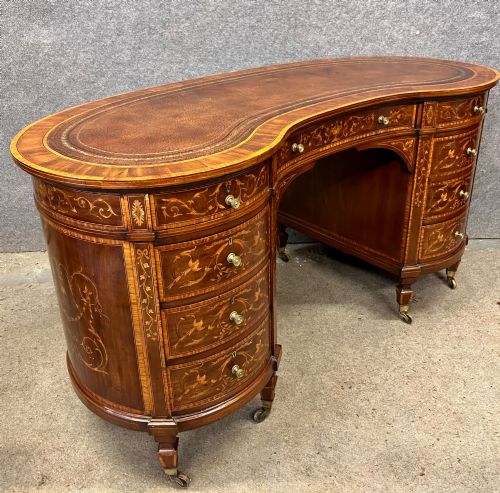
Object forms in this category span compact bedside cabinets and tall plant stands alongside large centre tables and partners desks.
Distinctions in execution and design
Superior examples of floral marquetry pedestals display exceptional precision in the cutting and fitting of individual veneer pieces, ensuring tight joints with minimal filler between the floral elements. Lesser items exhibit simpler, repetitive geometric or floral patterns executed with less attention to botanical shading and naturalistic leaf movement.
The choice of primary timber significantly influences the overall character of the piece, with richly figured burr walnut and exhibition-grade kingwood sitting at the higher end of the scale. Furthermore, the inclusion of robust internal carcase construction, original brass or ormolu mounts, and signed maker stamps distinguishes top-tier workshop output from standard commercial production.
Hewetsons London·Holmes Baldock·Jackson and Graham·John Kendal
The Floral Marquetry Pedestal Glossary
- Marquetry inlay
- A technique of decorating furniture surfaces by fitting together thin slices of wood veneer to form pictorial or floral patterns. This method differs from inlay by covering the entire surface rather than sinking motifs into solid wood.
- Burr walnut
- A prized wood harvested from walnut tree growths, yielding a swirling, highly figured grain pattern. Cabinetmakers favoured it for tabletops and cabinet doors to create dramatic visual texture.
- Centre table
- A piece of furniture finished on all sides to stand freely in the middle of a room rather than pushed against a wall. These tables often feature elaborate floral marquetry visible from any angle.
- Ormolu
- Gilded bronze mounts applied to furniture edges, feet, and corners for decorative enhancement. This material appears frequently on French-influenced nineteenth-century pieces.
Floral Marquetry Pedestal: Frequently Asked Questions
What is a floral marquetry pedestal used for?
These pieces function primarily as decorative display surfaces or occasional tables within a drawing room or study. Historically, taller versions served as plant stands or lamp tables while smaller tables held books and decorative objects.
Today, owners utilise them in similar ways to add warmth and nineteenth-century character to living spaces. Their finished surfaces make them suitable for central room placement or bedside use.
How do I identify a Victorian marquetry table?
Victorian examples typically feature dark timber foundations like walnut or rosewood combined with intricate floral wood veneers. The construction often employs sturdy central pedestals or tripod bases supporting round, octagonal, or kidney-shaped tops.
Examining the underside and interior reveals nineteenth-century secondary timbers and traditional joinery methods. Stylistic cues such as French Rococo Revival curves or Sheraton Revival proportions further confirm the period.
Are these tables sturdy enough for daily use?
Most pieces are built from dense hardwoods like walnut and mahogany, providing a solid structural foundation for everyday tasks. Centre tables and desks were originally designed for active domestic service rather than mere display.
Care should be taken to protect the veneered surfaces from excessive moisture and direct heat. Regular dusting and occasional waxing keep the timber and marquetry in stable condition.
Where were these pieces made?
The listings show production originating from workshops across England, France, Italy, and the Netherlands. English cabinetmakers produced many walnut and rosewood pieces in London firms, while continental makers favored French styles and Dutch floral compositions.
Regional preferences appear in the choice of secondary woods and specific marquetry motifs. Italian workshops occasionally incorporated bone inlay alongside traditional wood veneers.