


Floral Lattice Area Rug
A floral lattice area rug brings together centuries of geometric floral design and dense hand-knotted weave across Persian and Caucasian rooms.
Floral Lattice Area Rug
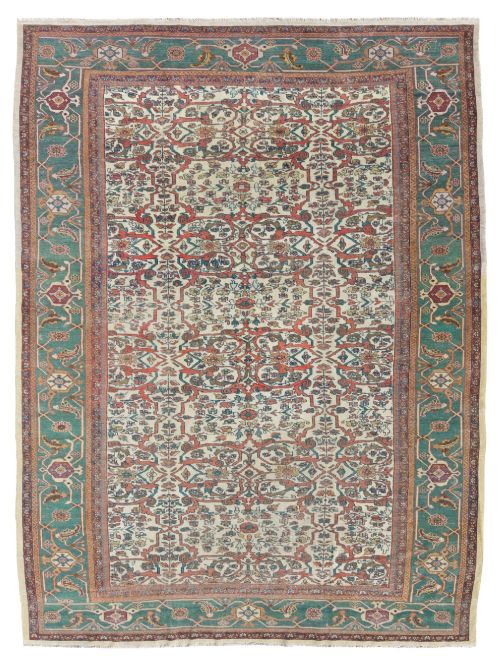
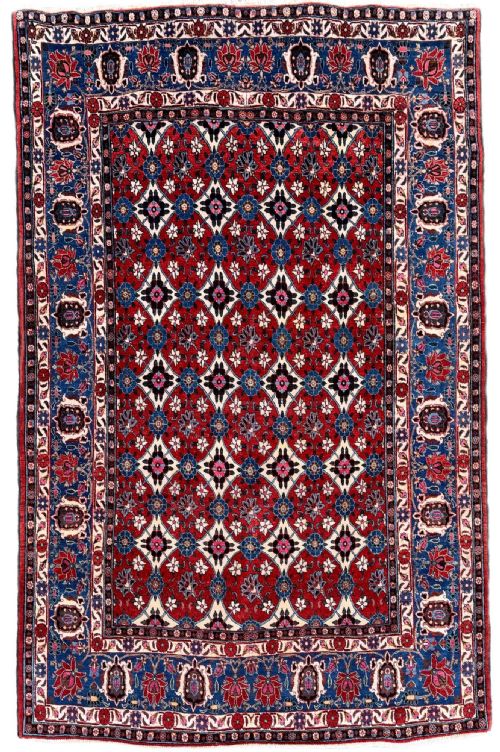
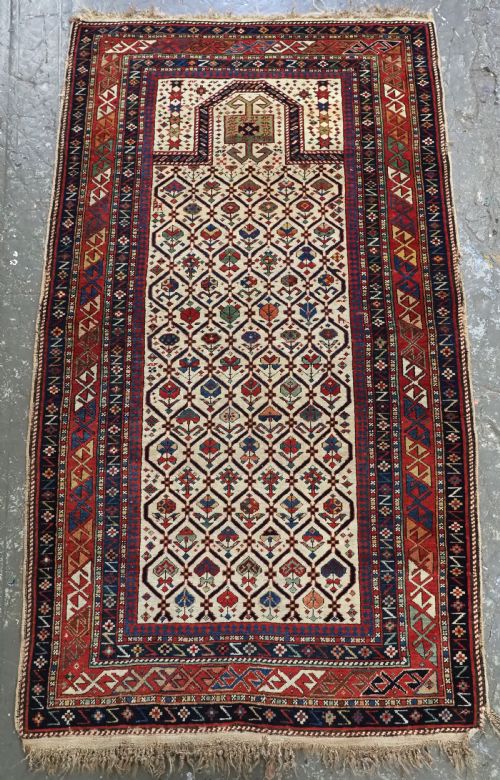
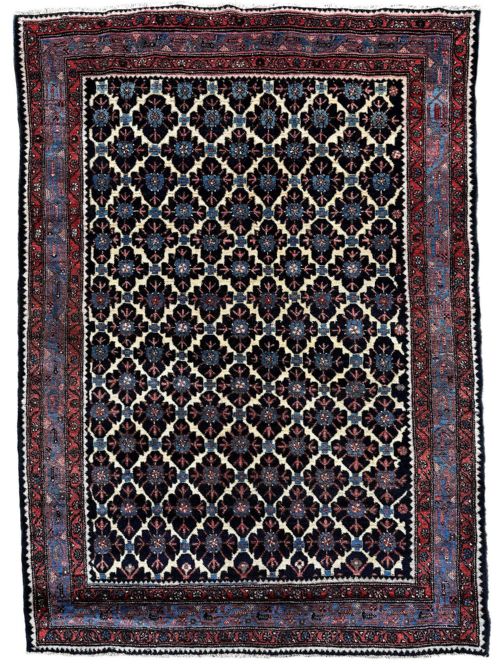
A floral lattice area rug gathers patterned textiles originating from Persian and Caucasian traditions, spanning production dates from the mid-nineteenth century through the early twentieth century. These pieces take the form of rugs and carpets, often categorized specifically as area rugs or prayer rugs featuring recurring geometric floral motifs.
The versions most commonly met in this selection include nineteenth-century Caucasian Dagestan, Shirvan, and Gendje prayer rugs alongside Persian village and town pieces from Veramin, Mahal, Hamadan, and Sultanabad. Their composition centres on repeating lattice arrangements framing floral elements across wool piles and cotton foundations.
How they were made
Makers constructed these rugs utilising wool for the visible pile and cotton for the structural foundation threads of warp and weft. This combination provided both the soft surface necessary for daily domestic use and the tensile strength required to maintain the rectilinear grid of the floral lattice.
Weavers knotted the wool yarn by hand onto the vertical cotton framework, securing each row with horizontal weft threads to lock the pattern into place. This traditional village and workshop technique resulted in durable carpets capable of retaining crisp botanical lines over generations of wear.
The listings show production dates spanning from the eighteen-fifties through the nineteen-thirties, utilising wool and cotton exclusively.
What varies in quality
The standard of execution depends heavily on the precision of the knotting and the complexity of the botanical drawing within the lattice grid. Superior examples display tightly packed knots that allow intricate floral details to remain sharp and legible from a distance.
Materials and dye preparation also dictate the upper tiers of the range, where saturated wool takes natural colour variations evenly across the field. Poorer examples show looser foundations or rigid layouts that lack the subtle vitality found in finer nineteenth-century village weaving.
The Floral Lattice Area Rug Glossary
- Lattice
- A repeating network of intersecting diagonal bands forming a geometric grid across the field of the rug. This framework typically encloses individual floral motifs or stylized blossoms.
- Prayer rug
- A small format textile traditionally featuring a single central arch or mihrab design at one end. These pieces were often woven for devotional use in domestic interiors.
- Pile
- The upright woolen yarn that forms the soft surface of the carpet above the woven foundation. Knot density directly influences how this surface wears over time.
- Warp
- The vertical foundation threads stretched tightly on the loom before knotting begins. Cotton serves as the standard material for this structural grid in the listed pieces.
- Weft
- The horizontal threads passed between rows of knots to bind the structure together. Proper tension in these threads ensures the rug retains its intended rectangular shape.
Floral Lattice Area Rug: Frequently Asked Questions
What is a floral lattice area rug?
A floral lattice area rug is a hand-knotted textile featuring a repeating geometric grid filled with botanical motifs. These pieces originate primarily from nineteenth and early twentieth-century Persian and Caucasian weaving centres.
They function as durable floor coverings that bring structured pattern and traditional craftsmanship into domestic spaces.
How do I care for an antique rug?
Protect antique wool and cotton textiles by placing them in low-traffic areas away from direct sunlight. Regular gentle vacuuming without a rotating beater bar prevents dust accumulation in the pile.
Professional cleaning tailored for antique carpets ensures the natural dyes and woolen fibres remain stable over time.
Where were these rugs made?
These carpets and rugs were produced in traditional weaving regions across Persia and the Caucasus. Specific provenances include village and town workshops in Veramin, Mahal, Shirvan, Dagestan, and Hamadan.
Each region developed distinct colour palettes and structural habits that identify its geographic origin.
How can I tell different regional styles apart?
Regional styles reveal themselves through distinct knotting structures, colour choices, and lattice geometries. Caucasian pieces like Shirvan and Dagestan rugs often favour crisp ivory grounds and sharp geometric flowers.
Persian town and village pieces such as Sultanabad and Veramin typically display larger scale floral formats executed with softer vegetable dye tones.