
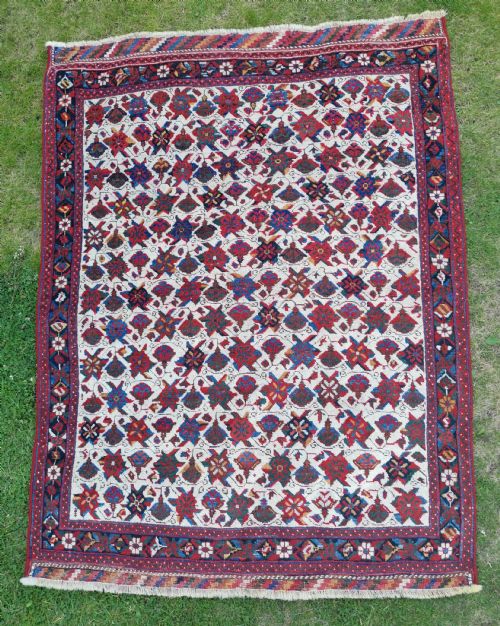
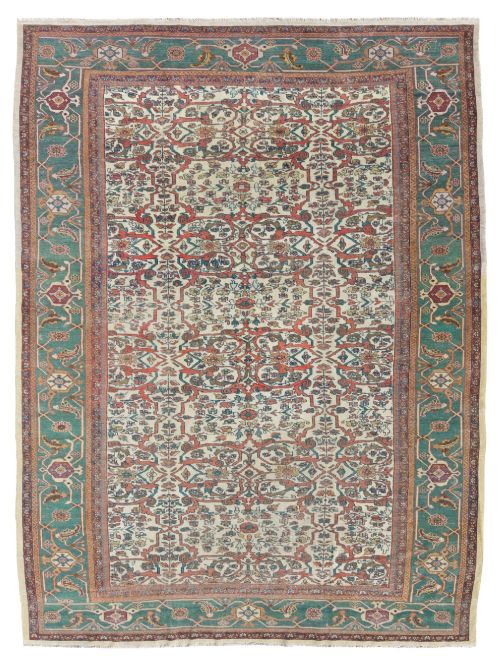
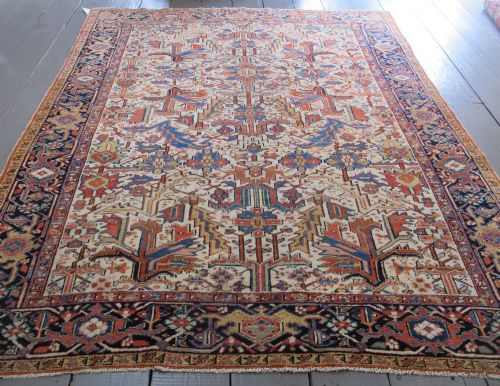


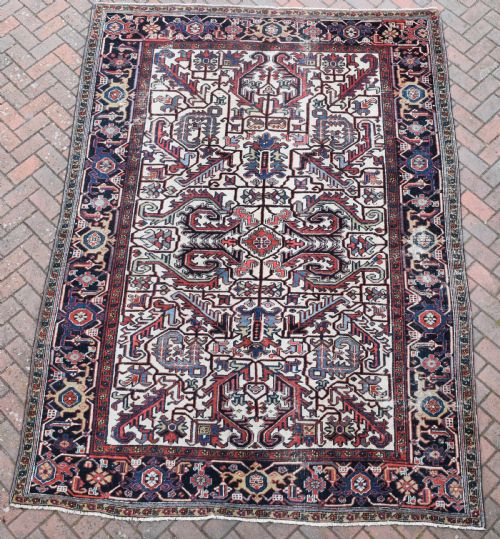

Cream Ground Persian Rug
A cream ground persian rug brings light and warmth to a room through traditional wool and cotton craftsmanship.
Cream Ground Persian Rug
A cream ground persian rug forms part of a diverse selection of floor coverings originating from Persia and dating across several decades from the late nineteenth century to the early twentieth century. These pieces display distinct regional styles such as Heriz, Sultanabad, Mahal, Malayer, and Afshar, each offering unique patterns on a pale background.
Materials and construction
The construction of these floor coverings relies primarily on wool and cotton foundations, materials selected for durability and tactile quality. Artisans knotted the wool pile onto cotton warps and wefts, ensuring the structure supports intricate tribal and traditional designs.
Regional workshops and nomadic weavers employed hand-knotting techniques alongside natural dyes to achieve the varied colour palettes seen across Malayer, Heriz, and Afshar pieces. This traditional method of production allows the intricate vase, boteh, and animal motifs to remain clear and defined.
Certain nineteenth-century rugs hide whimsical butterflies among their traditional floral fields.
Distinctions in quality
Quality in these carpets rests upon the fineness of the knotting and the precision of the design execution across the wool pile. Finer examples exhibit crisp detailing in complex motifs such as dragon and phoenix designs or elaborate vase patterns.
The condition of the cotton and wool materials also dictates the standard of a piece, alongside the harmony of the soft colour palette against the ivory or cream ground. Superior pieces maintain structural integrity and visual balance throughout the field and borders.
The Cream Ground Persian Rug Glossary
- Pile
- The upright yarn loops that form the soft surface of a rug. This layer experiences the direct wear of foot traffic.
- Warp
- The vertical threads stretched tightly on the loom before knotting begins. These cotton foundation threads provide the primary structural support.
- Weft
- The horizontal threads passed across the warps between rows of knots. They bind the structure together firmly.
- Boteh
- A traditional teardrop or almond-shaped motif with a curved upper end. This ancient symbol appears frequently in Kurdish and regional designs.
Cream Ground Persian Rug: Frequently Asked Questions
How do I clean a wool rug?
Professional cleaning is recommended for antique wool and cotton floor coverings to protect the natural fibres and dyes.
Regular gentle vacuuming without a beater bar helps remove surface dust and prevents dirt accumulation within the pile.
Can I place these in hallways?
Longer formats like Kurdish runners suit corridors and hallways well, provided they receive even foot traffic.
Using an appropriate underlay prevents slipping and cushions the cotton foundation against hard floors.
What rooms suit ivory grounds?
Pale foundations brighten darker spaces and create a sense of openness in studies, sitting rooms, or dining areas.
The neutral background allows furniture in various timber tones to sit comfortably atop the textile.
How are different regional styles identified?
Stylistic clues include specific border arrangements, drawing styles, and motif choices unique to areas like Heriz or Malayer.
The density of the wool pile and the structure of the cotton foundation also provide hints to the origin.