





19th Century Ziegler
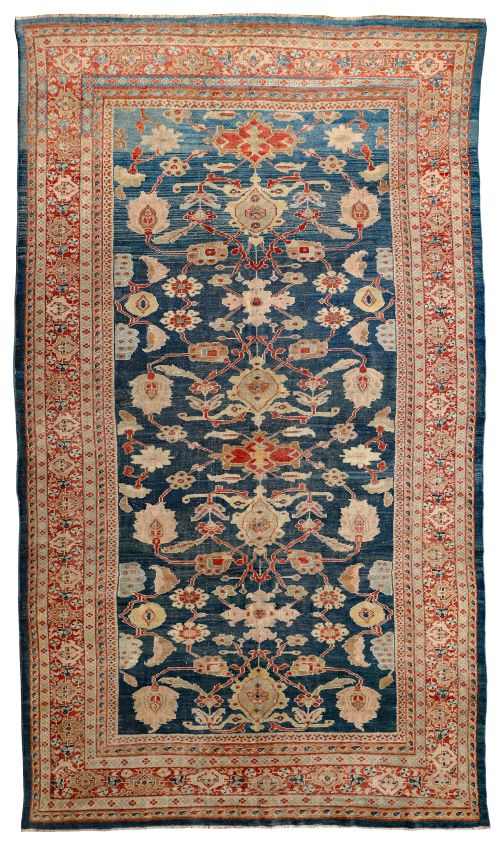
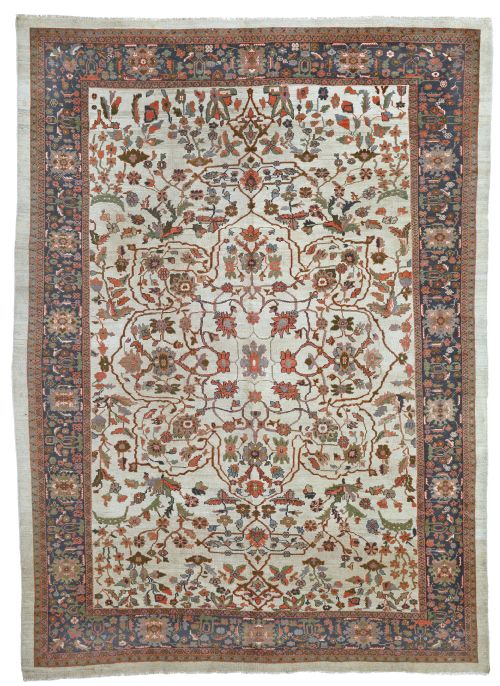
These 19th century ziegler carpets bring exceptional Persian workshop design and muted palettes into large rooms, offering collectors substantial room-scale character.
19th Century Ziegler
When you search for 19th century ziegler, you are looking at large-scale Persian carpets woven primarily for Western tastes during the late Victorian era. These floor coverings bridge traditional village motifs and the grand decorative demands of European and American drawing rooms.
The pieces you meet on this page include room-size carpets and rugs originating from the Sultanabad region and associated workshops. They span the closing decades of the nineteenth century, from the eighteen-eighties through to nineteen hundred.
Makers and commissioners such as Ziegler and Co adapted traditional Persian designs by employing softer colour palettes and more open compositions. This aesthetic choice makes them particularly adaptable to contemporary interior schemes that require scale without heavy visual congestion.
How they were made
These carpets are constructed with wool pile foundation and cotton warps and wefts, a combination that provided both structural stability and a supple drape across the floor. The hand-knotting technique allowed weavers to execute large floral and trellis patterns with remarkable clarity.
Regional workshops in West Persia utilised durable natural dyes on wool to achieve the signature faded rose, coral, and muted neutral grounds characteristic of the type. The density of the weave varied to accommodate both room-scale carpets and smaller area rugs.
Nineteenth-century merchants discovered that fading the rugs under the Persian sun made Victorian drawing rooms feel instantly less demanding.
What varies in quality
The distinction between average and exceptional examples rests upon the subtlety of the dye work and the precision of the large-scale floral drawing. Weavers in premier workshops managed complex, open fields with consistent pile density and harmonious colour transitions.
Scale and proportion govern the upper tier of these carpets, where grand dimensions do not compromise the balance of the central medallion or overall field. Original edge bindings and balanced proportions elevate a piece from a decorative floor covering to a textile of serious collector interest.
Ziegler and Co
The 19th Century Ziegler Glossary
- Sultanabad
- A West Persian rug-producing region known for large-scale floral designs and expansive field patterns. Carpets from this area supplied major international export firms during the nineteenth century.
- Ziegler and Co
- A prominent Manchester-based firm with operations in Persia that commissioned and exported bespoke carpets for the Western market. Their pieces are distinguished by subdued palettes and generous proportions.
- Mahal
- A designation for carpets woven in the broader Sultanabad district, often featuring all-over floral repeats rather than strict central medallions. These designs prioritised decorative versatility for domestic interiors.
- Fereghan
- A style associated with West Persian weaving known for fine knotting and intricate, balanced geometric or floral motifs. Pieces attributed to this tradition demonstrate exceptional structural refinement.
- Medallion
- A central ornamental motif set within the field of a carpet, anchoring the surrounding botanical or geometric composition. In late nineteenth-century export rugs, this element is frequently scaled down to maintain an open field.
19th Century Ziegler: Frequently Asked Questions
What is a 19th century ziegler carpet?
These are large Persian carpets commissioned and exported by European firms during the late nineteenth century to suit Western aesthetic preferences. They typically feature expansive fields and muted palettes.
Weavers in regions like Sultanabad adapted traditional Persian motifs, creating scaled-down medallions and open floral designs that function well in spacious interiors.
Where were these carpets made?
The production centred on West Persia, specifically in the Sultanabad region and surrounding districts where workshop weaving flourished. British and European firms established direct supply chains here.
Local artisans utilised regional wool and cotton materials, combining traditional Persian knotting techniques with specific design instructions tailored for export to European homes.
How do I live with a large carpet?
Place your carpet in a low-traffic or moderate-use room to preserve the wool pile and natural dyes over time. Pair them with neutral upholstery to let the muted coral and rose grounds anchor the space.
Ensure you use a quality underlay to prevent slipping and to provide extra cushioning beneath the cotton and wool foundation, protecting the weave from premature wear.
How do I tell a Ziegler from a standard Sultanabad?
Ziegler pieces generally display a more subdued, European-influenced palette with open, spacious compositions and softer vegetable dyes. Standard Sultanabad carpets can feature denser fields and slightly more traditional local colour saturation.
Examine the scale of the floral motifs and the background tones to determine if the piece was woven specifically for Western export or for domestic consumption.