



Floral Inlay Chest Drawers
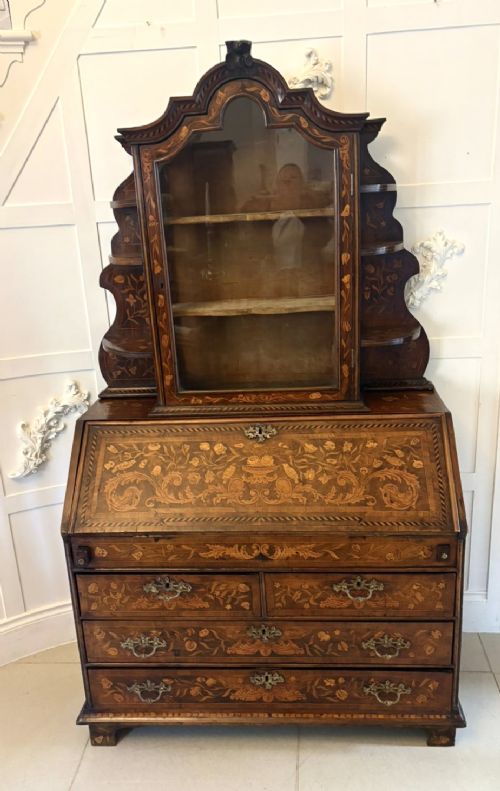
These floral inlay chest drawers combine practical storage with intricate marquetry, offering a decorative surface that appeals to period furniture collectors.
Floral Inlay Chest Drawers
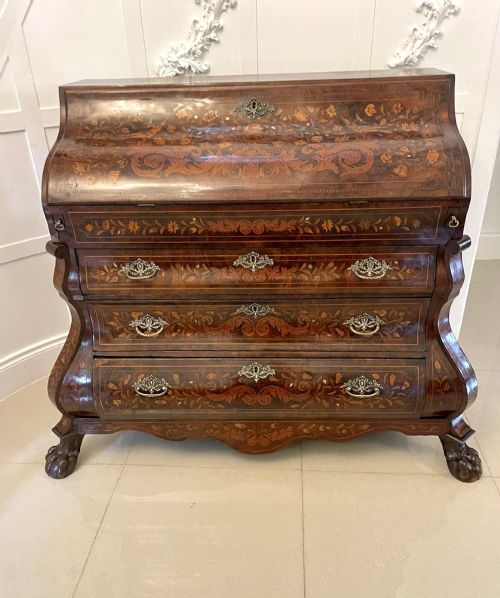
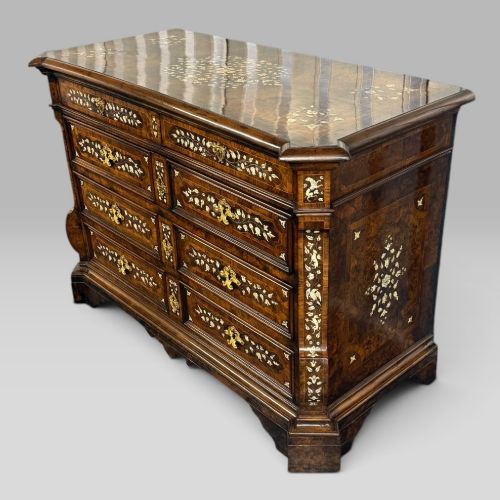
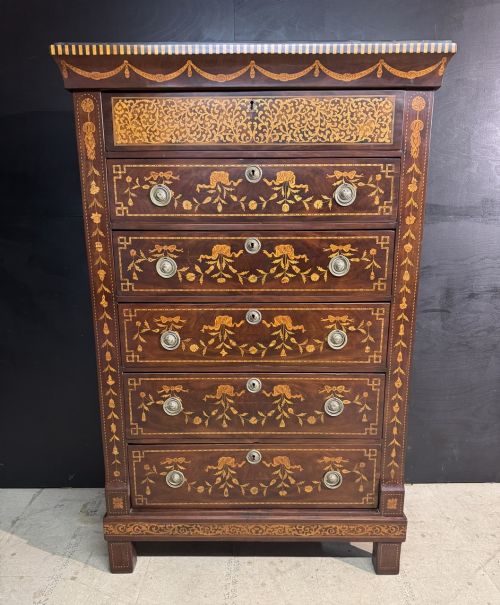
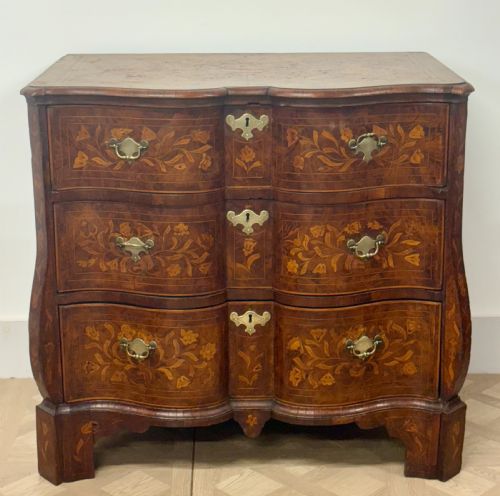
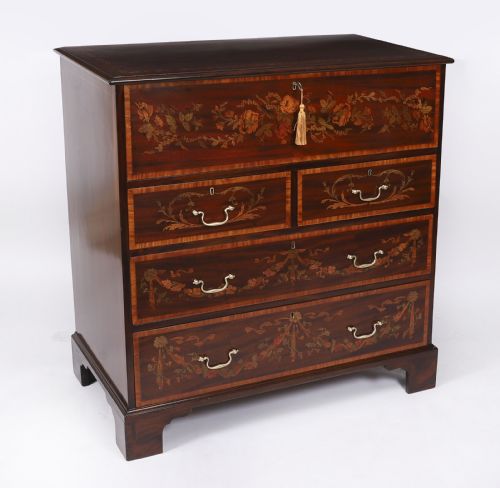
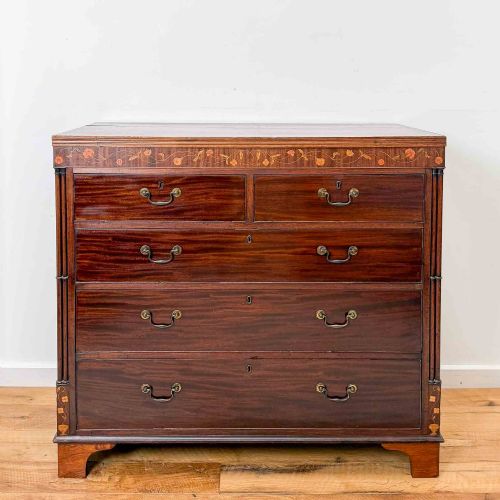
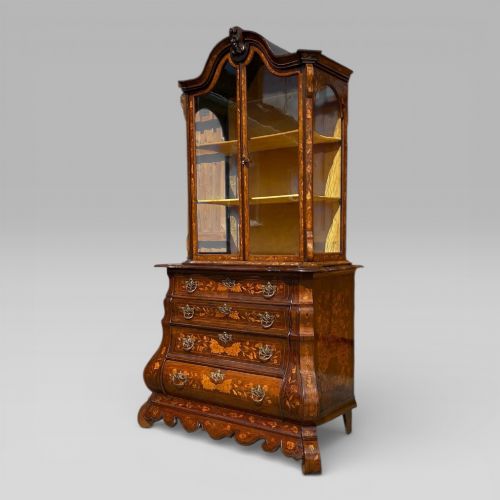
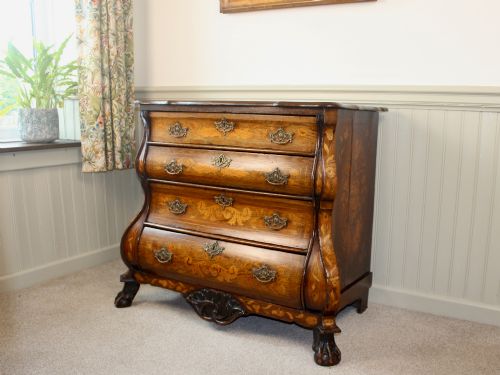
Floral inlay chest drawers span multiple centuries, ranging from seventeenth-century William and Mary examples to eighteenth-century Dutch bombé pieces and later Edwardian interpretations. The selection frequently includes tall chests, bureau desks, and bedside cabinets alongside standard drawer configurations.
Materials and construction
Carcases employ foundational timbers such as walnut, mahogany, oak, and fruitwood, providing a stable structure for decorative surface treatments. Veneers of burr walnut, satinwood, and kingwood supply the contrasting backgrounds necessary for detailed pictorial work.
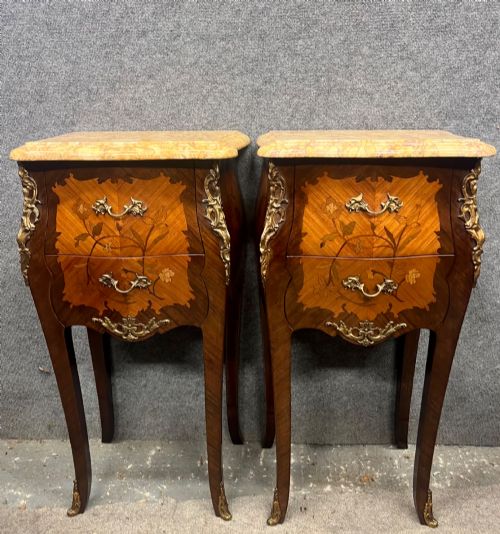
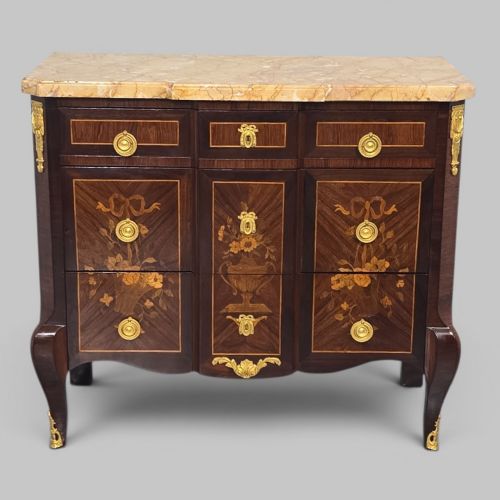
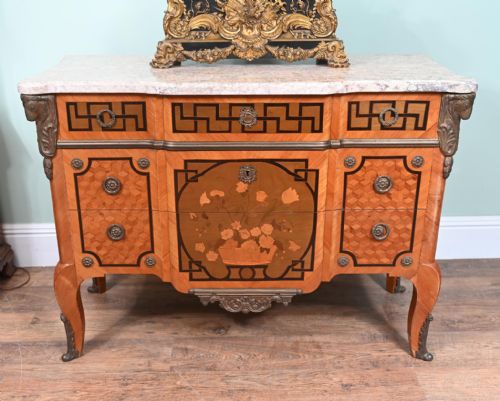
Marquetry techniques incorporate fruitwood inlay, brass, and ormolu details to build floral motifs. Marble tops occasionally cap later French commodes, adding weight and a contrasting texture to the inlaid wooden cabinetry below.
Listed items span diverse regional traditions, encompassing seventeenth-century English work alongside eighteenth-century Dutch bombé forms.
Evaluating the craftsmanship
Quality rests in the precision of the marquetry cutter and the selection of figured veneers. Finer pieces demonstrate tight botanical details without excessive filler, maintaining crisp edges along each stem and petal.
Structural integrity and proportion distinguish superior examples from simpler ones. Well-executed bombé curves and intact brass hardware indicate higher workshop standards during the original period of manufacture.
Edwards and Roberts
The Floral Inlay Chest Drawers Glossary
- Marquetry
- Decorative veneer work assembled in patterns or pictures using pieces of wood, shell, or other materials. This technique defines the floral ornamentation seen across the drawer fronts and tops.
- Bombé
- An outward-swelling or convex shape characteristic of continental furniture. It requires considerable skill from the cabinetmaker to maintain structural strength while curving the timber.
- Commode
- A low chest of drawers, often French in origin, standing on relatively tall legs. They frequently incorporate marble tops and elaborate gilt-bronze mounts.
- Bureau
- A desk fitted with a sloping flap that opens to reveal a writing surface and small drawers. Many examples combine this writing function with floral marquetry drawer units underneath.
- Wellington chest
- A tall, narrow chest of drawers secured by a hinged locking side stile. These appear in nineteenth-century walnut configurations within the selection.
Floral Inlay Chest Drawers: Frequently Asked Questions
How do I date a floral inlay chest?
Dating relies on examining the secondary timbers inside the drawers, the construction methods used for the carcase, and the specific style of the marquetry. Earlier seventeenth-century pieces display different walnut grain choices and joinery compared to Edwardian revivals.
Changes in handle hardware and the complexity of the floral designs also offer clear chronological clues. Comparing the piece against known regional characteristics, such as Dutch bombé forms, helps narrow the decade of production.
Where were these chests placed originally?
These decorative cabinets served primary rooms such as parlours, drawing rooms, and principal bedrooms where hosts entertained guests. Their intricate floral surfaces were meant to catch the eye and demonstrate the owner's taste.
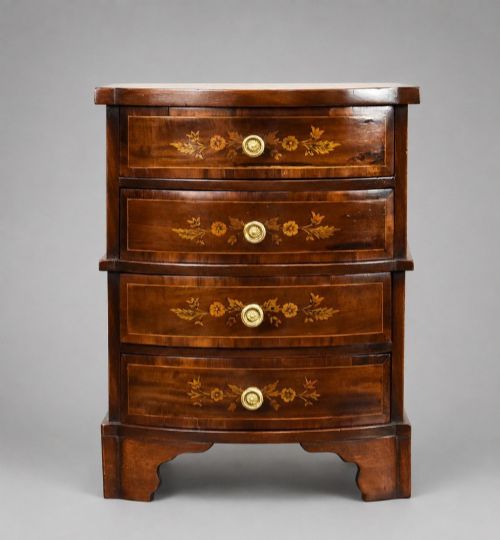
Smaller variants like bedside chests and miniature models functioned in private dressing rooms or parlours for specialised storage. Their dual role as storage and display art kept them in prominent household locations.
How should I care for the marquetry surface?
Protect inlaid furniture by keeping it away from direct sunlight and steady heat sources that can dry out old veneers. Maintaining consistent room humidity prevents the delicate fruitwood inlays from shrinking or lifting.
Apply a microcrystalline wax sparingly when the wood appears dry, avoiding heavy silicone polishes. Gentle dusting with a soft, dry cloth is sufficient for routine maintenance.
Are Dutch chests different from English ones?
Dutch examples frequently utilise dramatic bombé silhouettes and dense, multi-coloured floral marquetry covering almost every visible surface. Walnut and oak form the primary foundation for these bolder continental designs.
English variants tend towards more restrained proportions, often applying satinwood or mahogany with controlled banding and central floral medallions. The regional preference dictates the overall visual weight and architectural profile.