


Dutch Inlaid Mahogany Chest
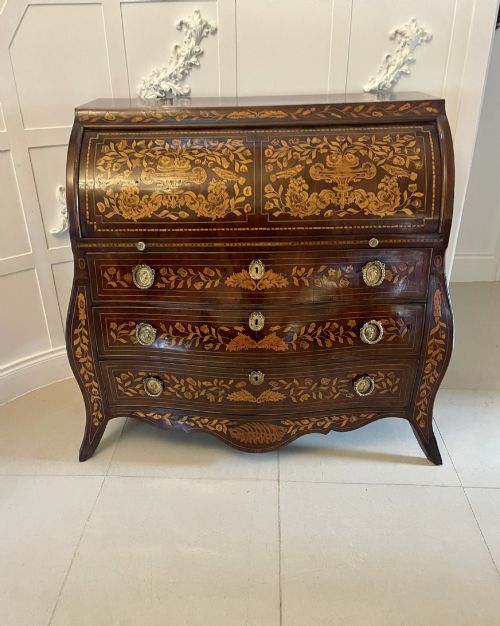
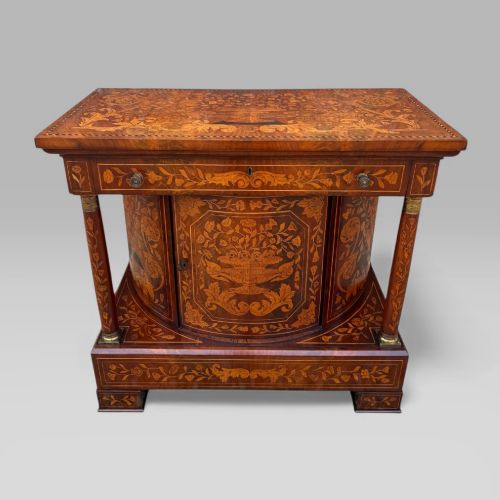
A dutch inlaid mahogany chest brings together rich timber and elaborate floral marquetry from the eighteenth and nineteenth centuries.
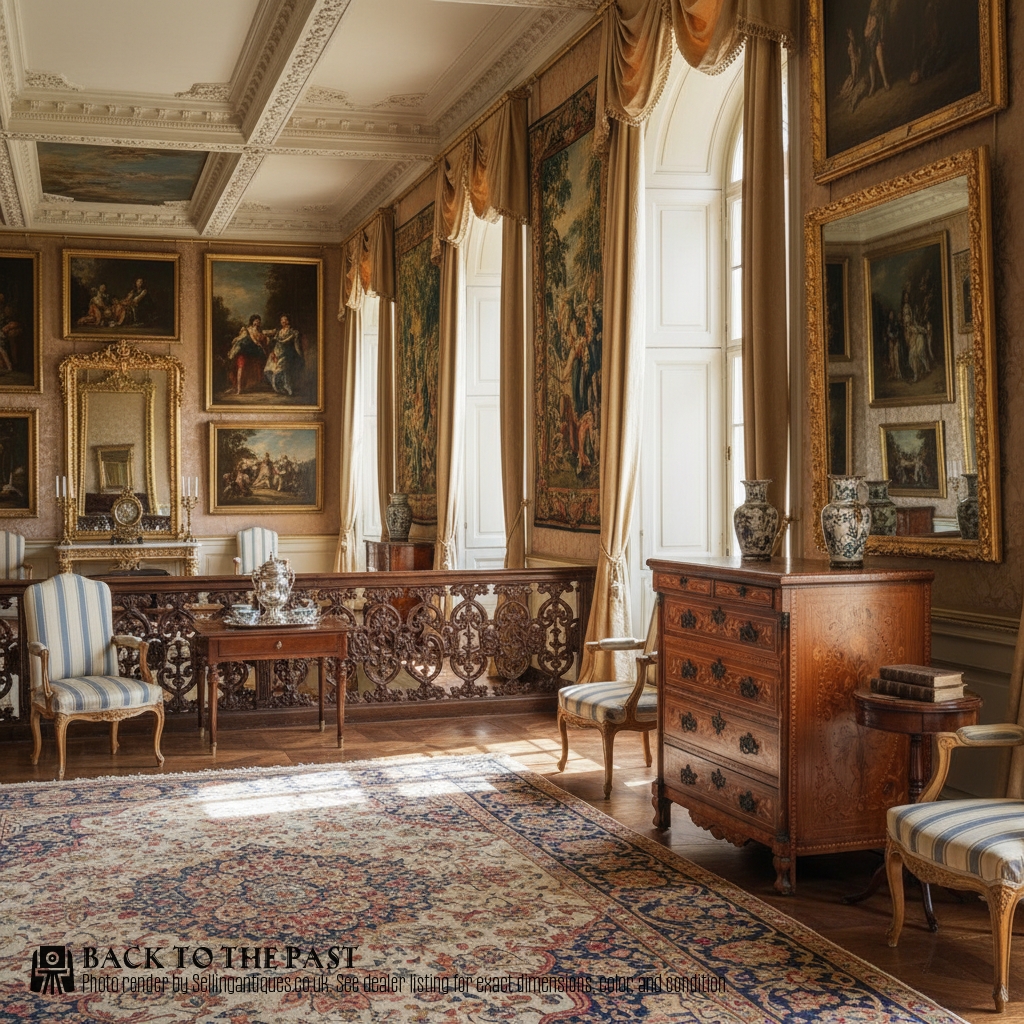
Dutch Inlaid Mahogany Chest
A dutch inlaid mahogany chest combines substantial case construction with intricate decorative veneers spanning the eighteenth and nineteenth centuries. These pieces encompass tall chests of drawers, bombe forms and various desk configurations.
The versions most commonly encountered on this page display floral marquetry worked in fruitwood, boxwood and satinwood upon a dark mahogany background. Baroque, rococo and neoclassical influences shape the distinct silhouettes of these cabinets.
Makers utilised native and exotic timbers to build bureaus, secretaire cabinets and console tables alongside standard drawer units. The regional aesthetic relies heavily on contrasting light woods inlaid into dense brown mahogany.
How they were made
Cabinetmakers constructed the main carcass using solid mahogany or walnut, applying veneers of mahogany over secondary woods for the primary surfaces. Drawers and side panels received careful framing to support the weight of the timber.
Marquetry decoration required cutting thin sheets of fruitwood, boxwood and satinwood into floral and scroll motifs before pressing them into recessed channels on the mahogany ground. Brass hardware such as handles and escutcheons provided functional closure and contrast.
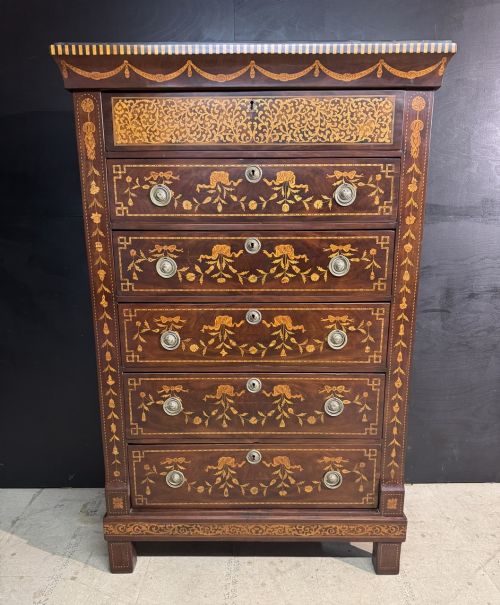
A neat-sized early nineteenth-century chest proves that cabinetmakers could squeeze a riot of botanical marquetry onto remarkably compact drawer fronts.
What varies in quality
The refinement of the marquetry design dictates the visual success of the piece, separating dense, lively floral compositions from rigid or sparse patterns. Mastery in cutting and shading the fruitwood veneer creates depth within the floral sprays.
Form and proportion play a decisive role, particularly in bombe and serpentine shapes where curving mahogany surfaces demand advanced woodworking skill. The crispness of the carved mouldings and the integration of the inlay across drawer lines demonstrate the maker's discipline.
The Dutch Inlaid Mahogany Chest Glossary
- Marquetry
- Decorative veneer work forming pictorial patterns using various coloured woods. Craftsmen assemble these thin pieces like a puzzle to create floral or architectural scenes on the furniture surface.
- Bombé
- A swelling, outward-curved shape characteristic of certain eighteenth-century case furniture. This bulging profile requires advanced skill in shaping solid timber and fitting drawers.
- Fruitwood
- Timber sourced from fruit-bearing trees such as pear, apple or cherry, valued for its fine grain. Cabinetmakers use these light woods for contrasting inlay work.
- Escutcheon
- A protective plate surrounding a keyhole, frequently cast in brass on these cabinets. It serves both a functional purpose and a decorative role on drawer fronts and doors.
Dutch Inlaid Mahogany Chest: Frequently Asked Questions
What periods do these pieces date from?
The pieces span the eighteenth and nineteenth centuries, incorporating styles from baroque and rococo to neoclassical and empire periods.
Craftsmen working across these eras maintained traditions of heavy floral inlay on mahogany and fruitwood.
How were these chests used historically?
These cabinets served primarily for storing clothing and household valuables in wealthy domestic interiors. Bureau and secretaire variants also provided a dedicated writing surface with internal compartments.
The combination of drawers and fold-down writing desks accommodated both storage and correspondence in one piece of furniture.
How do I identify floral marquetry?
Floral marquetry consists of distinct pieces of lighter wood, such as boxwood and fruitwood, inlaid directly into the darker mahogany background. Artisans often shaded the edges of these wood pieces by scorching them in hot sand to create a three-dimensional effect.
Close inspection reveals the tight joints between the various contrasting timber elements forming petals and stems.
What distinguishes bombe forms from straight chests?
Bombé chests feature sides and drawer fronts that curve outward in a swelling contour, requiring complex carpentry. Straight chests maintain vertical planes while still displaying elaborate marquetry across the facade.
The curving profile demands specialised joinery to ensure the drawers operate smoothly within the bulging carcass.