


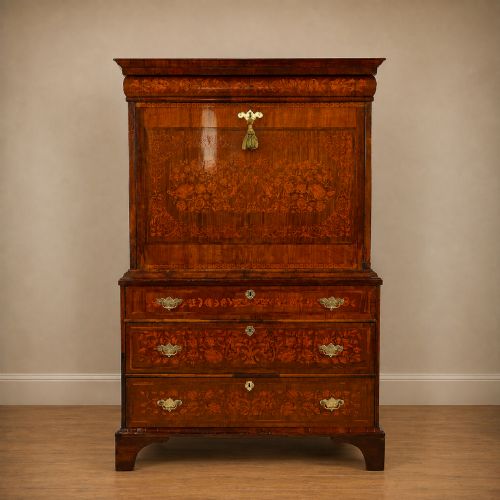
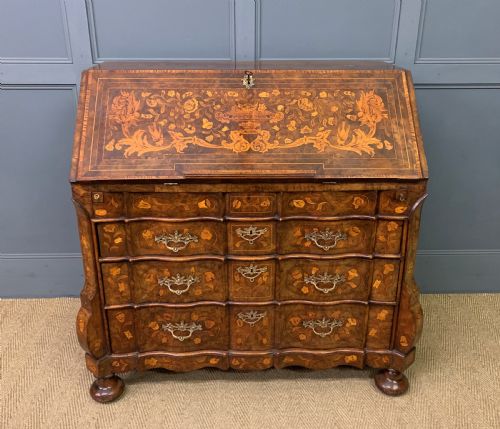
Floral Inlaid Desk
A floral inlaid desk brings together botanical marquetry and practical writing surfaces across periods from the eighteenth century onwards.

Floral Inlaid Desk
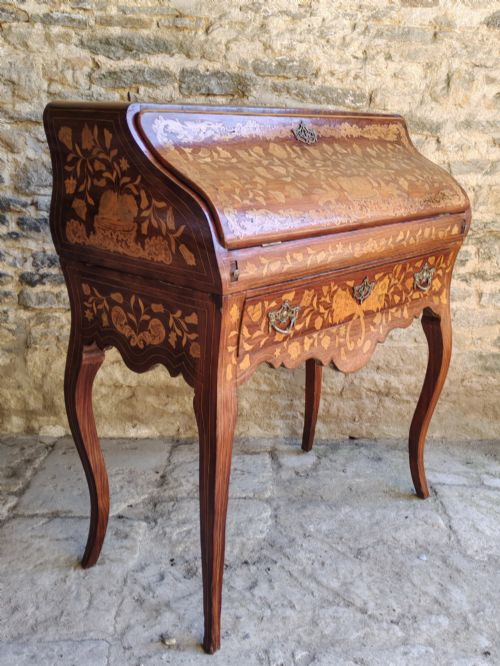
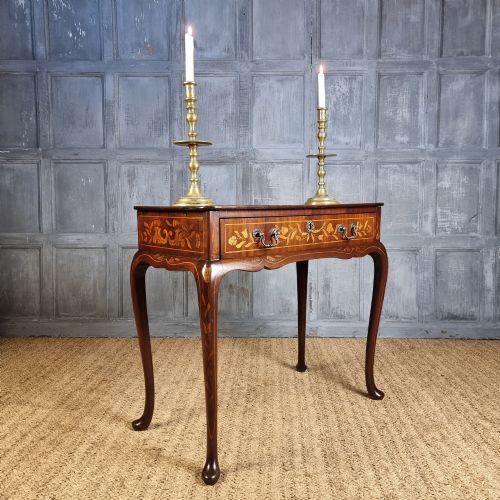
A floral inlaid desk encompasses various writing furniture forms, including bureau bookcases, cylinder bureaux, and writing tables. Pieces span the eighteenth century, nineteenth century, Victorian, and Edwardian eras.
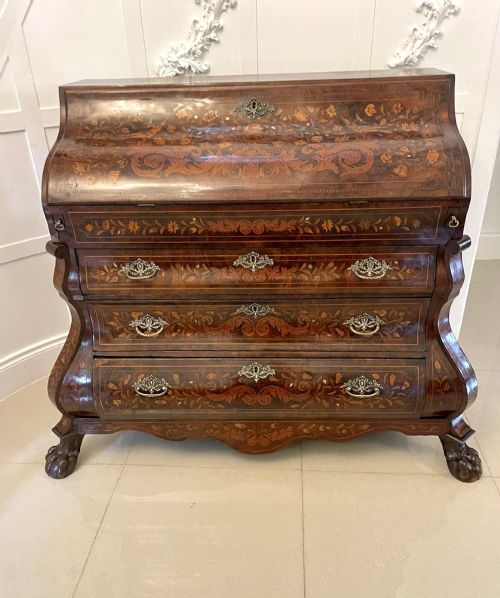
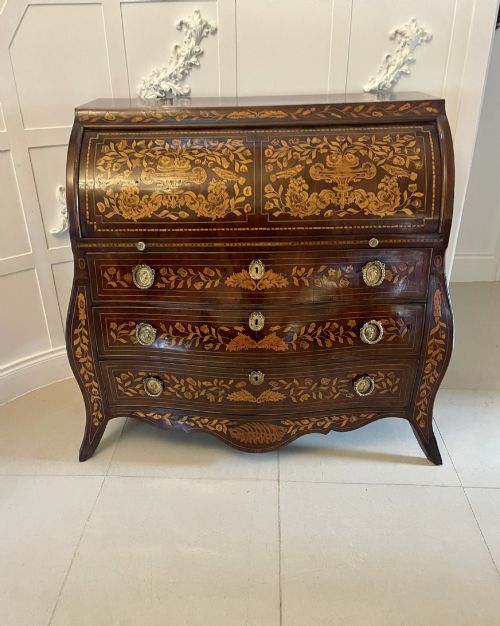
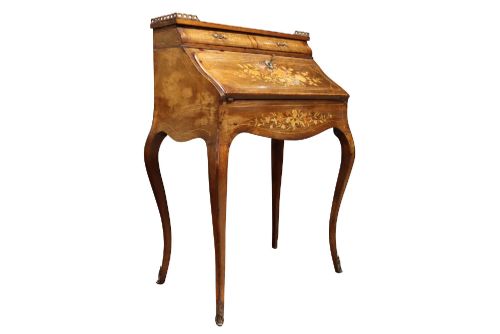
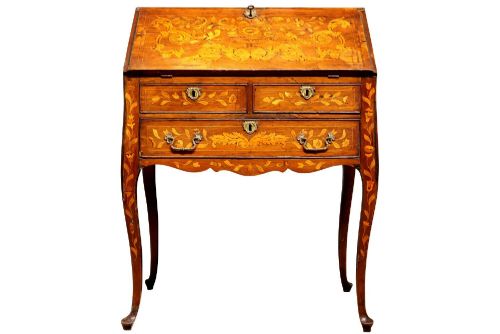
Dutch rococo and French Louis XV revival styles appear frequently, often employing walnut or mahogany carcasses. Bureau desks with bombe shapes or sloping fronts provide the primary examples of floral marquetry in this selection.
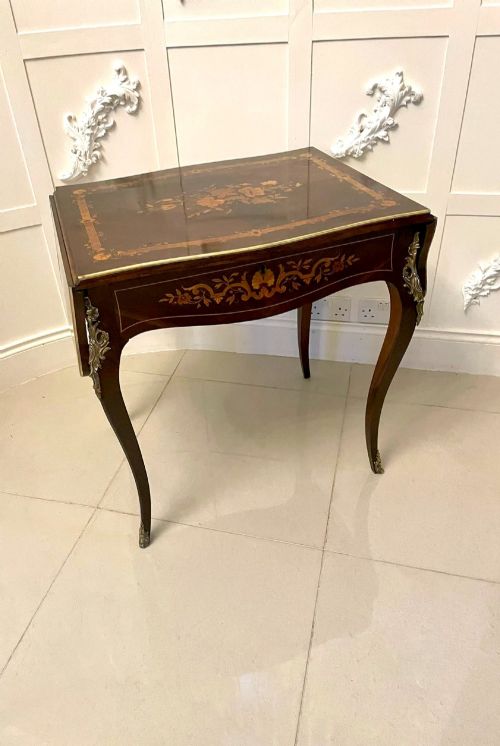
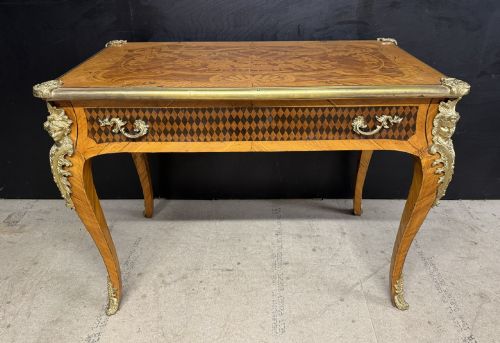
Freestanding centre tables and kidney shaped desks also feature floral inlay, extending the decorative vocabulary beyond traditional writing cabinets.
Materials and technique
Craftsmen built carcasses using hardwoods such as walnut, mahogany, and satinwood, applying contrasting veneers of fruitwood, rosewood, and kingwood for pictorial floral marquetry. Brass mounts, ormolu, and bone inlay occasionally augment the primary wooden structures.
Marquetry cutters jigsawed floral and bird motifs from thin veneers, assembling complex pictorial panels before gluing them to the furniture carcase. Hand-finishing with polishing methods highlighted the natural grain variations of the underlying timbers.
Listings feature eighteenth century and nineteenth century periods, incorporating Dutch baroque and French revival styles executed in walnut, mahogany, and satinwood.
Evaluating the standard
Quality rests in the precision of the marquetry cutter and the choice of timbers, where burr walnut and finely grained satinwood elevate a piece. Dense, natural shading within the floral petals indicates skilled engraving and scorching of the veneer.
Structural integrity of the carcase and the retention of original brass or ormolu mounts dictate the desirability of a bureau or writing table. Crisp edge definition in the floral panels separates workshop output of high distinction from simpler commercial pieces.
The Floral Inlaid Desk Glossary
- Marquetry
- Decorative veneer work forming pictures and floral patterns by fitting together small pieces of wood. This technique defines the primary surface ornamentation on these desks.
- Ormolu
- Gilded bronze mounts applied to furniture edges and corners for decoration. French nineteenth century pieces frequently utilise this material.
- Bureau
- A sloping desk with a hinged flap covering pigeonholes and small drawers. Examples in this category often feature walnut carcasses with floral marquetry.
- Bombe
- A bulging, convex swelling shape characteristic of eighteenth century Dutch furniture. This curved form provides a challenging surface for floral inlay.
- Satinwood
- A durable exotic hardwood with a lustrous yellowish grain used for contrasting inlay work. It appears alongside mahogany and fruitwood on writing tables.
Floral Inlaid Desk: Frequently Asked Questions
How do I care for a marquetry desk?
Keep wooden writing furniture away from direct sunlight and sudden temperature shifts to prevent veneer lifting. Apply specialist wax sparingly to nourish the timber surface.
Dust regularly with a soft, dry cloth rather than using wet cleaners. Protecting the writing surface with a blotter prevents accidental scratches on antique veneers.
Were these desks used for writing?
Most pieces served as practical writing furniture for correspondence and estate management. Sloping bureau flaps concealed pigeonholes and ledger compartments.
Freestanding centre tables provided alternative surfaces for letter writing in larger drawing rooms. Fitted interiors accommodated inkwells, sanders, and stationery storage.
How do I distinguish eighteenth century pieces?
Eighteenth century examples often display characteristic Dutch rococo or baroque floral marquetry featuring birds and naturalistic flower urns. Carcasses typically utilise solid walnut with hand-cut dovetail joints in the internal drawers.
Later nineteenth century revivals adopt similar motifs but employ mechanical veneer cutting and different secondary woods. Examining the interior construction reveals the age and workshop practices.
What is a bureau bookcase?
A bureau bookcase combines a sloping desk base with upper shelving enclosed by glazed or panelled doors. These tall pieces served dual functions for both writing and library storage.
Floral marquetry panels often adorn the fall-front flap and lower drawer fronts. Burr walnut and mahogany versions dominate the available styles from the period.