





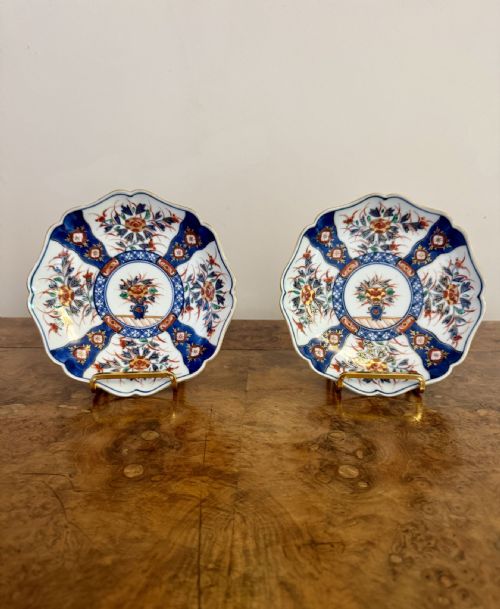
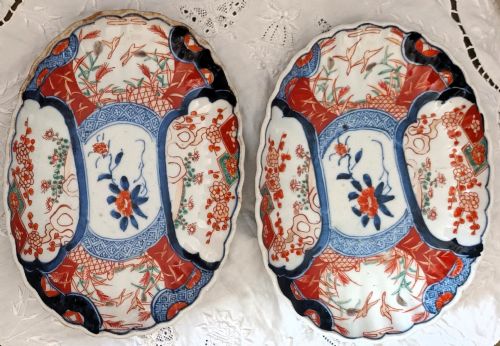
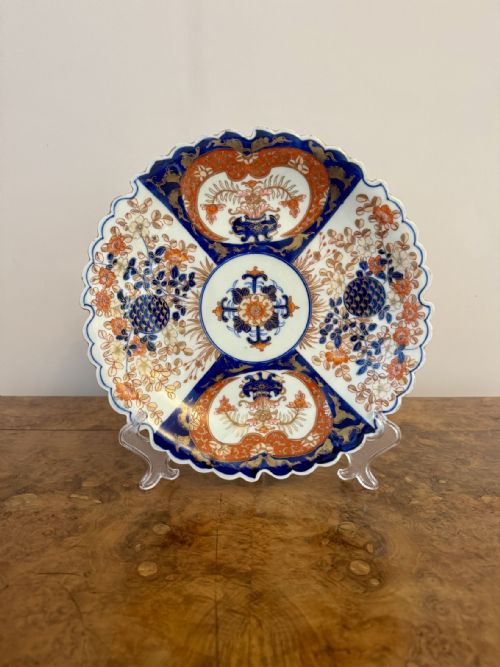
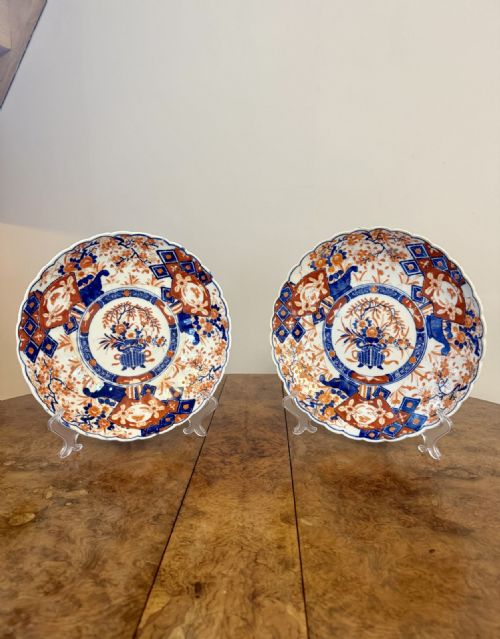
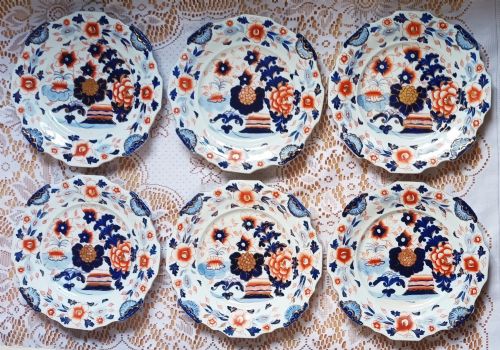
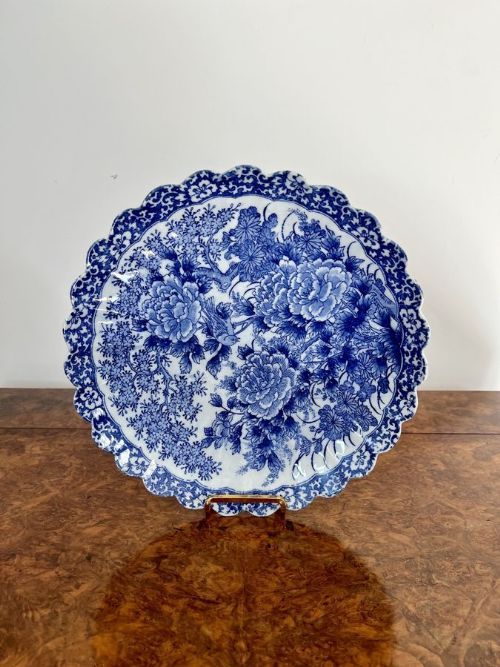

Floral Imari Wall Plate
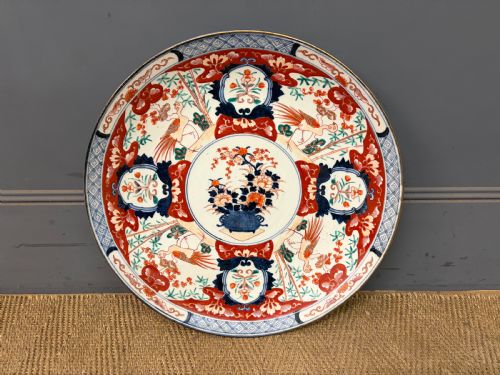
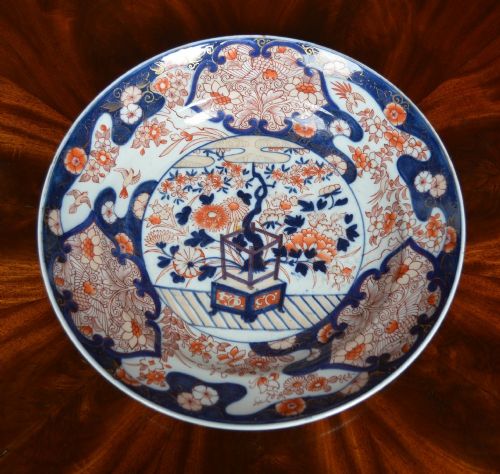
A floral imari wall plate brings rich cobalt underglaze and iron-red enamel directly to the room.

Floral Imari Wall Plate
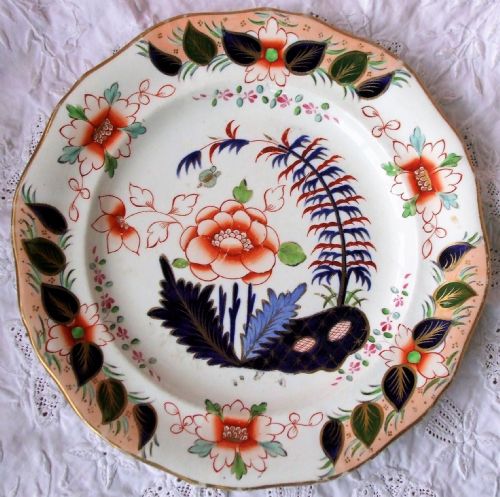
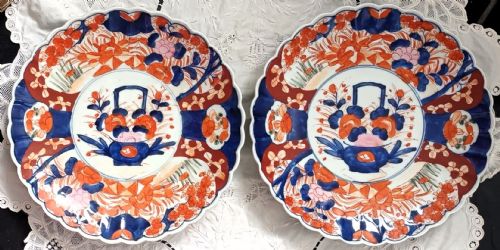
A floral imari wall plate spans Japanese porcelain chargers, English ironstone dishes, and Chinese export ceramics rendered in the distinctive Imari palette. When you search for a floral imari wall plate, you meet round dishes, square plates, and scalloped chargers intended for decorative display.
How they were made
Potters shaped porcelain, stoneware, or ironstone and applied cobalt underglaze details before firing. Artisans then layered enamel colours and gold leaf or gilding over the glaze to complete the rich decoration.
Hand painting governs the output, seen in the meticulous brushwork across Japanese Arita porcelain and English earthenware plates alike.
Listings span Japanese porcelain alongside English ironstone and stoneware, capturing both Edo and Meiji periods and nineteenth-century production.
What varies in quality
The crispness of the hand-painted cobalt underglaze and the precision of the enamel work distinguish the finer examples. Richness in the application of gold leaf and the subtlety of the porcelain body elevate individual plates above standard production ware.
John Davenport of Longport·John Ridgway
The Floral Imari Wall Plate Glossary
- Imari palette
- A traditional decorative scheme using cobalt blue, iron red, and gold on a white ceramic ground. This palette originated in Japan and was later copied by European potteries.
- Cobalt underglaze
- A blue pigment applied to the raw ceramic body before glazing and firing. It creates a permanent blue design beneath the transparent surface.
- Ironstone
- A heavy, durable type of earthenware developed in nineteenth-century England. It provided a robust alternative to true porcelain for patterned tableware.
- Charger
- A large decorative plate used historically for display or service. These wide vessels showcase intricate floral and geometric patterns.
Floral Imari Wall Plate: Frequently Asked Questions
How were floral imari wall plates displayed?
These large plates and chargers were primarily produced for decorative display rather than daily dining. Historic interiors utilised plate rails, sideboards, and wall mountings to exhibit the vibrant palette.
Today, hanging wires and display stands allow them to serve the same visual purpose on modern walls.
What is the difference between Japanese and English imari?
Japanese examples originate from Arita and date across the Edo and Meiji periods, utilising fine porcelain bodies and traditional eastern motifs. English potteries in Staffordshire adopted the distinctive colour scheme during the Georgian and Victorian eras, applying it to ironstone and stoneware.
English interpretations often heavier in weight, while Japanese pieces maintain a finer porcelain translucency.
How do I identify the period of a plate?
Dating relies on material composition, potting technique, and stylistic markers recorded in the evidence. Eighteenth-century pieces often show coarser potting and distinct iron-red tones, while late nineteenth-century Meiji and Victorian pieces display sharper enamel work.
Maker marks on the reverse of English ironstone also provide precise chronological reference points.
Are these plates safe for everyday use?
Most antique plates function best as decorative objects due to surface wear on the gilt and enamel highlights. Hand washing is essential if they are used for serving, though wall display protects the painted glaze from friction.
Examine the surface for rubbing on the gold leaf before deciding on daily utility.