





Floral Imari Porcelain Plate
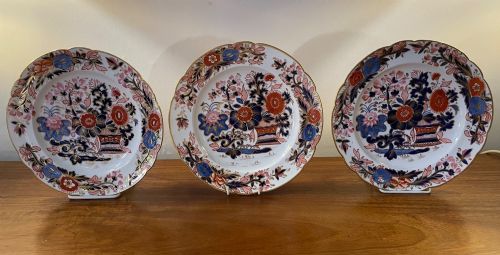
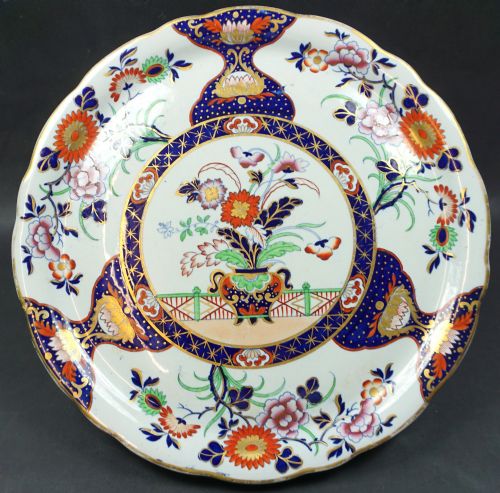
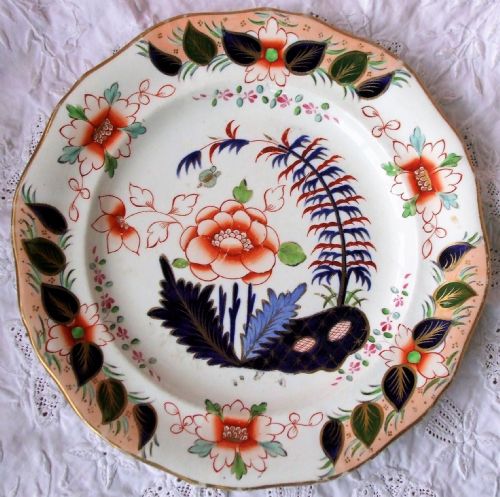
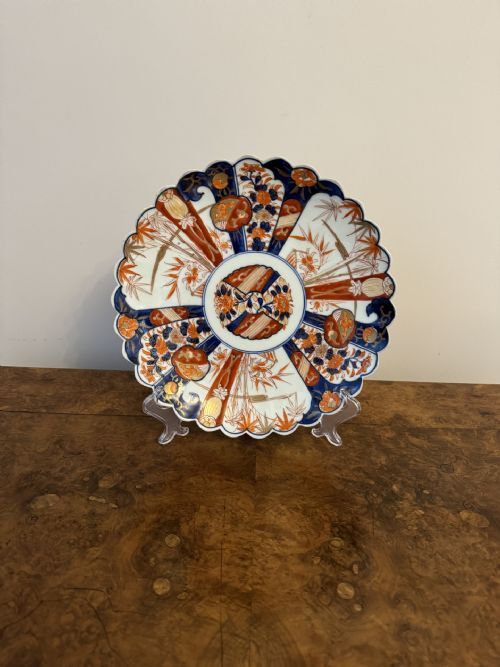
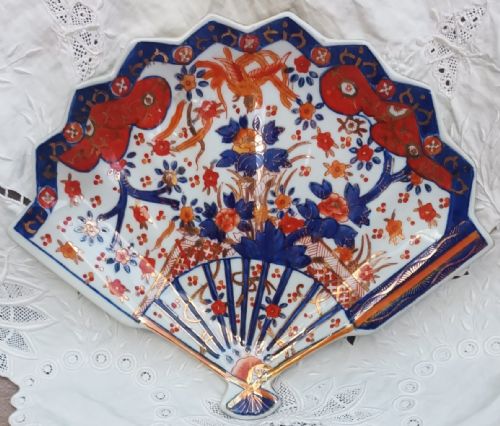
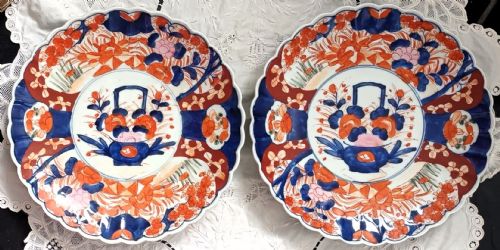
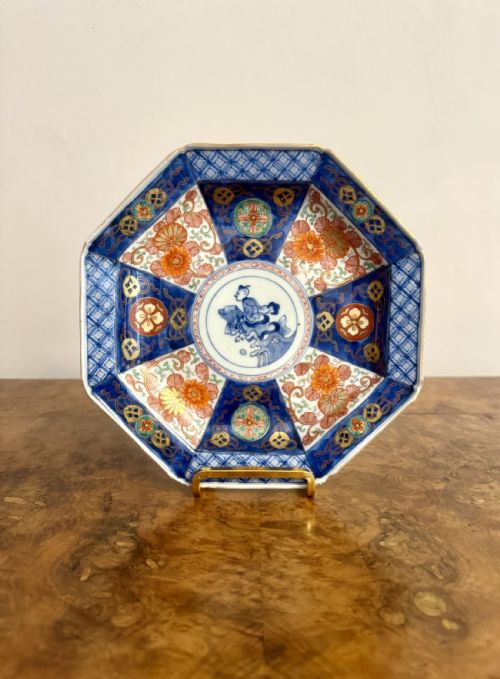
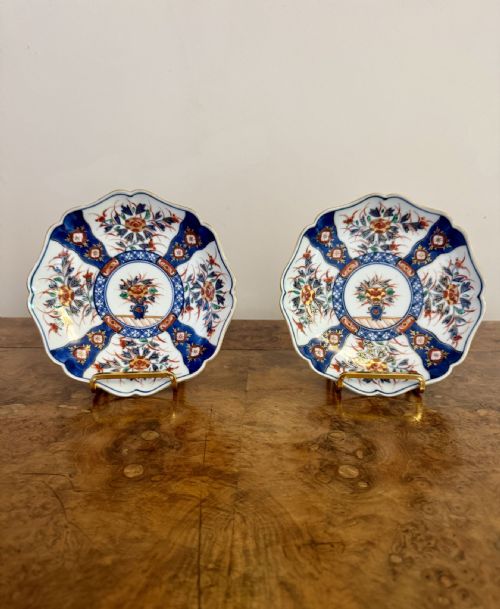
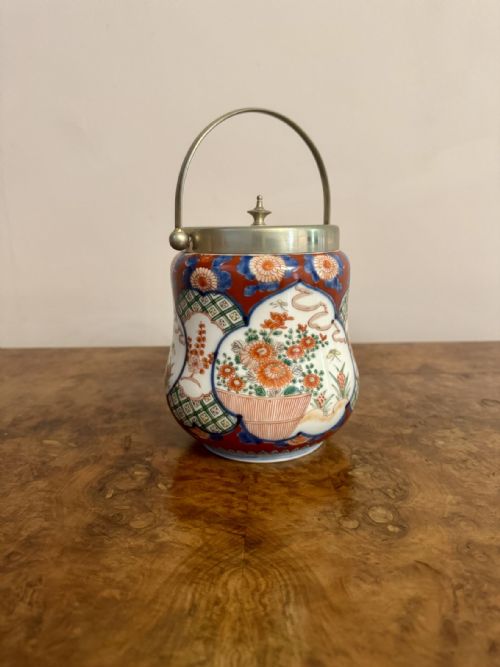
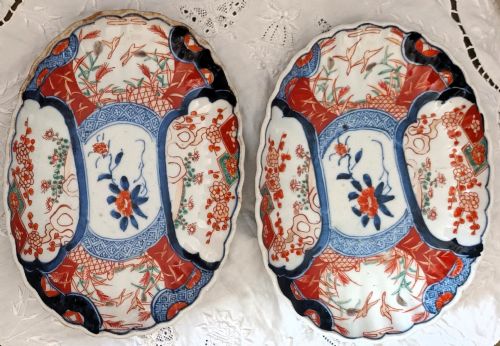
A floral imari porcelain plate brings together rich cobalt blue, enamel colours and gilt highlights on crisp ceramic.

Floral Imari Porcelain Plate
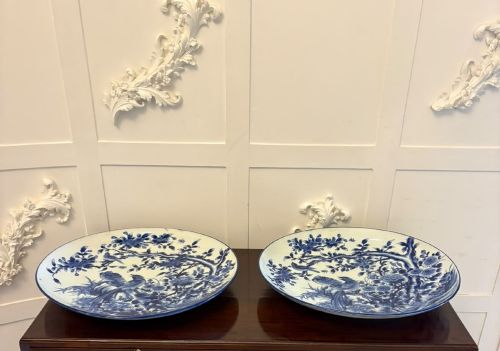
When you search for a floral imari porcelain plate, you encounter decorative tableware and chargers originating mainly from Japan during the Meiji period, alongside English interpretations from the Georgian and Victorian eras. These items span standard serving dishes, large chargers for display and hexagonal or scalloped plates.
The Japanese examples, often associated with Arita production, dominate the selection alongside English ironstone versions made by factories such as John Davenport and Hicks & Meigh. Buyers find single items, pairs and matched sets intended for display or traditional service.
How they were made
Potters shaped ceramic and porcelain bodies before applying underglaze blue pigment and overglaze enamel decoration. Artisans then added gold leaf, gilding and hand-coloured details to complete the characteristic palette.
Firing techniques allowed the cobalt blue to fuse beneath the glaze while enamel colours and gold accents sat above it, creating a textured surface relief on the porcelain and ironstone plates.
A cheese dish sneaks into the selection, proving that nineteenth-century dairy products deserved imari decoration just as much as wall chargers.
What varies in quality
Quality rests in the precision of the hand-painted floral and bird designs, the vibrancy of the enamel colours and the crispness of the gilt details. Superior examples exhibit balanced compositions and clean glaze application across the porcelain body.
The crispness of moulded edges, such as scalloped or hexagonal rims, and the preservation of the overglaze enamels distinguish finer antique chargers and plates from simpler commercial production.
Hicks & Meigh·John Davenport
The Floral Imari Porcelain Plate Glossary
- Imari
- A style of Japanese porcelain featuring a palette of cobalt blue, iron red and gold, originating in the town of Arita. These wares were widely exported to Europe from the seventeenth century onward.
- Ironstone
- A type of durable heavy earthenware patented in the nineteenth century by English potteries as a robust alternative to porcelain. It readily accepted the imari pattern transfer printing and hand-painting.
- Meiji Period
- The era of Japanese history lasting from 1868 to 1912, corresponding to a surge in decorative porcelain exports to Western markets. Pieces from this period frequently display intricate floral and bird motifs.
- Charger
- A large decorative plate intended primarily for display on a wall or sideboard rather than for practical dining use. These items often measure significantly larger than standard dinner plates.
- Scalloped edge
- A decorative rim shaped into a series of continuous curves resembling a scallop shell. Potters applied this detail to plates to enhance visual interest on display.
Floral Imari Porcelain Plate: Frequently Asked Questions
How do I hang a heavy imari charger?
Large chargers require robust, spring-loaded brass wall hangers that grip the rim securely without scratching the porcelain.
Ensure the wall fixing engages directly with a stud or utilises a heavy-duty wall plug capable of supporting the weight of the ceramic.
Are these plates safe for daily dining?
While nineteenth-century ironstone and porcelain plates were made for service, antique overglaze enamels and gilding can wear with constant use and modern dishwashing.
Most collectors prefer to use them for display or occasional gentle service to preserve the hand-painted details.
How do I tell Japanese imari from English imari?
Japanese imari pieces typically utilise a finer porcelain body with slightly greyish or translucent undertones and distinct Meiji period hand-painted brushwork.
English imari is usually heavier, formed from ironstone or earthenware, and often bears factory marks or impressed patterns on the reverse.
What is the difference between a plate and a charger?
Plates are traditionally sized for individual dining portions, whereas chargers are substantially larger display pieces designed to sit as centerpieces on a table or wall.
Chargers feature more expansive painted surfaces, accommodating complex floral and bird compositions.