








Floral Imari Porcelain Dishes
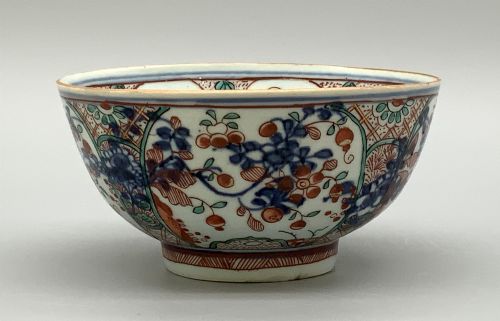
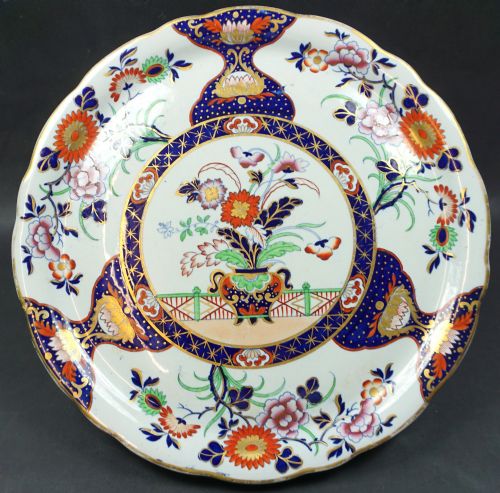
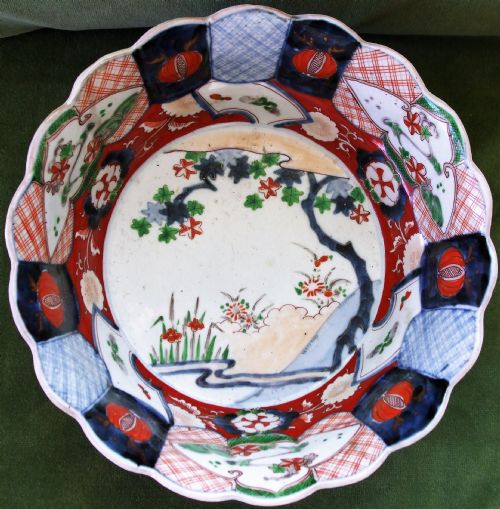
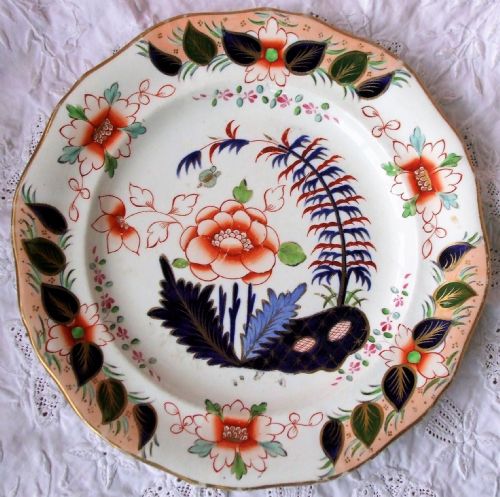
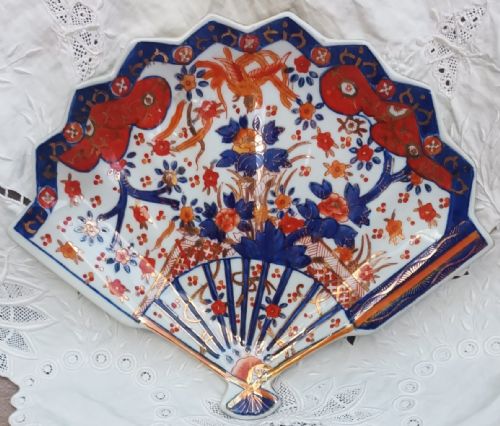
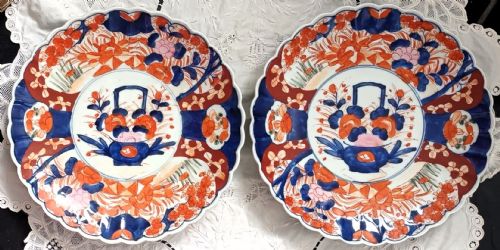
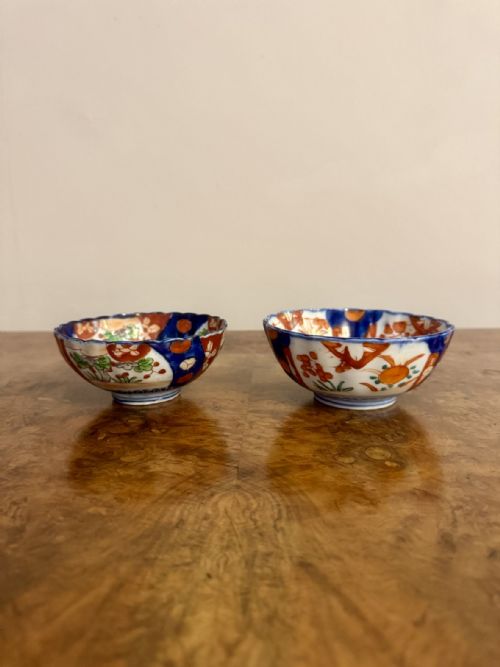
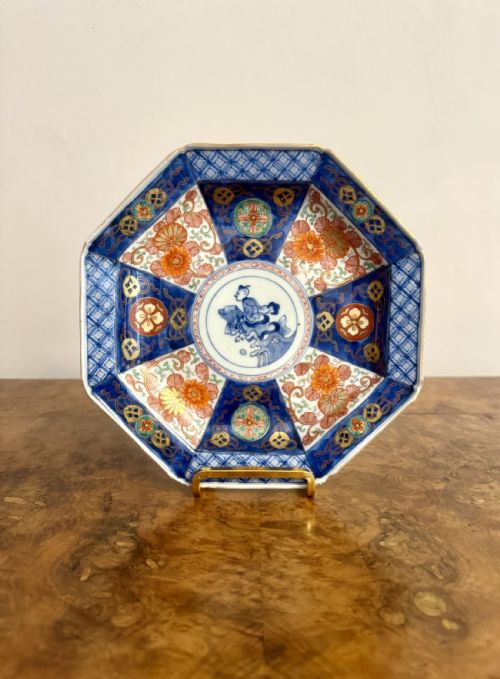
These floral imari porcelain dishes combine deep cobalt underglaze with vibrant enamel and gold leaf.
Floral Imari Porcelain Dishes
Floral imari porcelain dishes encompass decorative plates, chargers, bowls, and serving dishes created across multiple centuries. Buyers searching for floral imari porcelain dishes encounter wares originating primarily from Japanese kilns, alongside Chinese export pieces and English adaptations.
The pieces appearing most frequently on this page date from the nineteenth century and the Meiji period, taking forms such as large chargers with scalloped edges and deep bowls. These items serve primarily for display and decorative use rather than dining.
Makers in Japan, particularly around Arita, established the distinct palette that defined these floral imari porcelain dishes. Later English factories such as John Davenport and Hicks & Meigh also adopted the pattern on ironstone and ceramic bodies.
How they were made
The manufacture of these objects relies upon a porcelain or ceramic body painted with cobalt underglaze before the initial firing. Artisans then apply enamel colours and gold leaf or gilding over the glaze before a subsequent firing fuses the surface decoration.
Potters shape many of these vessels with scalloped, hexagonal, or curved edges, requiring careful hand-forming prior to glazing. The application of floral and bird motifs involves precise hand painting across both Japanese and Chinese workshops.
Listings span the eighteenth, nineteenth, and early twentieth centuries, featuring Japanese porcelain, Chinese export wares, and English ironstone.
What varies in quality
Quality separates across these items by the precision of the hand painting and the richness of the enamel and gold leaf application. Finer pieces demonstrate crisp detail in the floral and bird designs, whereas simpler examples show broader brushwork.
The weight, symmetry, and complexity of the porcelain body also distinguish standard production from exceptional examples, particularly in larger chargers and scalloped bowls.
Hicks & Meigh·John Davenport of Longport
The Floral Imari Porcelain Dishes Glossary
- Imari
- A style of ceramic decoration originating in Japan, characterised by a palette of cobalt blue, iron red, and gold. This technique spread to Chinese export workshops and English potteries.
- Charger
- A large decorative plate utilised for display rather than service at the table. These items often measure twelve inches or more in diameter.
- Cobalt Underglaze
- A blue pigment applied to the raw ceramic body before glazing and firing. It provides the deep blue foundation beneath the enamel colours.
- Meiji Period
- A Japanese historical era spanning from 1868 to 1912. Many plates and bowls on this page date from this period of production.
Floral Imari Porcelain Dishes: Frequently Asked Questions
What are floral imari porcelain dishes?
Floral imari porcelain dishes are decorative plates, bowls, and chargers featuring traditional Japanese, Chinese, or English patterns.
They utilise cobalt underglaze, enamel, and gold leaf to create distinct floral and bird designs.
How were imari dishes used?
These pieces served primarily as decorative display items in homes rather than everyday tableware.
Large chargers and scalloped bowls were often placed on walls or sideboards to showcase the enamel and gilt work.
How do I date an imari dish?
Dating relies upon stylistic markers, historical periods such as the Meiji era, and ceramic materials like ironstone or porcelain.
18th-century pieces often reflect Chinese Kangxi styles, while 19th-century examples typically originate from Japanese Arita kilns.
Are these dishes safe for food?
Most antique floral imari porcelain dishes are intended for display and collection rather than culinary use.
The overglaze enamels and gold leaf can wear down with modern washing and food contact.