
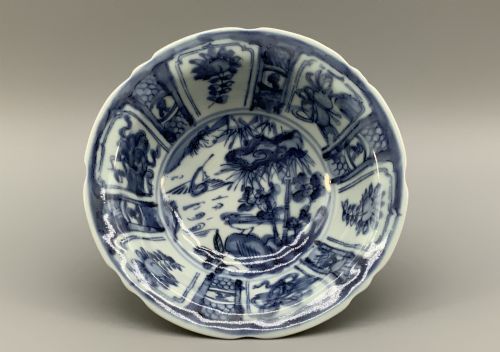
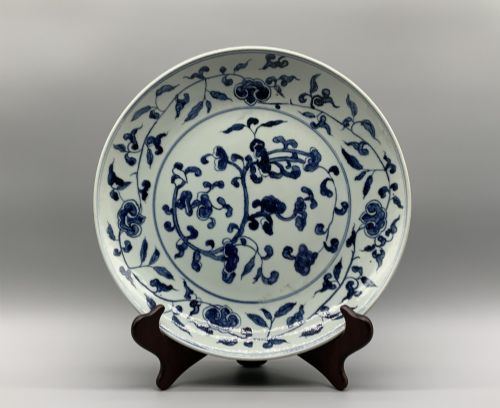
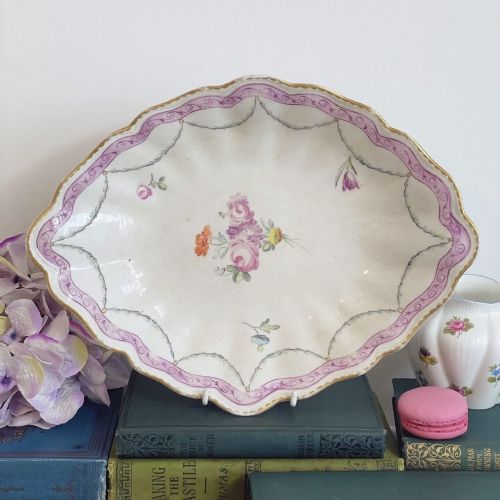

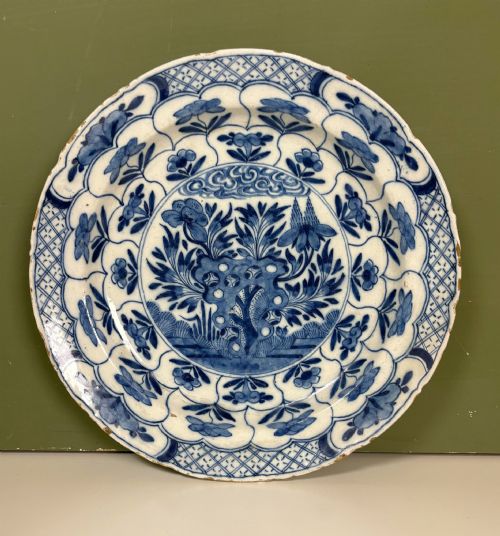

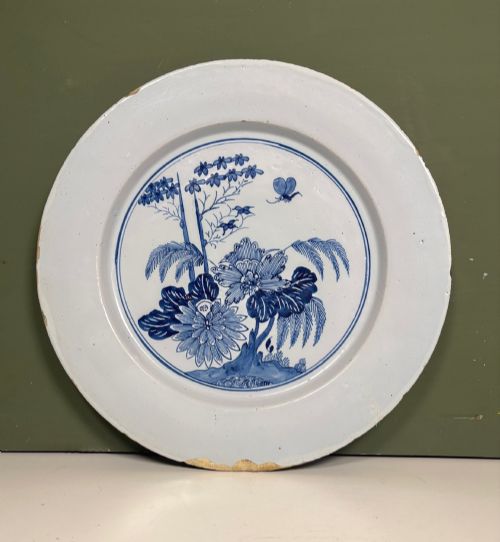
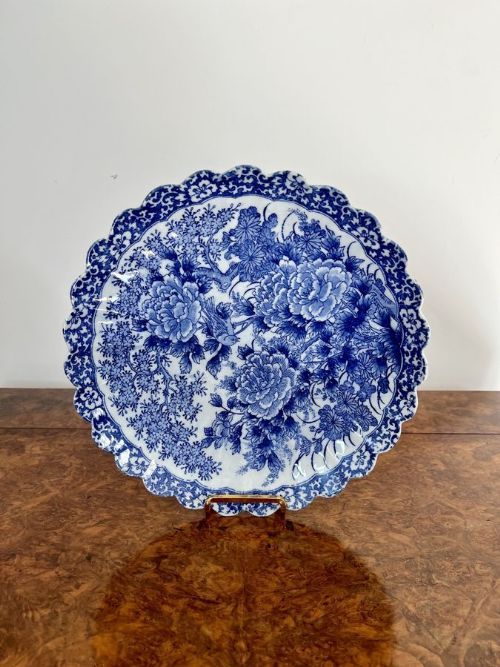


Floral Blue White Plate
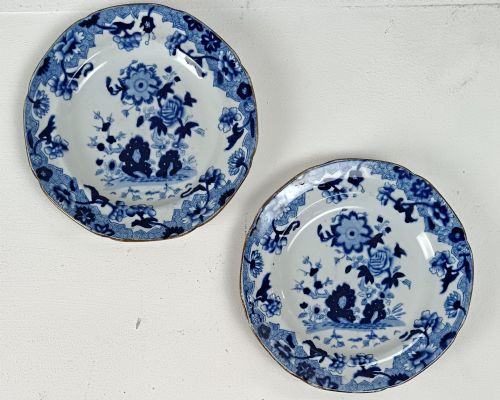
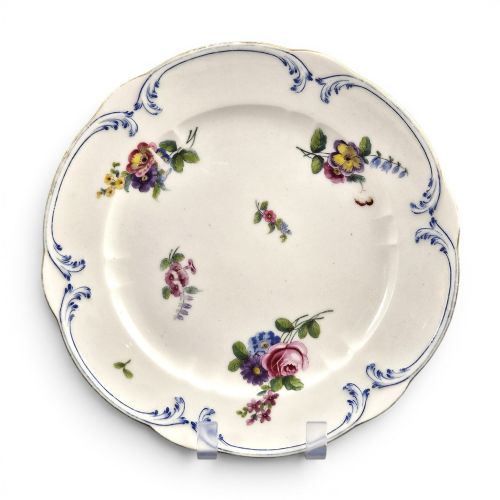
A floral blue white plate brings centuries of kiln craft to the table, pairing crisp cobalt pigment with botanical motifs on tin glaze, earthenware, and porcelain.
Floral Blue White Plate
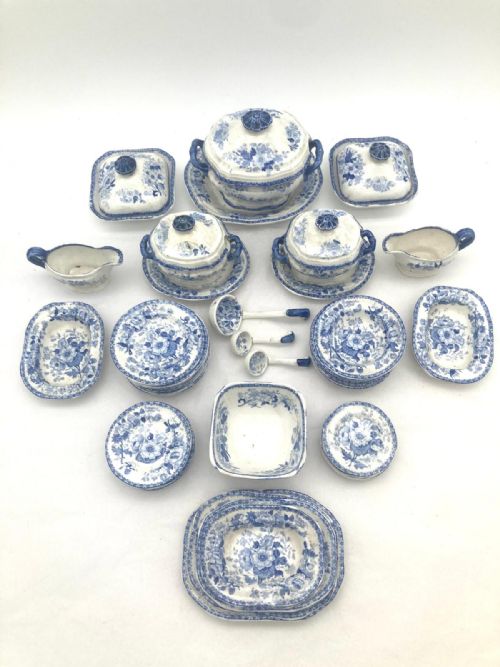
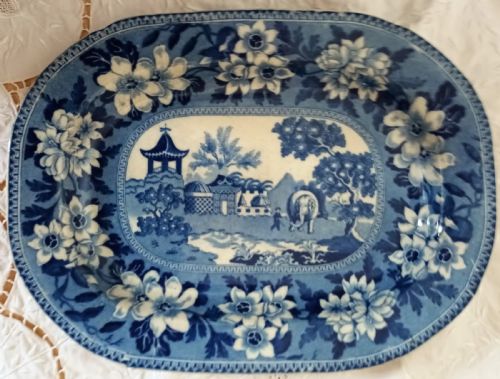
A floral blue white plate encompasses a wide range of ceramic forms, from small Georgian tea plates and Staffordshire dishes to large Japanese Arita chargers and Dutch Delftware plates. The pieces available span multiple centuries, touching on the eighteenth and nineteenth centuries alongside 1900s productions.
The decorative schemes rely heavily on cobalt pigment applied beneath or over glaze, rendering floral patterns, botanical sprays, and pictorial scenes. Buyers encounter round plates, scalloped edges, deep chargers, and larger serving platters suited to historical tables.
Origins stretch across English potteries, French factories, Dutch workshops, and East Asian kilns. Whether choosing a Georgian transferware plate or an eighteenth-century Delft dish, the core appeal remains the durable union of blue decoration on a white ground.
How They Were Made
Makers utilised earthenware, stoneware, soft-paste porcelain, and tin-glazed bodies to form the base plates and chargers. Cobalt pigment served as the primary colouring agent for the intricate blue motifs, applied either by handpainting or through blue and white transfer printing.
Tin glaze and transparent enamel coatings were applied over the ceramic body before firing, locking the cobalt pigment beneath a smooth, glassy surface. Firing temperatures varied depending on whether the pieces originated in European earthenware kilns or high-fire East Asian porcelain furnaces.
Materials recorded across the inventory include porcelain, earthenware, stoneware, tin glaze, and cobalt pigment.
What Varies in Quality
The definition of the cobalt pigment transfer or brushwork separates standard domestic wares from exceptional pieces. Crisp outlines, deep tonal variation in the blue, and careful alignment of floral patterns indicate higher skill in the workshop.
The weight, throwing, and moulding of the ceramic body dictate structural excellence. Thinner porcelain bodies with translucent qualities and evenly potted earthenware chargers command greater attention than heavy, poorly balanced blanks.
Ambroise Michel·John Rogers And Son·John Ridgway·William Adam·Wedgwood
The Floral Blue White Plate Glossary
- Cobalt Pigment
- A metallic oxide used to achieve deep blue colouring on ceramics. It withstands high kiln temperatures without losing intensity.
- Tin Glaze
- An opaque white glaze containing tin oxide, providing a smooth background for painted blue designs. It characterises traditional Delftware.
- Transfer Printing
- A method of applying engraved designs to ceramics via paper from a copper plate. This technique enabled rapid, detailed pattern replication in nineteenth-century factories.
- Imari
- A style of Japanese porcelain featuring blue underglaze and iron-red overglaze, often highlighted in gold. These wares heavily influenced European ceramic design.
- Charger
- A large decorative plate intended for ceremonial display or grand table service. They measure significantly wider than standard dining plates.
Floral Blue White Plate: Frequently Asked Questions
How were floral blue white plates used?
These pieces served practical dining functions or acted as display items on sideboards and walls. Large chargers and platters held meats and communal dishes during formal Georgian and Victorian meals.
Smaller plates handled everyday tea service and dessert courses. Over time, many transitioned from utilitarian kitchenware into decorative cabinet pieces.
How do I care for antique ceramic plates?
Wash antique ceramics gently by hand in warm water using mild soap. Avoid dishwashers, harsh scrubbers, and soaking, as old glazes and tin surfaces can craze or weaken.
Store plates in stable environments away from direct sunlight and extreme temperature shifts. Use padded plate dividers if stacking them vertically.
What defines Japanese Imari style?
Japanese Imari work combines underglaze cobalt blue with contrasting iron-red enamel and gold detailing. The resulting palette is rich and densely patterned.
Plates in this style frequently display floral and botanical panels arranged symmetrically. Eighteenth and nineteenth-century examples show remarkable vibrancy in their enamel work.