

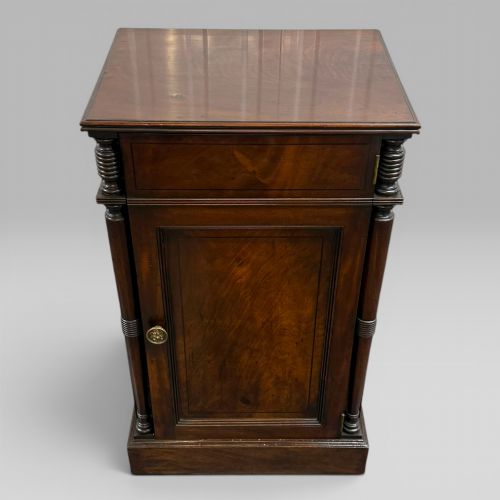

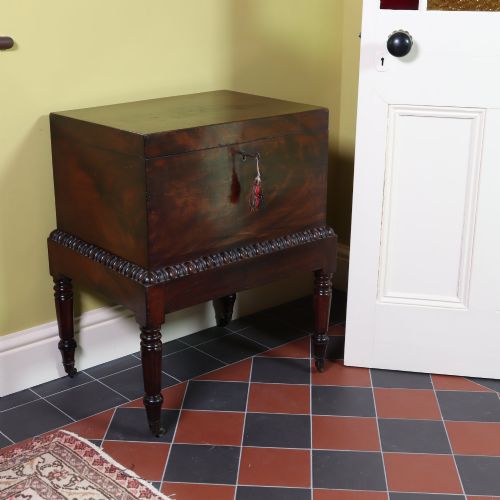
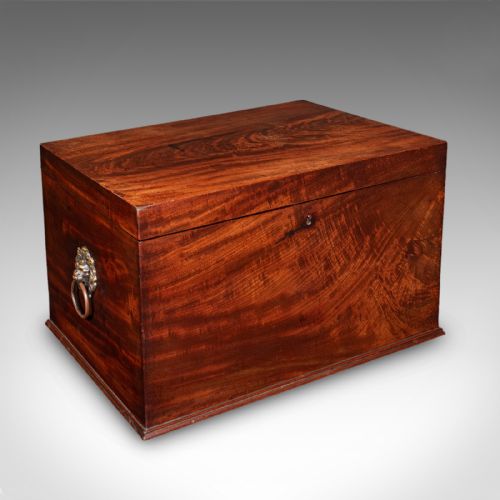


Flame Mahogany Wine Chest
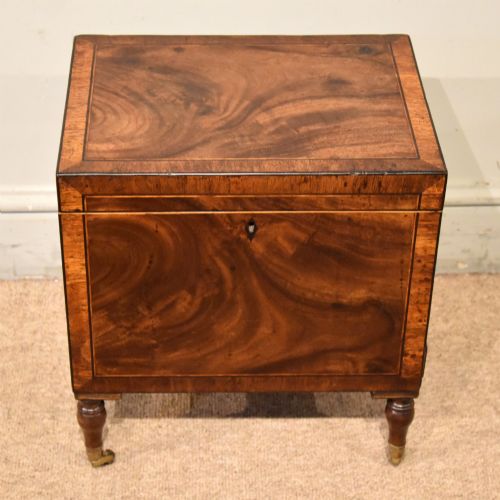
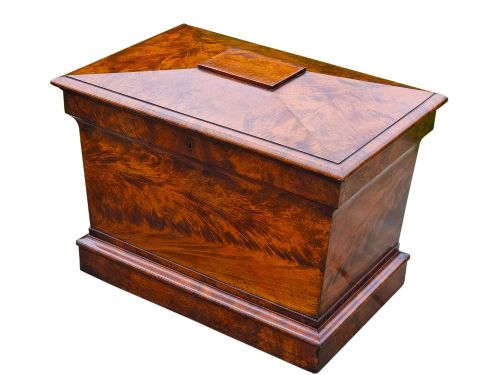
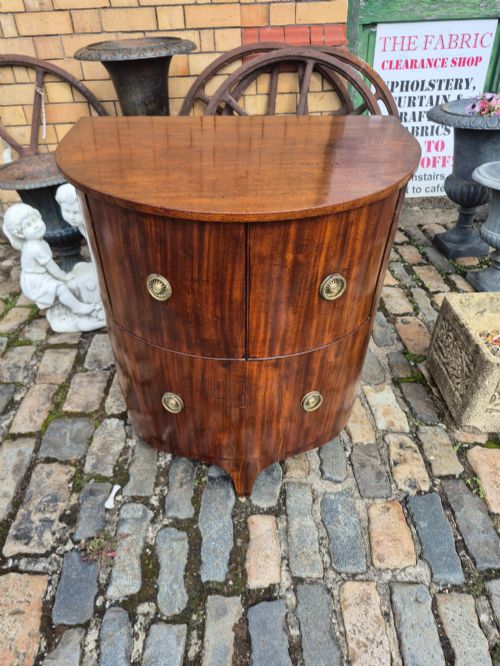
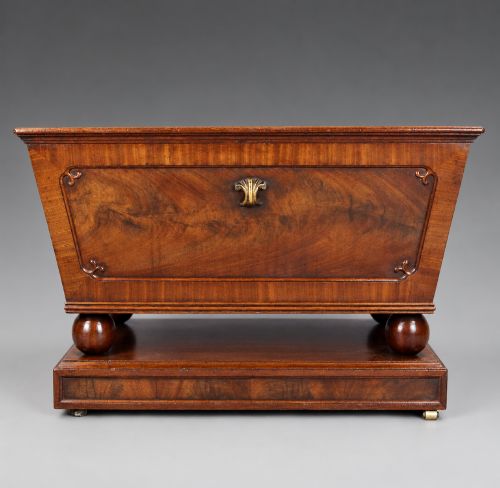
These flame mahogany wine chest pieces are grand timber receptacles for storing vintage bottles, sought after for their rich figure and formal presence.
Flame Mahogany Wine Chest
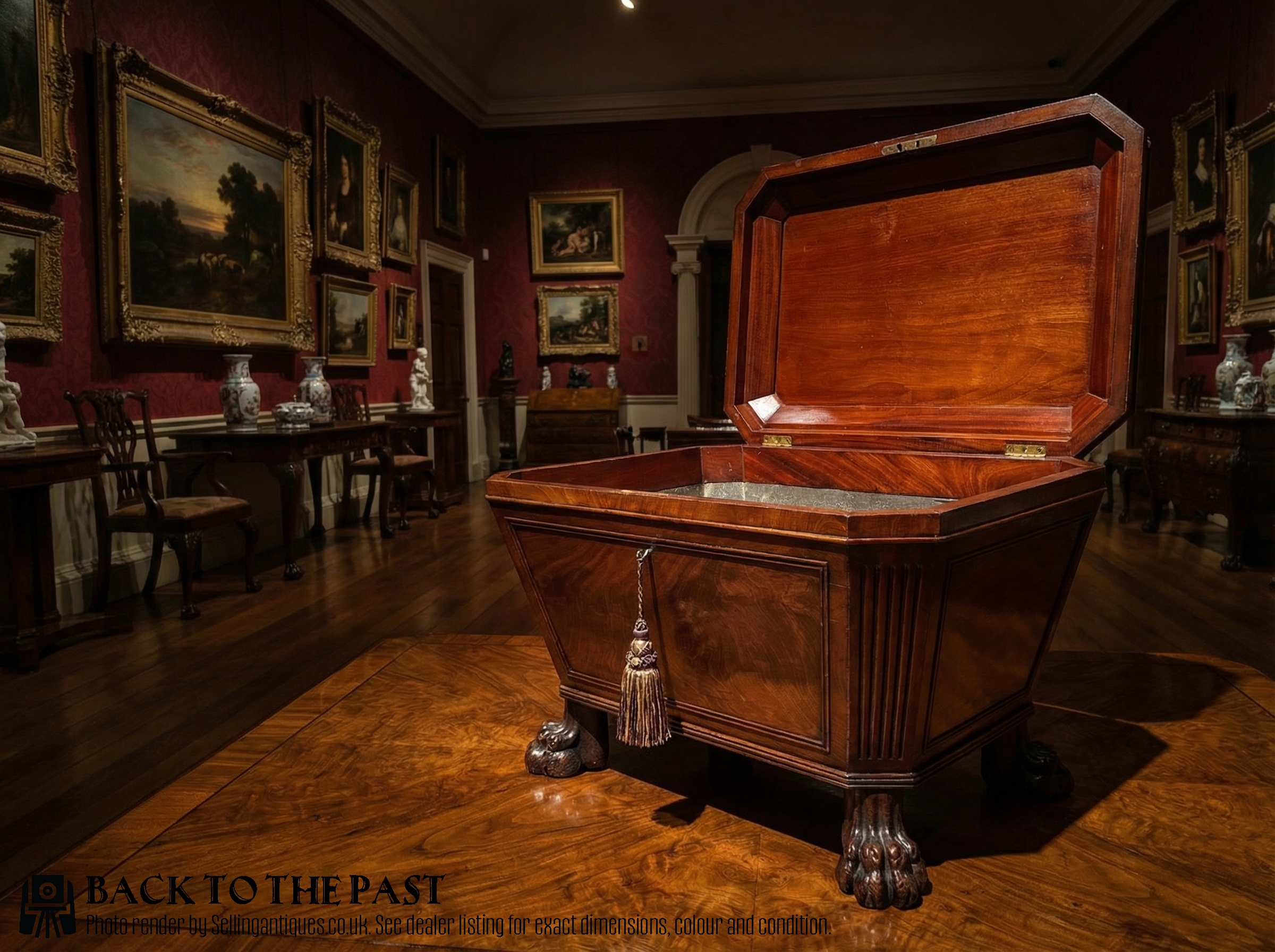
A flame mahogany wine chest, commonly catalogued as a cellarette or wine cooler, serves as a formal storage box for wine bottles within domestic interiors. Most examples on this page date from the Regency, Georgian, and Victorian periods, taking substantial forms such as sarcophagus shapes or pedestal boxes.
Makers shaped these timber vessels to stand beneath sideboards or beside dining tables, utilising heavy lids and fitted interiors designed to keep bottles secure and cool. Buyers encounter pieces spanning the eighteenth century through to the early twentieth century, reflecting classical proportions and architectural detailing.
Judging quality and character
Quality rests in the intensity and symmetry of the flame mahogany veneer selected for the principal display surfaces, particularly the lid and front panels. Superior pieces demonstrate crisp carving on paw feet or reeded columns, alongside heavy, original brass hardware that has not been replaced.
Proportion and scale distinguish finer examples, where the timber grain flows naturally across joints rather than appearing mismatched. The presence of untouched interior lead linings or original internal bottle dividers adds considerable substance to a piece.
Flame Mahogany Wine Chest Retail Price Guide 2026
Typical asking prices for flame mahogany wine chest among the pieces listed under this phrase on Sellingantiques today, from the lower quarter to the upper quarter. They describe what is for sale here now, not the wider market.
Several chests feature carved lion paw feet, standing ready to pounce on the nearest vintage.
Gillows·Gillingtons
The Flame Mahogany Wine Chest Glossary
- Cellarette
- A lockable container or box designed specifically for holding and cooling bottles of wine near the dining table. They frequently double as wine coolers in period inventories.
- Sarcophagus shaped
- A form characterised by a heavy, domed lid and tapered body resembling a classical stone coffin, popular during the Regency period.
- Flame mahogany veneer
- Thin slices of mahogany cut from the point where a branch joins the main trunk, producing a distinctive flickering flame pattern.
- Paw foot
- A carved furniture foot shaped to resemble the paw of a lion or beast, frequently seen on Regency and William IV supports.
Flame Mahogany Wine Chest: Frequently Asked Questions
What is a cellarette?
A cellarette is a dedicated timber box or chest built to hold wine bottles securely in a dining room.
Historically, servants kept these containers filled with ice or water to chill bottles before serving them to guests at the table.
How do I date a wine chest?
Dating relies on observing stylistic markers such as classical sarcophagus shapes, brass paw feet, and the specific cut of the mahogany timber.
Pieces originating in the Regency and Georgian periods typically display heavier architectural proportions and distinct veneer grain patterns compared to later revivals.
Where were they placed?
These chests usually stood directly beneath the dining room sideboard or tucked into the corners of formal dining spaces.
Their substantial weight and decorative presence meant they remained visible pieces of furniture rather than hidden storage.
Are the interiors original?
Many surviving examples retain their internal lead linings or wooden bottle dividers, though some have been altered over time.
Original linings often show patination and wear from ice and moisture exposure during their active period of use.