
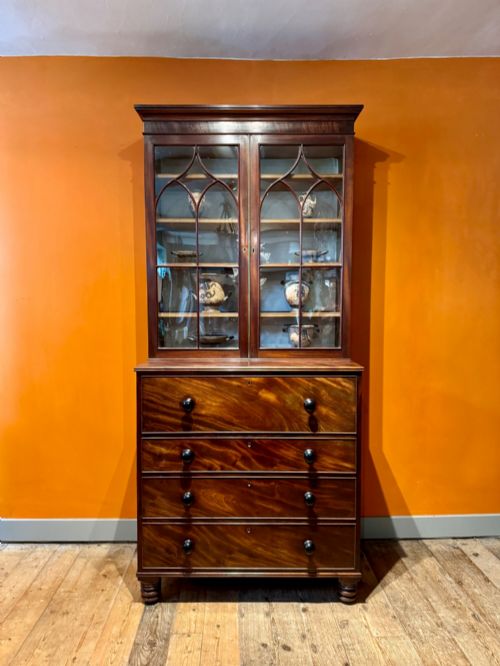
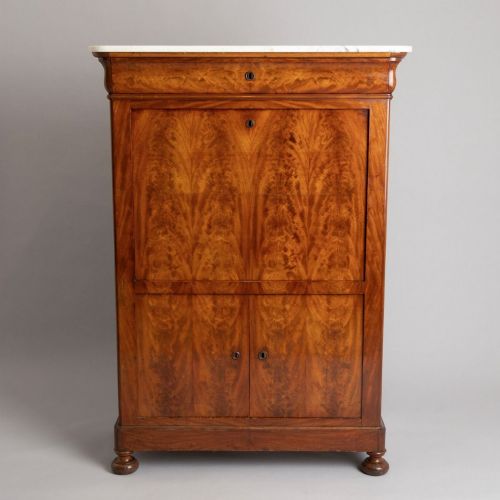


Flame Mahogany Desk Cabinet
A flame mahogany desk cabinet combines rich, swirling timber with a concealed writing surface, offering both a commanding presence and practical workspace.
Flame Mahogany Desk Cabinet
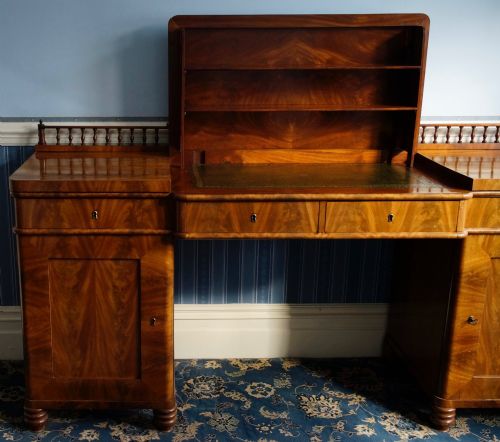
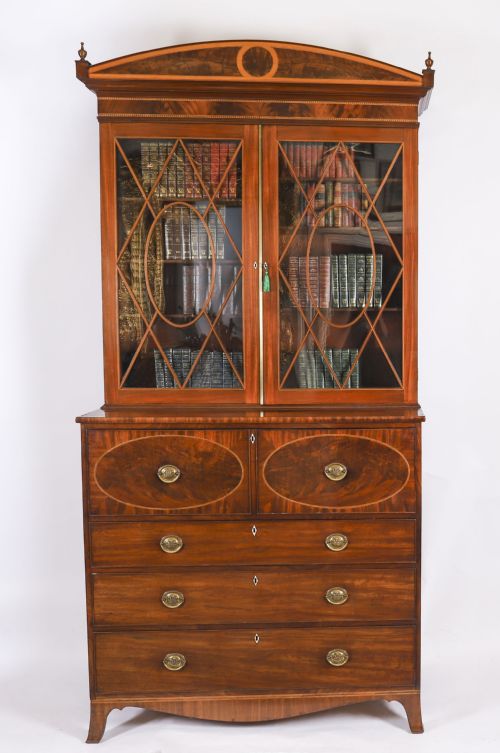
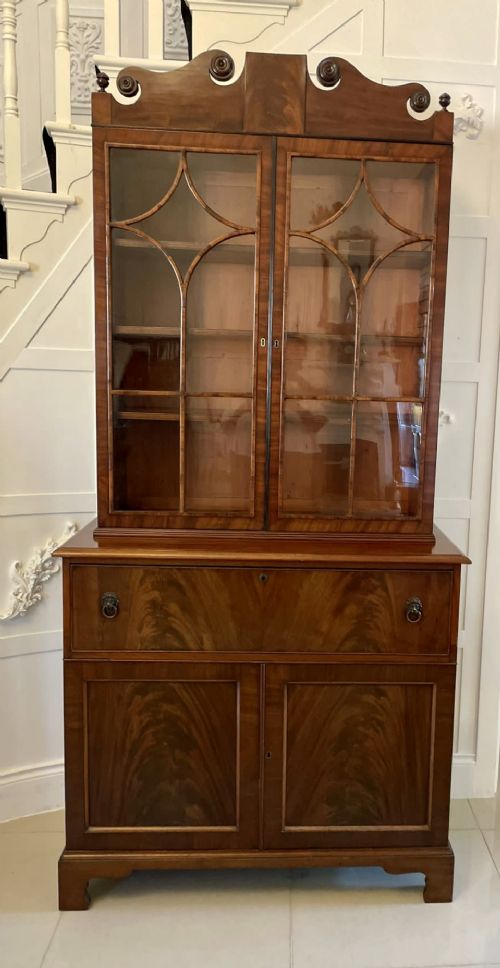
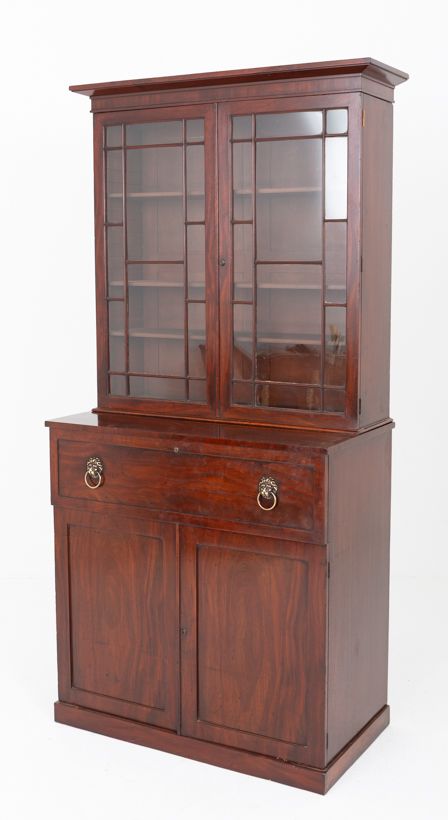
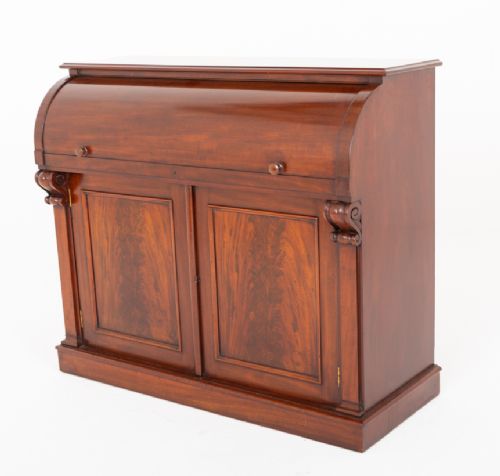
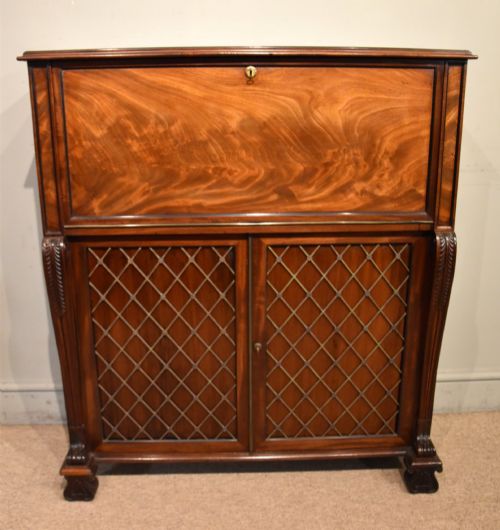
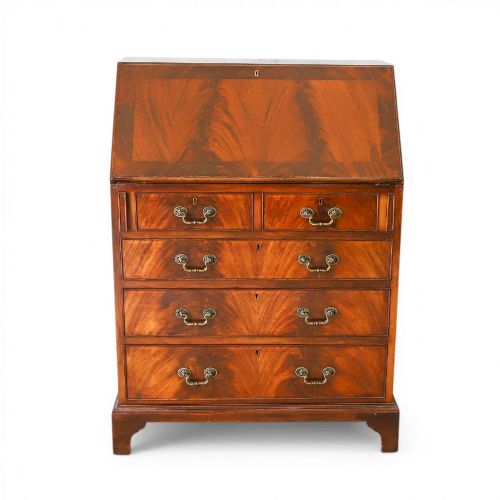
When buyers search for a flame mahogany desk cabinet, they encounter large architectural storage pieces and writing furniture designed for domestic use. These items predominantly take the form of secretaire bookcases, bureau bookcases, and secretary cabinets originating from the eighteenth and nineteenth centuries.
The selections span periods from the Georgian and Regency eras through to the Victorian age, showcasing styles such as George III, William IV, and French Empire. Pieces often integrate upper bookcase sections with lower desk compartments or drawers featuring drop fronts.
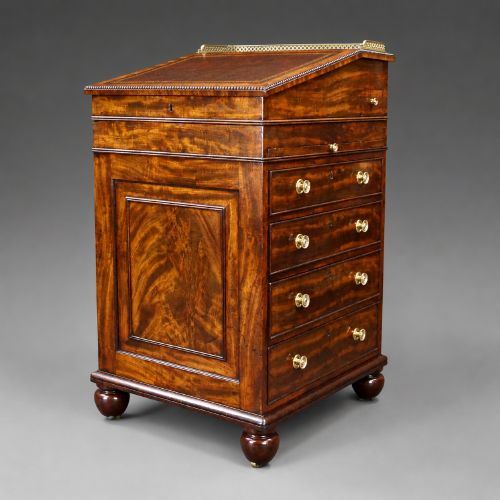
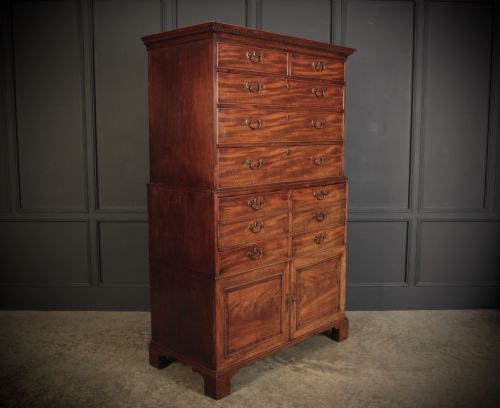
Makers such as Gillows appear alongside regional English, French, and Biedermeier examples, demonstrating the widespread popularity of deploying figured timber across Europe. Buyers will find these works ranging from tallboy chests to compact Davenport desks.
Assessing quality in flame mahogany furniture
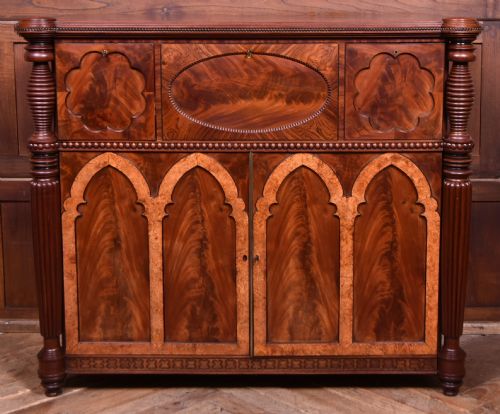
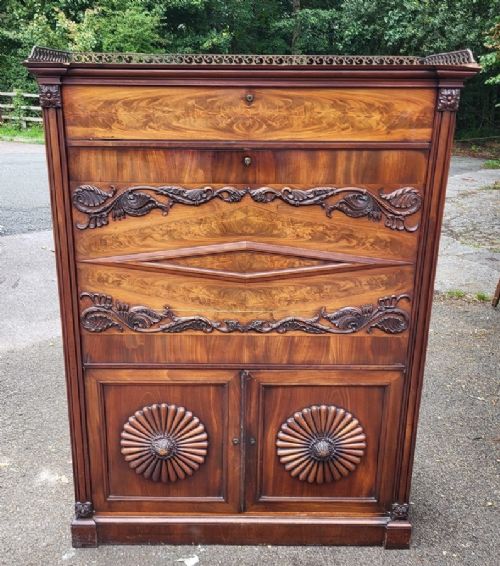
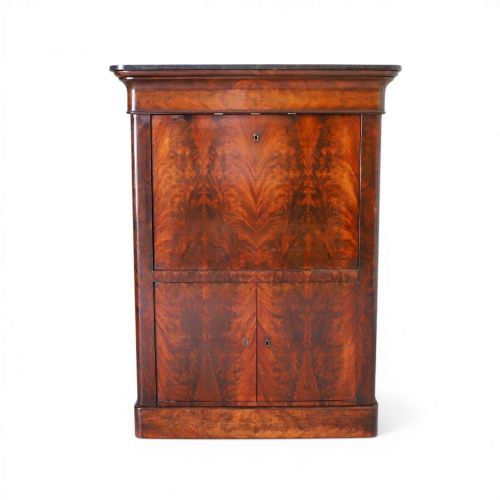
The visual impact of a flame mahogany desk cabinet rests upon the symmetry and boldness of the grain matching across the drawer fronts and fall fronts. Superior examples display carefully chosen veneer sheets that create a continuous, mirror-image flame effect across the entire facade.
Structural integrity and the retention of original brass mounts, glass panes, and fitted internal drawers dictate the standing of a piece within its period. Fine craftsmanship shows in the smooth operation of the secretaire drawer mechanism and the tight tolerances of secret compartments.
Many of these desks conceal tiny secret drawers behind decorative pigeonholes, designed to guard letters and small valuables from curious eyes.
Gillows
The Flame Mahogany Desk Cabinet Glossary
- Flame mahogany
- A distinct wood veneer cut from branches or forks of the mahogany tree, producing a rippling, flame-like pattern prized by cabinet makers. This figure defines the visual appeal of high-end eighteenth and nineteenth century furniture.
- Secretaire bookcase
- A tall cabinet combining a shelved upper section for books with a lower section housing a pull-down writing drawer or fall front desk. It serves dual functions as a library and a bureau.
- Secrétaire à abattant
- A vertical wall cabinet featuring a hinged fall-front writing surface that conceals a fitted interior of small drawers and pigeonholes. Originating on the continent, it presents a flat expanse of figured veneer when closed.
- Davenport
- A compact pedestal desk featuring a sloping, leather-lined writing lid and drawers accessed from the side. This form emerged during the Regency period for use in smaller reception rooms.
- Tallboy
- A tall chest of drawers made in two sections, sometimes incorporating a secretaire drawer within the upper chest. It maximises vertical storage capacity while maintaining a modest floor footprint.
Flame Mahogany Desk Cabinet: Frequently Asked Questions
What is a secretaire bookcase?
A secretaire bookcase is a tall dual-purpose furniture form that combines an upper section of glass-fronted bookshelves with a lower section containing a pull-down writing drawer.
The writing drawer drops forward to reveal an array of small pigeonholes and secret compartments, allowing the piece to function as both a library storage unit and a writing desk.
How do I tell a Georgian desk cabinet from a Victorian one?
Georgian and George III pieces typically exhibit restrained classical proportions, delicate stringing inlay, and lighter construction methods associated with eighteenth-century cabinet making.
Victorian examples often display heavier proportions, darker finishes, and more robust architectural details influenced by Gothic revival or later nineteenth-century tastes.
What is flame mahogany veneer?
Flame mahogany veneer is sliced from the fork or branch junctions of mahogany trees where the wood grain grows in a wavy, undulating pattern.
Craftsmen book-matched these thin sheets of timber across drawer fronts and fall-front desks to produce striking, symmetrical patterns resembling flickering flames.
How do I care for a mahogany desk surface?
Mahogany surfaces require gentle dusting with a soft, dry cloth and occasional treatment with traditional beeswax to nourish the timber and preserve the polish.
Leather writing inserts benefit from minimal moisture and protection from direct sunlight to prevent the material from drying out and cracking over time.