
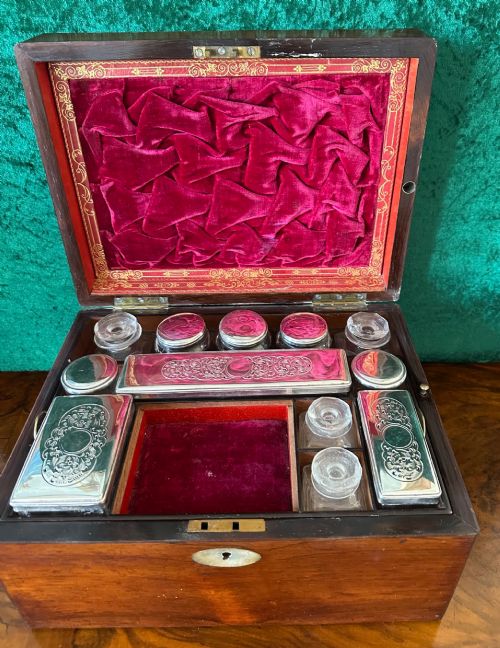
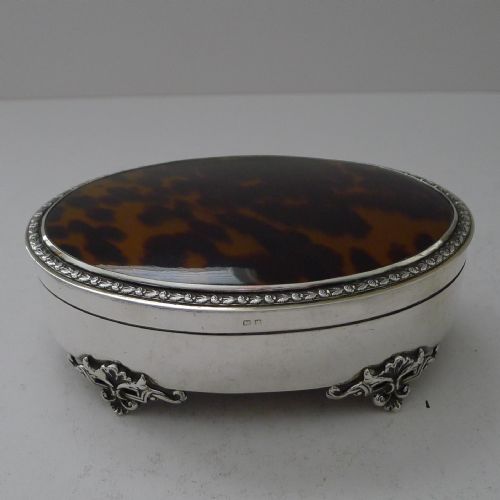


Fitted Jewellery Box
A fitted jewellery box organises precious trinkets within segmented trays and velvet linings, originating mainly from the Georgian, Victorian, and Edwardian eras.
Fitted Jewellery Box
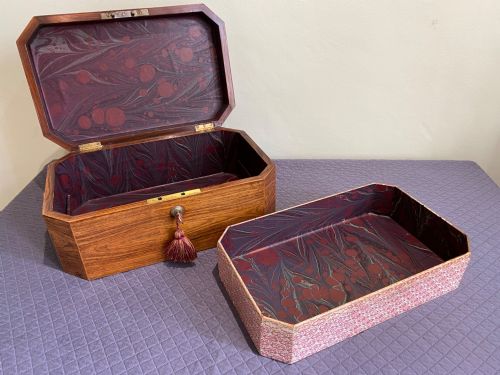
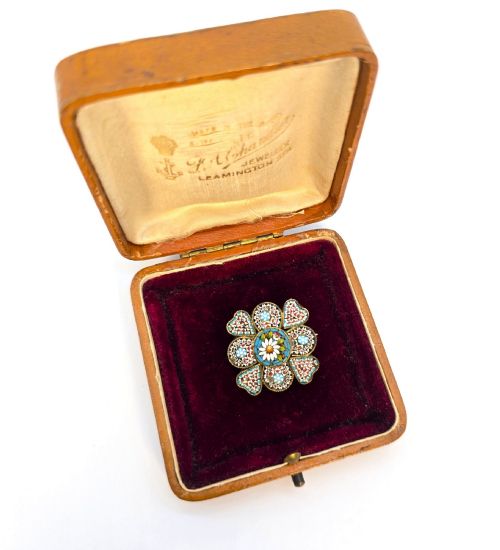
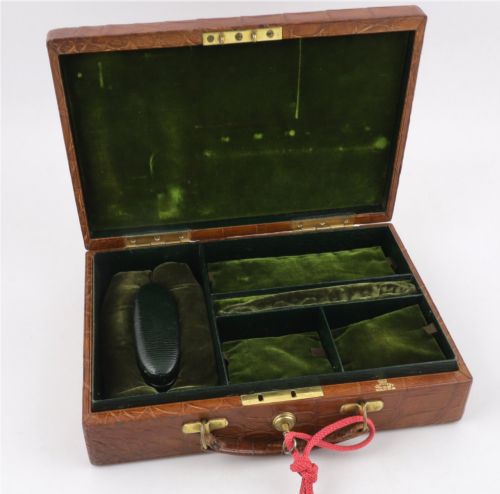
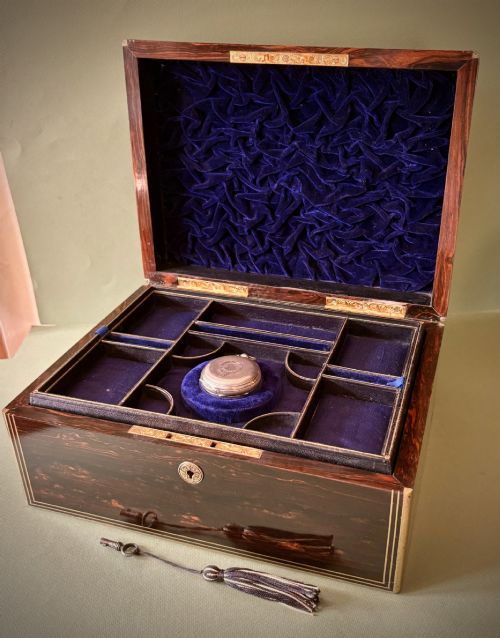
A fitted jewellery box provides internal compartments, lift-out trays, and mirrors designed to store rings, necklaces, and small accessories securely. These containers range from compact travelling cases to substantial dressing boxes equipped for domestic use.
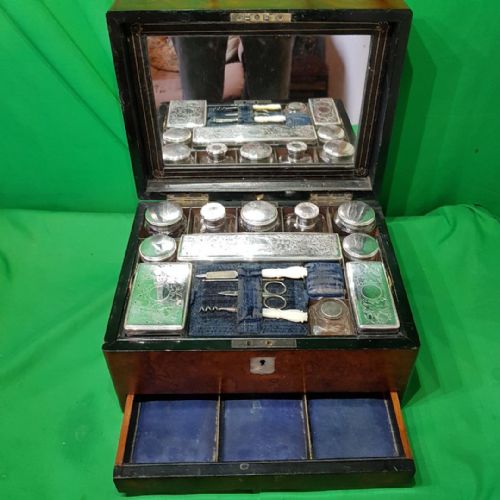
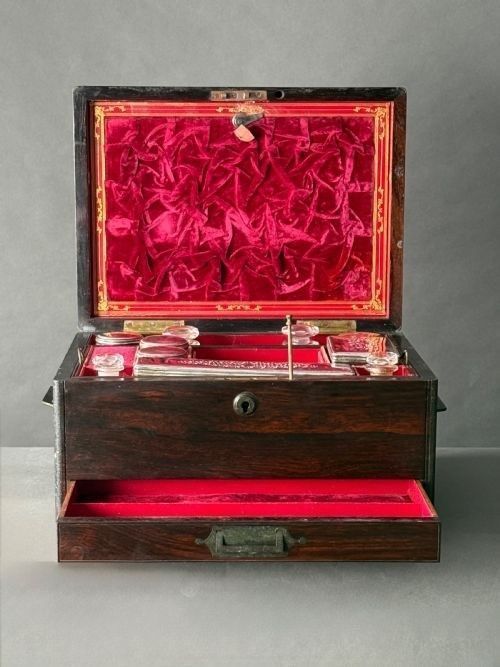
Victorian and Edwardian iterations dominate the selection, frequently utilising dense exotic timbers and leather. Pieces span simple rosewood containers to elaborate travelling sets containing crystal cut bottles and sterling silver items.
Earlier Georgian examples and mid-nineteenth-century variations appear alongside dressing cases and workboxes that share similar internal architecture. The category also includes specific maker-signed boxes originating from London retailers.
How they were made
Carinthian and exotic hardwoods form the structural carcass of these vessels, with coromandel, burr walnut, and rosewood selected for their striking grain patterns. Brass inlay, mother-of-pearl, and brass corner banding reinforce edges and provide exterior ornamentation.
Interiors rely on precision carpentry to construct lift-out trays, secret drawers, and hinged compartments lined with velvet, silk, or leather. Specialised makers incorporated Bramah locks, working keys, and manufacturer nameplates into the construction.
Several boxes contain secret compartments and hidden spring-release drawers designed to outsmart Victorian houseguests.
What varies in quality
The choice of exterior timber and the complexity of the internal arrangement dictate the standing of a piece. Uniform veneer selection, substantial brass hardware, and intact original silk or velvet linings distinguish higher-tier examples.
Maker attribution elevates certain boxes, particularly those bearing stamps from established London retailers or workshops like Asprey, Lund, and Vickery. Complete sets retaining original glass bottles, trays, and working locks represent the more accomplished survivals.
J C Vickery·F West·H Mitchell·Asprey·Parkins and Grotto·Lund
The Fitted Jewellery Box Glossary
- Coromandel
- A dense, heavily figured southeast Asian timber prized for its rich dark brown colouring and contrasting streaks. Makers utilised this material extensively for luxury nineteenth-century dressing boxes.
- Bramah lock
- A patented high-security cylindrical lock mechanism invented by Joseph Bramah in the eighteenth century. These mechanisms frequently secure better-quality nineteenth-century boxes.
- Burr walnut
- Wood taken from the abnormal growth of a walnut tree, yielding intricate, swirling grain patterns. Cabinet makers used veneers of this timber on decorative Victorian box lids.
- Guilloche enamel
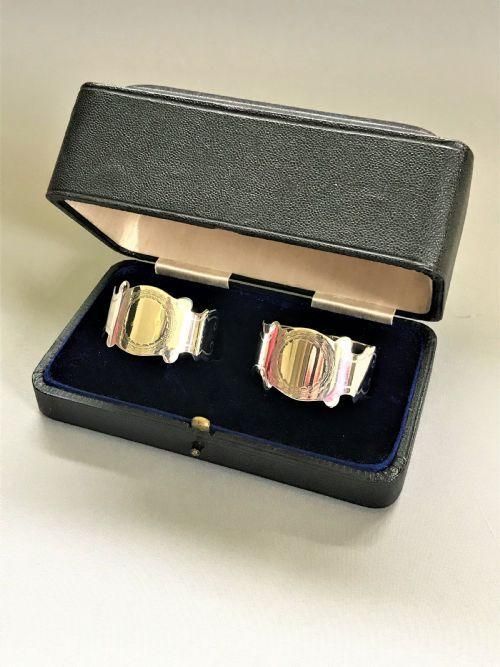
- A decorative technique where intricate geometric patterns are mechanically engraved beneath a translucent layer of enamel. This finish often appears on silver items housed inside Edwardian boxes.
- Tunbridgware
- Woodworking craftsmanship involving thousands of tiny coloured wood blocks assembled to create mosaic pictorial designs. Boxes featuring this technique originate from Kent workshops.
Fitted Jewellery Box: Frequently Asked Questions
How do I date a wooden box?
Dating relies on observing the timber species, construction methods, hardware styles, and any manufacturer stamps present on the locks or interior leather. Rosewood and mahogany appear more frequently in earlier nineteenth-century pieces, while coromandel and burr walnut gain prominence later.
Interior lining fabrics and paper styles also provide chronological clues. Maker signatures and patent marks help narrow down the decade of manufacture.
What is coromandel wood?
Coromandel is an exotic hardwood harvested from southeast Asia, known for its deep brown background and dramatic black or greenish figuring. Cabinet makers favoured it for luxury dressing cases and vanity boxes due to its substantial weight and visual impact.
Because supplies dwindled over time, pieces constructed from solid coromandel or featuring thick coromandel veneers are associated with higher-end production.
Were these boxes meant for travel?
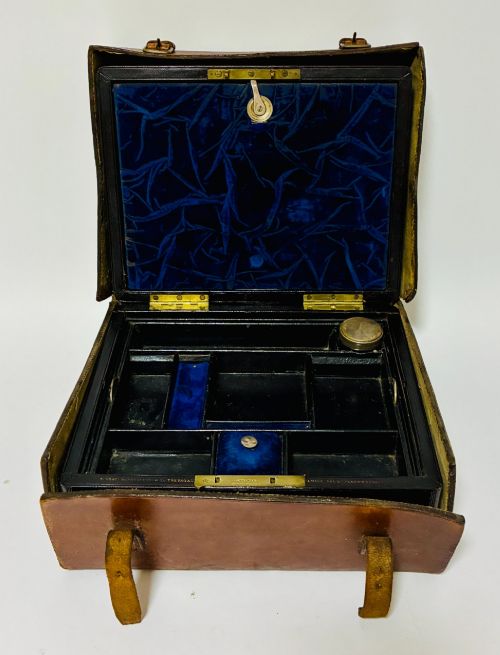
Many examples function as travelling sets or dressing cases, equipped with robust leather outer cases, carrying handles, and secure locks. Others are table cabinets designed to remain stationary on a dressing table or chest.
Travelling variants often include removable trays so the owner could take a smaller selection of jewels while leaving the main case behind.