
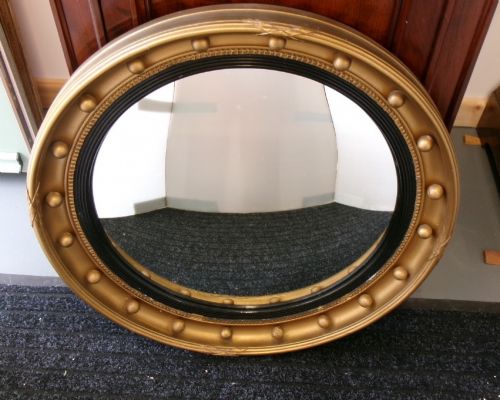
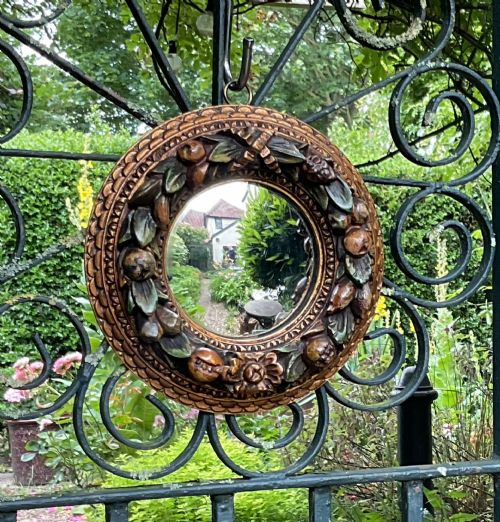
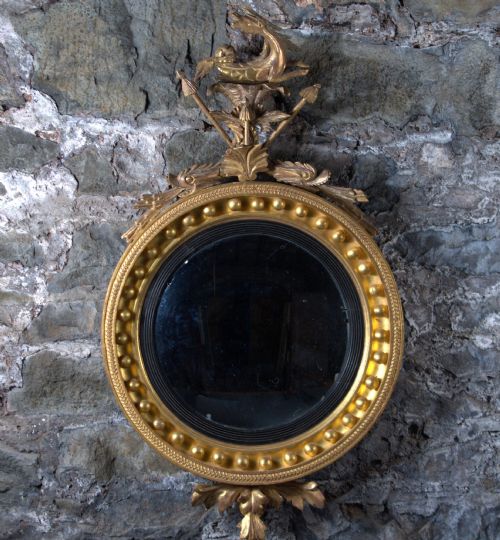
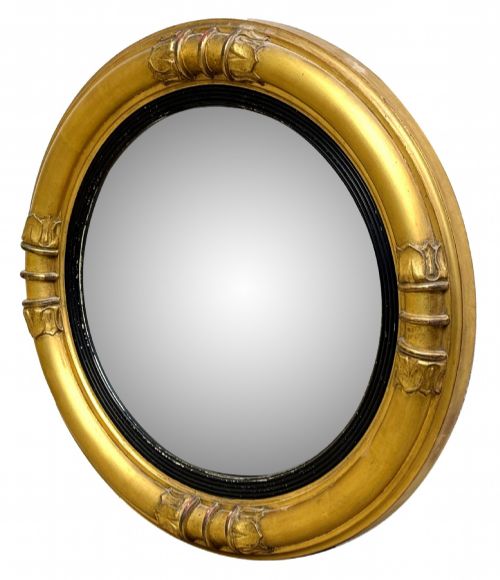


Fisheye Wall Mirror
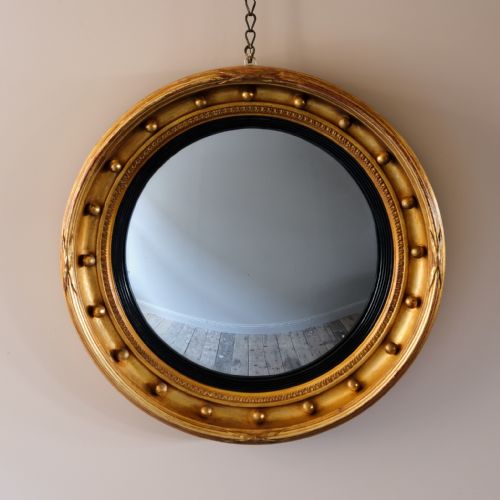
A fisheye wall mirror bends the room into a single curved globe, pulling light across a bold circular frame.
Fisheye Wall Mirror
A fisheye wall mirror gathers the corners of a room into a circular glass plate, functioning as both a practical looking-glass and an optical curiosity. Buyers seeking this form encounter round frames built primarily during the Regency and nineteenth century, alongside later revivals from the Victorian era up to the 1920s.
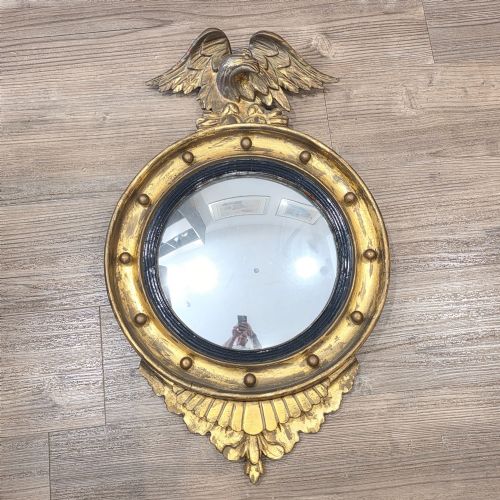
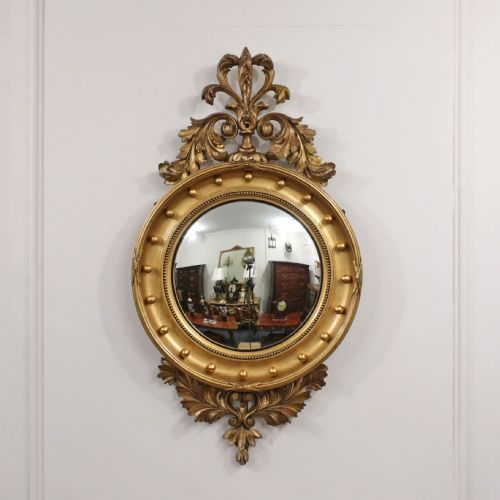
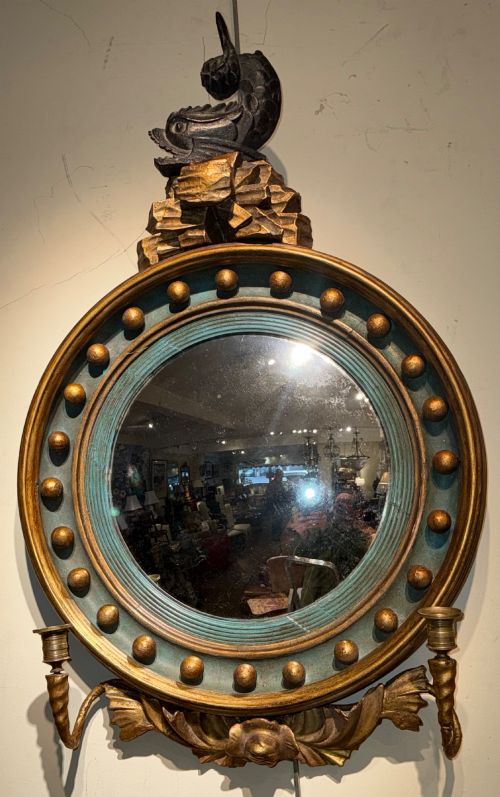
The Regency examples dominate the selection, often taking the shape of heavy giltwood frames topped by carved eagles or dragons. These round pieces appear frequently under alternate descriptions such as butler's mirrors or porthole mirrors, reflecting their historical use in domestic interiors.
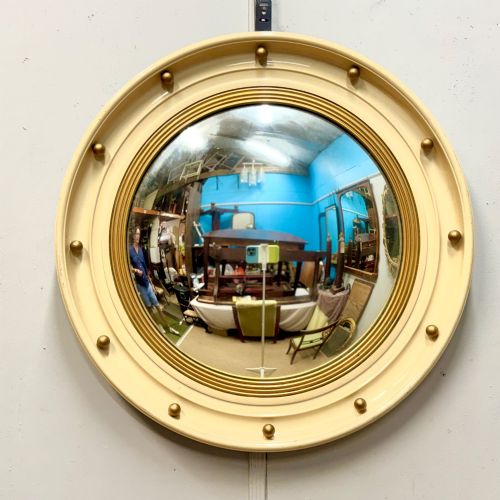
Later nineteenth-century and early twentieth-century variations continue the round format, sometimes rendered in smaller proportions or simpler painted woods, brass, and mahogany. The core aesthetic remains centred on the convex plate, which projects the interior back toward the viewer in miniature.
Materials and Construction
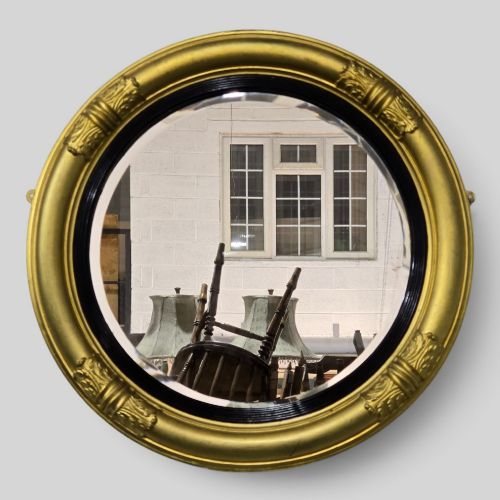
Makers built the frames of a fisheye wall mirror using gesso over carved wood, applying layers of gold leaf or paint to achieve a polished finish. Ebonised wood and mahogany also appear, paired with brass details to construct heavier, contrasting borders.
The defining optical element is the convex glass plate, which required specialised blowing and silvering techniques to maintain a uniform curve without distortion. Craftsmen set these curved plates deep within circular rabbets, often securing them with decorative reeded bezels or ebony-trimmed inner rings.
Fisheye Wall Mirror Retail Price Guide 2026
Typical asking prices for fisheye wall mirror among the pieces listed under this phrase on Sellingantiques today, from the lower quarter to the upper quarter. They describe what is for sale here now, not the wider market.
Some nineteenth-century examples feature fierce carved eagles perched atop the frame, glaring down at anyone checking their reflection.
Distinctions in Execution
The distinction in quality across a fisheye wall mirror rests largely on the depth and crispness of the carved ornamentation, such as the feathered detail on an eagle crest or the precision of the giltwood reeding. Finer examples display harmonious proportions between the heavy bullseye frame and its surrounding cresting, whereas lesser pieces can feel heavy-handed or disproportionate.
The integrity of the convex glass plate and its original gilt surface dictate the overall presence of the object. Pieces retaining their early or original silvering and unchipped gilded gesso stand apart from those with compromised surfaces or heavy later repairs.
The Fisheye Wall Mirror Glossary
- Convex mirror
- A round looking-glass with an outward-curving spherical plate that distorts reflections into a wide-angle view. This shape is the defining feature of every piece listed.
- Giltwood
- Timber coated with a thin layer of gold leaf over a prepared gesso ground. It provides the bright, reflective border characteristic of Regency frames.
- Ebonised
- Wood treated with a chemical stain or black finish to imitate ebony. This dark material contrasts sharply with gilt inner rings.
- Butler's mirror
- A traditional name for a convex wall glass used historically in service rooms to monitor large spaces. The round format offered a wide field of vision.
- Gesso
- A plaster mixture applied to carved wooden frames to create a smooth surface for gilding. It holds sharp decorative detail.
Fisheye Wall Mirror: Frequently Asked Questions
What is a fisheye wall mirror?
A fisheye wall mirror is a circular looking-glass featuring an outward-curving spherical plate that reflects a wide, panoramic view of an interior. These pieces bend light to miniature proportions, creating an optical globe within the room.
Most examples found in trade are built around round wooden frames finished in giltwood, ebonised wood, or brass. They date primarily from the Regency period through to the early twentieth century.
Where were they hung historically?
Historically, these circular mirrors were placed in grand reception rooms, dining parlours, and service spaces where occupants needed to observe activity across a wide area. Their optical reach made them useful for monitoring doorways and corners from a single fixed point.
In domestic settings, they functioned both as practical monitoring tools and as decorative focal points that added light and depth to dark walls.
How do I date a convex mirror?
Dating relies on the construction materials, frame style, and the character of the carved ornaments like eagles or dragons. Regency examples from the early nineteenth century typically feature detailed giltwood carvings and specific mouldings.
Later Victorian and 1920s versions often simplify these motifs or introduce alternative materials like mahogany and brass. Examining the backboards and the method of holding the glass plate provides further clues to age.
Are all convex mirrors called sorcerer mirrors?
Not all convex mirrors carry that name, though the term appears historically for pieces associated with divination or optical amusements. The description reflects the mysterious, wide-angle distortion produced by the curved glass plate.
In trade catalogues and listings, these objects are more commonly designated as convex wall mirrors, butler's mirrors, or porthole mirrors depending on their specific frame style.