
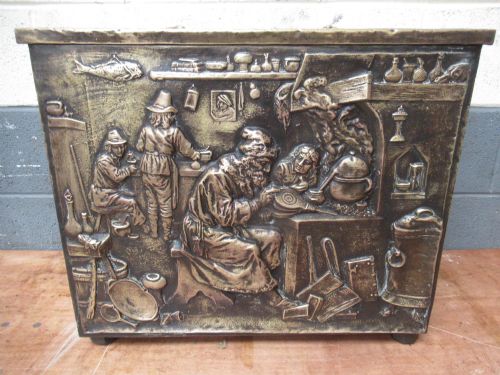


Fireside Storage Chest
These fireside storage chest pieces are hearthside containers designed to keep fuel tidy, and you want one to anchor your fireplace with period character.

Fireside Storage Chest
A fireside storage chest covers a practical range of hearthside containers, including log bins, coal scuttles, slipper boxes, and cellarettes. When searching for a fireside storage chest, buyers encounter functional fuel holders spanning the Georgian, Victorian, Edwardian, and 1930 periods.
The pieces on this page originate from English, French, and Belgian workshops, shifting in form from timber cellarettes to metal-lined coal boxes. Regional variations show distinct preferences, such as French provincial lines alongside sturdy English oak and pine boxes.
Domestic interiors of the nineteenth and early twentieth centuries relied on these chests to hold wood and coal near the fire. Surviving examples range from late Victorian decorative bins to Edwardian oak boxes fitted with metal panels.
Materials and Construction
Timber frames form the structural core of many fireside storage chests, utilising oak, walnut, mahogany, pine, and general wood construction. Joinery methods keep these heavy storage boxes stable when loaded with logs and coal.
Metal components define the decorative and protective surfaces, featuring brass mountings, embossed copper panels, and iron fittings. Craftsmen applied copper plating and hammered designs, such as galleon motifs, directly onto the metal panels.
Listings span the Georgian, Victorian, and Edwardian periods, utilising oak, walnut, brass, and copper.
Craftsmanship and Proportion
Quality in a fireside storage chest rests upon the integration of timber framing with durable metal fixtures. Well-constructed examples balance heavy materials with refined proportions that suit domestic hearths.
Decorative detail separates standard utility boxes from superior pieces, seen in embossed copper work and brass mounts. The clarity of period styles, from Aesthetic Movement designs to Arts and Crafts panels, dictates the character of the object.
The Fireside Storage Chest Glossary
- Coal Scuttle
- A container designed to hold coal for transport to the fireplace, often fashioned from brass or copper. These items typically include a hinged lid and a carrying handle.
- Cellarette
- A lockable cabinet or chest originally used for storing wine bottles near the dining table or hearth. Georgian examples frequently double as fireside storage.
- Slipper Box
- A compartmented wooden box with a sloping lid, repurposed in domestic settings for general fireside storage. The distinctive form resembles an oversized slipper.
- Aesthetic Movement
- A late nineteenth-century design style focusing on visual and material refinement rather than narrative art. Pieces from this period often display disciplined ornamentation.
Fireside Storage Chest: Frequently Asked Questions
What fits inside a fireside storage chest?
These chests accommodate logs, kindling, or coal to maintain a clean hearth area. Their internal capacity suits daily fuel requirements.
Heavier items sit securely within timber or metal-lined interiors designed to withstand the weight of solid fuel.
How do I clean a brass or copper box?
Metal surfaces respond well to gentle dusting and occasional cleaning with non-abrasive polishes. Preserving the natural patina maintains the historical appearance.
Aggressive cleaning agents strip the aged surface character that develops over decades of exposure.
Are these chests heavy to move?
Solid wood and metal construction gives these containers substantial weight, particularly when filled with fuel. Many include side handles to assist with repositioning.
Emptying the contents makes relocation much easier during room rearrangements.
How do I identify the period?
Stylistic markers such as Georgian proportions, Victorian brass mounts, or Edwardian Arts and Crafts copper panels indicate the era of manufacture. Wood selection also guides dating.
Examining internal construction methods and fixings provides further confirmation of the period.