
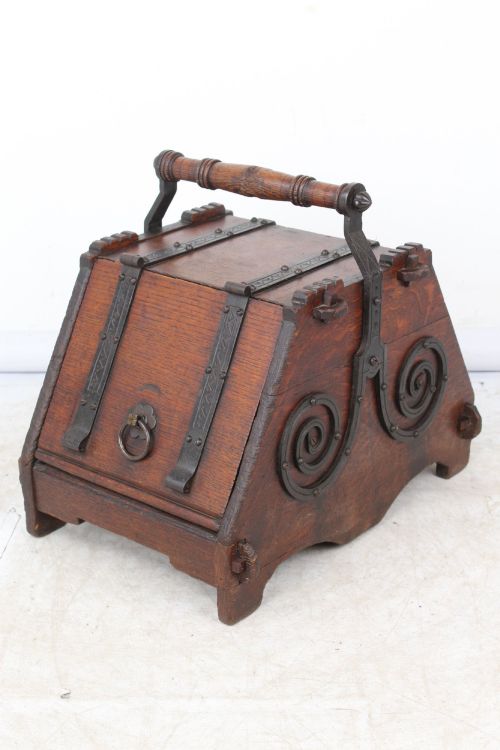
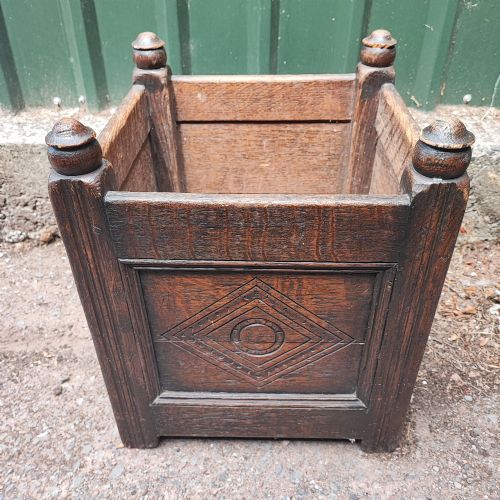
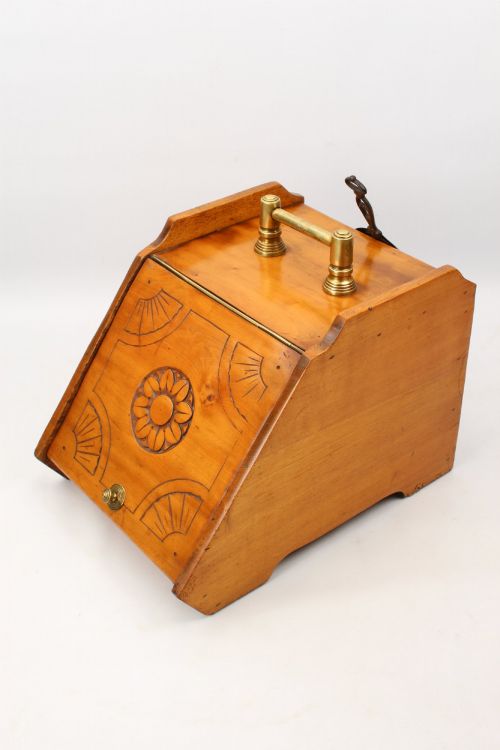


Carved Oak Coal Bin
These carved oak coal bins are heavy fireside accessories that keep fuel ready by the grate while lending robust character to a room.
Carved Oak Coal Bin
A carved oak coal bin is a sturdy fireside container designed to store solid fuel near the hearth, appearing in forms such as boxes, scuttles, and purdoniums. These items belong to the Victorian and Edwardian eras, alongside earlier Georgian examples.
The versions most commonly met on this page are Victorian and Edwardian boxes and purdoniums fashioned from solid timber. Makers often incorporated metal handles and shovels to assist with daily use.
Some examples draw on Gothic Revival or rustic country styles, featuring carved fronts or panels that elevate a utilitarian object into a decorative feature.
How they were made
Makers built these pieces primarily using oak, occasionally selecting pollard oak or fruitwood for decorative grain patterns. Metal components like brass and wrought iron provided structural reinforcement and functional handles.
Joinery techniques combined traditional wood carpentry with metal mounting to secure hinges, liners, and handles. Carved ornamentation on the fronts required skilled hand chiselling to achieve depth and texture.
What varies in quality
The depth and execution of the carving separate standard utilitarian boxes from finer pieces. Crisp detailing on panels or specific motifs like a green man indicates superior workshop craftsmanship.
The integration of quality metal hardware, such as heavy brass mounts and original shovels or liners, distinguishes the better examples in this category.
Christopher Dresser
The Carved Oak Coal Bin Glossary
- Purdonium
- A specialised coal box featuring a sloping front door that drops forward to reveal a metal container or liner. This design keeps the fuel neatly enclosed while allowing easy access by the hearth.
- Coal Scuttle
- A deep fireside container traditionally used for carrying and holding coal, often fitted with a swinging overhead handle and a matching shovel. They appear frequently in Victorian domestic interiors.
- Pollard Oak
- Timber taken from trees that have been pollarded, producing a dense wood with clustered, knotty grain patterns. Cabinet makers prized this variant for decorative panel fronts.
- Gothic Revival
- An architectural and decorative style popular during the nineteenth century that revived medieval forms. Pieces in this style often feature pointed arches, heavy tracery, and dramatic carved details.
Carved Oak Coal Bin: Frequently Asked Questions
What is a purdonium?
A purdonium is an enclosed wooden coal box featuring a hinged, dropping front panel that conceals a metal interior liner. It provides a tidy way to store fuel beside the fireplace.
These pieces typically include a matching shovel stored in a compartment at the side or back, combining practical utility with neat domestic design.
How do I clean a wooden coal box?
Maintain the oak by dusting it regularly with a dry cloth and occasionally applying a traditional beeswax polish to nourish the timber. Avoid using harsh chemical sprays that might strip the historic finish.
Keep the interior metal liner clean by brushing out residual coal dust and wiping it down only when completely dry to prevent moisture damage to the surrounding wood.
Where should I place a coal bin in a modern room?
These bins sit naturally beside a working fireplace, wood burner, or empty period hearth as a focal point. Their robust construction allows them to blend easily into living spaces.
Beyond fireside use, some people repurpose these boxes as stylish storage containers for kindling, blankets, or magazines in a study or hallway.
How do I distinguish Victorian from Georgian pieces?
Victorian examples often display heavier ornamentation, such as Gothic Revival motifs, deep relief carvings, and manufactured brass fittings. They tend to date from the later nineteenth century.
Georgian pieces usually exhibit simpler, more restrained lines and construction methods reflecting earlier eighteenth or early nineteenth-century cabinet making traditions.