
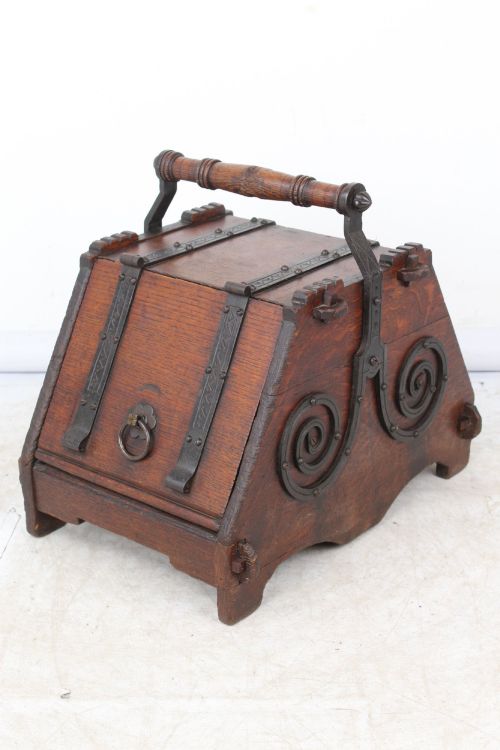
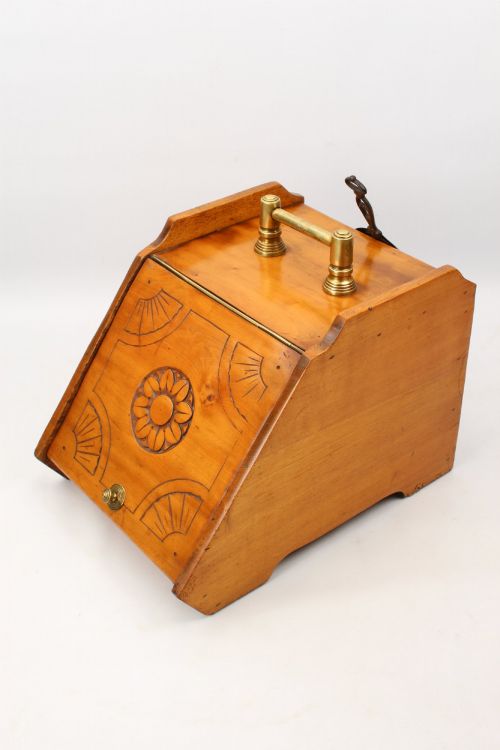


Carved Oak Scuttle
A carved oak scuttle brings honest texture and warmth to a fireside, combining heavy timber with practical metalwork.
Carved Oak Scuttle
A carved oak scuttle is a traditional fireside container designed to hold coal, often referred to in listings as a coal box, purdonium, or storage box. These functional items became domestic staples during the Victorian and Edwardian eras, combining sturdy utility with decorative craftsmanship.
The versions most commonly met on this page date from the nineteenth century into the early twentieth century. They range from simple timber boxes to elaborate Gothic Revival pieces and examples featuring specialised pollard oak veneers.
Beyond basic fuel storage, these items frequently integrate related fireside accessories such as matching metal shovels and original interior liners. While primarily associated with coal storage, similar forms in the evidence span alternative domestic uses including biscuit barrels and small drop-front cabinets.
How they were made
These pieces rely on solid timber construction using oak, occasionally utilising distinctive pollard oak variations for decorative effect. Carving defines the surface ornament, executed directly into the wood to create panels, moulded edges, and textured fronts.
Metal components form an essential part of the construction, combining brass handles, hinges, and mounts with iron or wrought iron internal elements. Silver plate also appears on related serving forms, while removable metal liners protect the wooden structure from moisture and residue.
Materials in these records include standard oak alongside decorative pollard oak and silver plate.
What varies in quality
Quality separates simple utility items from pieces showing deliberate artistic ambition, visible in the depth and clarity of the carved decoration. Finer examples display crisper detailing across the oak panels and heavier gauge brass handles and mounts.
The presence of original fittings dictates much of the standing of an individual piece. Retaining the matching shovel and the original internal metal liner marks out a well-preserved survivor.
Christopher Dresser
The Carved Oak Scuttle Glossary
- Purdonium
- A specialised type of coal box or scuttle, usually featuring a sloping drop-front or tilt-bin mechanism designed for easy fuel retrieval. These cabinets often incorporate interior metal liners and dedicated compartments for a shovel.
- Gothic Revival
- An architectural and decorative style drawing inspiration from medieval forms, characterised in these pieces by heavy pointed arches, tracery, and robust proportions. The aesthetic was popular during the Victorian period.
- Pollard Oak
- Timber harvested from trees that have been pollarded, producing a dense wood grain with rich, swirling patterns. This figured material was selected for prominent veneered surfaces on select Victorian boxes.
- Silver Plate
- A thin layer of silver fused to a base metal core, utilised on domestic vessels such as antique biscuit boxes. This technique provided the visual appeal of solid silver at a lower production cost.
Carved Oak Scuttle: Frequently Asked Questions
What is a purdonium?
A purdonium is an enclosed coal box featuring a sloping front door or a tilting compartment designed to hold domestic fuel neatly beside the fireplace. These Victorian and Edwardian items kept coal dust contained while presenting a tidy wooden cabinet to the room.
Inside, most purdoniums feature a removable metal liner that lifts out for emptying and cleaning. Many also include a built-in internal rack or clips to hold a matching metal shovel.
How do I date an oak scuttle?
Dating relies on observing the stylistic markers and construction methods typical of nineteenth and early twentieth-century domestic woodwork. Pieces displaying heavy Gothic Revival carving generally point to the Victorian era, whereas cleaner lines often indicate Edwardian manufacture around nineteen hundred.
Hardware details also help establish chronology. The weight and fastening style of the brass handles, hinges, and internal liners correspond directly to the manufacturing standards of their respective decades.
Were these used only for coal?
While primarily manufactured to hold fuel for coal-burning grates, similar wooden box forms served other domestic purposes. Surviving examples include biscuit boxes and small storage cabinets constructed with identical oak and brass materials.
At the fireside, the scuttle remained dedicated to fuel management, but the versatility of sturdy wooden boxes meant workshops produced parallel forms for dining rooms and parlours.
How do I care for antique oak?
Maintaining antique oak involves keeping the timber away from direct heat sources and sudden temperature shifts that can cause the wood to dry out or split. A light application of appropriate wax helps nourish the grain and preserve the surface sheen.
Metal components such as brass handles and iron fittings benefit from dry dusting. Avoid harsh chemical polishes that might damage the historic patina on both the timber and the metalwork.