



Fireside Coal Purdonium
A fireside coal purdonium is an essential Victorian and Edwardian receptacle designed to store fuel beside the hearth with practical elegance.

Fireside Coal Purdonium
A fireside coal purdonium is a dedicated domestic container built to hold coal, logs, or kindling within reach of the fireplace. The pieces gathered under this phrase span the nineteenth and early twentieth centuries, encompassing Victorian, Edwardian, and Regency periods.
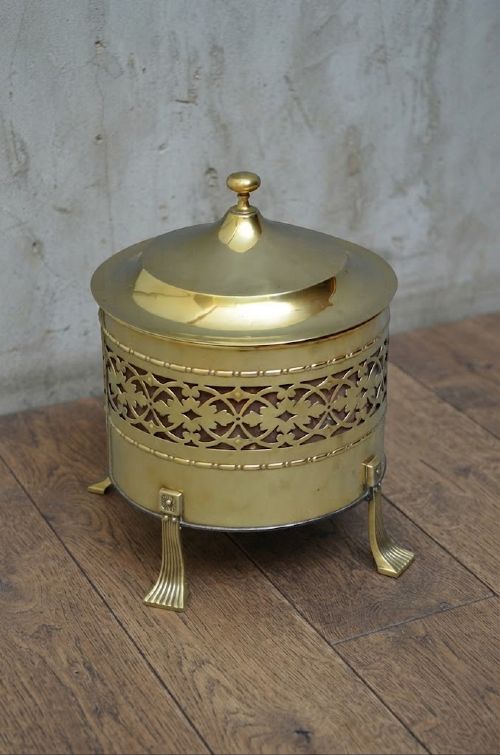
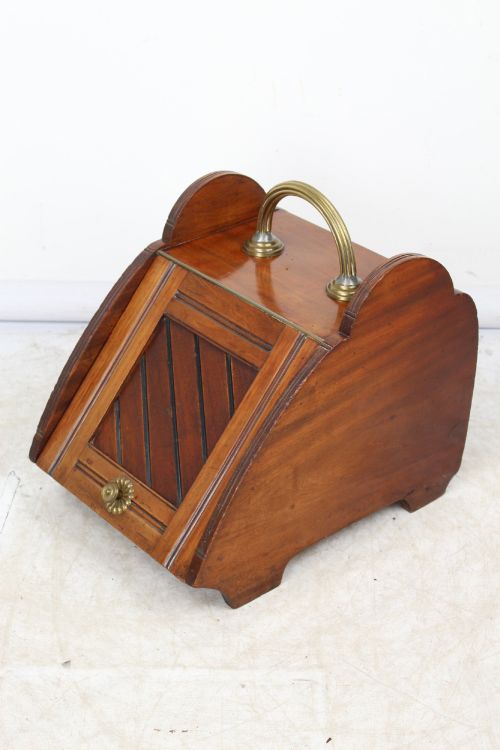
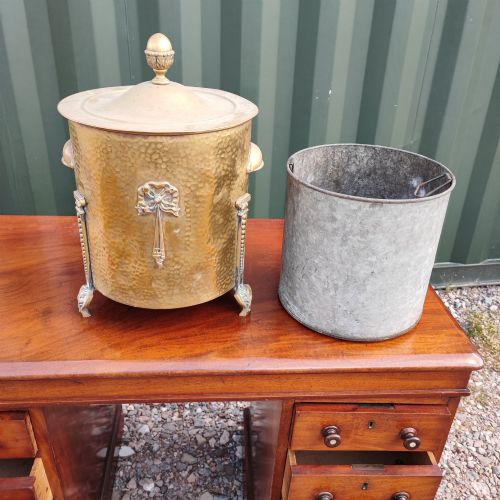
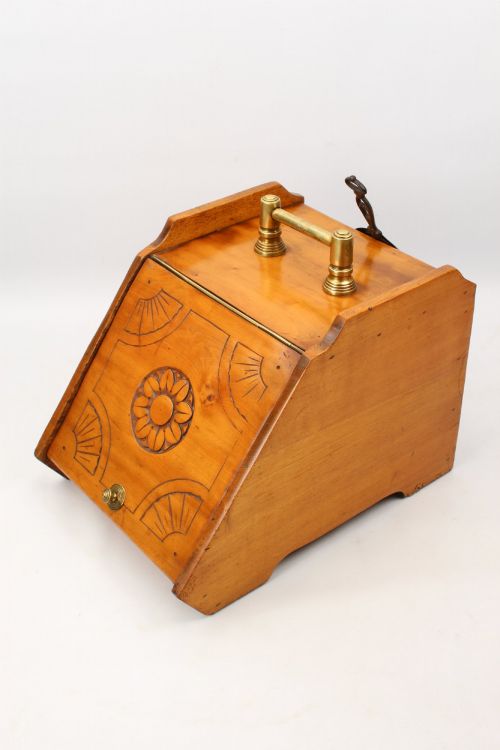
The most common formats found in these listings are upright timber cabinets with drop-front mechanisms, alongside open copper or brass buckets. Many include original metal liners and matching shovels tucked into side compartments.
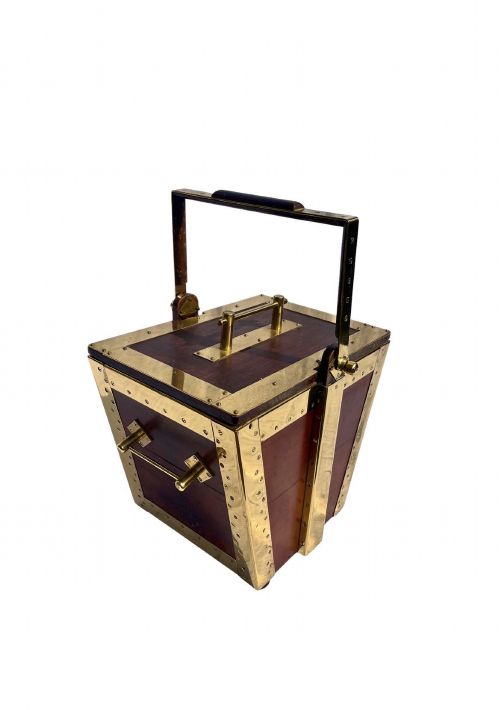
Makers utilised various regional timbers including mahogany, walnut, oak, and pollard oak, frequently enhanced with brass handles, hinges, and decorative mounts.
How They Were Made
Cabinet-style purdoniums were constructed by joiners using hardwoods such as walnut, mahogany, and oak, often decorated with marquetry inlays, carved panels, or aesthetic movement motifs.
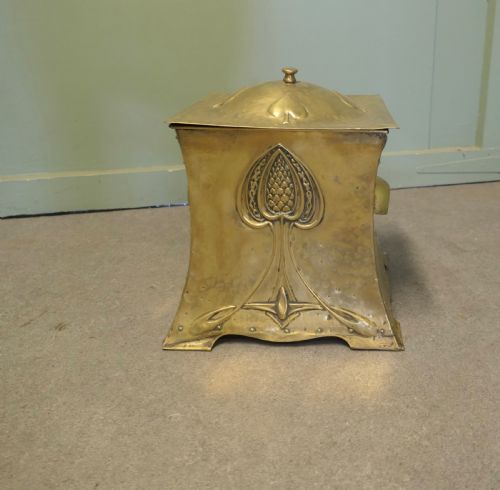
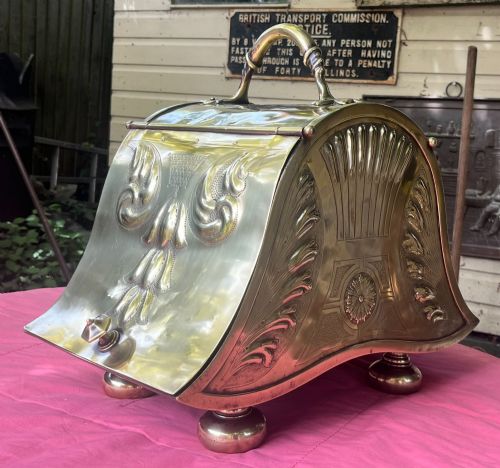
Metal versions relied on sheet brass and copper, shaped by hand or spun, frequently finished with robust iron swing handles and cast brass mounts.
Drop-front mechanisms required internal tracks and pivots to allow the coal container to tilt forward smoothly without spilling the contents.
Listings feature oak, walnut, mahogany, pollard oak, brass, copper, and iron across Victorian and Edwardian periods.
What Varies in Quality
The distinction between standard utility items and superior examples lies in the selection of timber and the sophistication of the brass mounts. Finely carved panels, inlaid rosewood, and ormolu detailing indicate a piece made for a principal reception room rather than a back bedroom.
The survival of original components such as the interior metal liner and the matching shovel preserves the integrity and completeness of the piece. Substantial gauge brass and tight joinery in the drop-front mechanism distinguish the better workshops from mass production.
William Soutter And Sons
The Fireside Coal Purdonium Glossary
- Purdonium
- A specialised coal cabinet or box featuring a tilt-forward compartment designed for domestic hearths.
- Tole ware
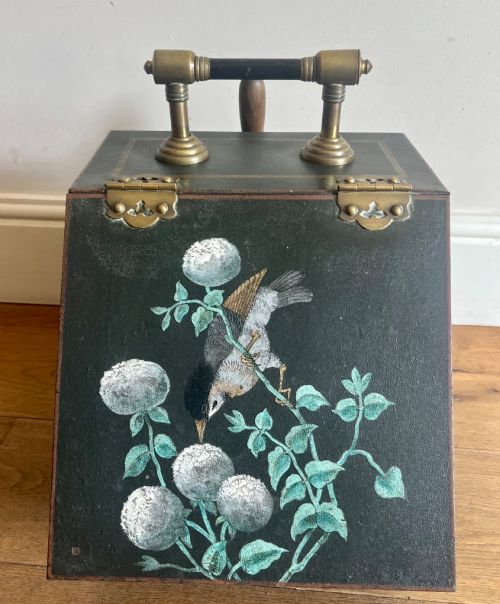
- Japanned or painted metalware used for domestic containers such as coal buckets.
- Marquetry
- Decorative woodwork where pieces of veneer are fitted together to form geometric or floral designs on cabinet surfaces.
- Ormolu
- Gilt-bronze mounts applied to furniture and metalwork for decorative enrichment during the nineteenth century.
- Drop-front
- A hinged front panel that tilts downward to grant access to an internal coal hopper.
Fireside Coal Purdonium: Frequently Asked Questions
What is a purdonium?
A purdonium is a specific type of coal container developed in the Victorian era, usually taking the form of a cabinet with a sloping front drop-door.
Unlike an open bucket, it kept the coal completely enclosed to contain dust and debris while sitting tidily in the drawing room.
Did they always come with shovels?
Many purdoniums and coal boxes were manufactured with dedicated side brackets or internal clips designed to hold a matching shovel.
Finding a piece with its original shovel and metal liner remains a significant bonus for collectors.
How do I date a coal purdonium?
Dating relies on timber choices, brass hardware styles, and decorative movements such as Arts and Crafts or Art Nouveau.
Earlier nineteenth-century examples often feature heavy mahogany and robust brass handles, whilst Edwardian pieces frequently display lighter oak or inlaid rosewood.
Can I still use one for real coal?
While these pieces were built for solid fuel, most modern owners prefer to utilise them for storing dry logs or kindling.
Using the original metal liner helps protect the antique wood from moisture and heavy wear.