
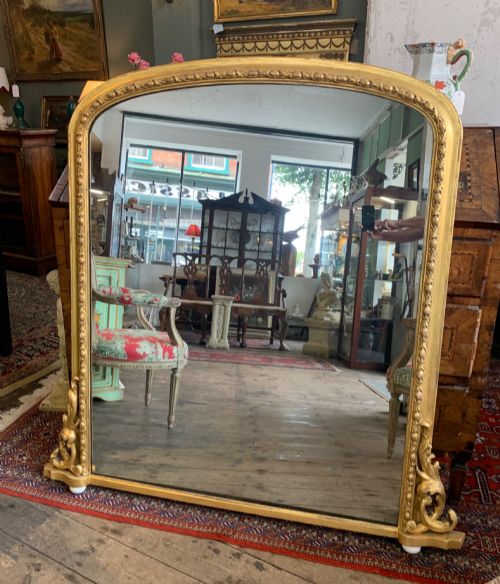
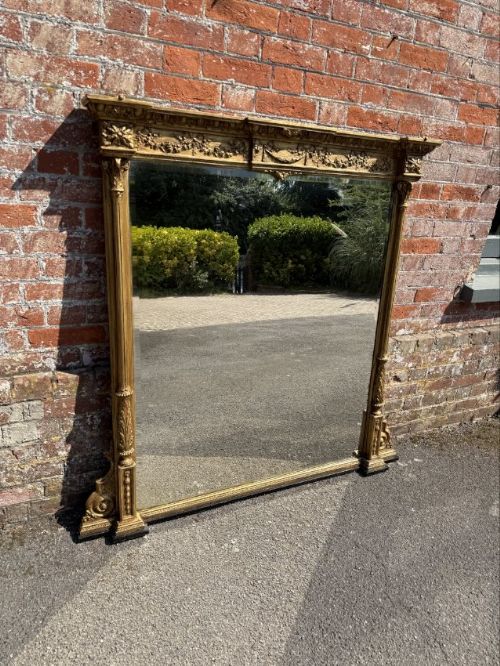
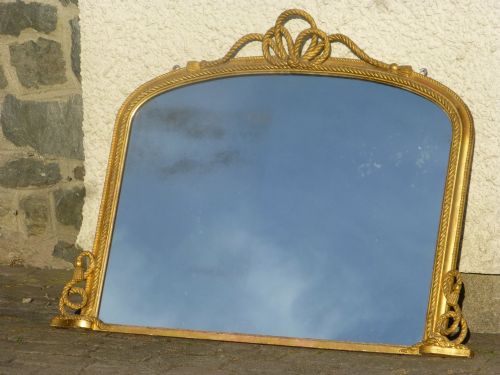
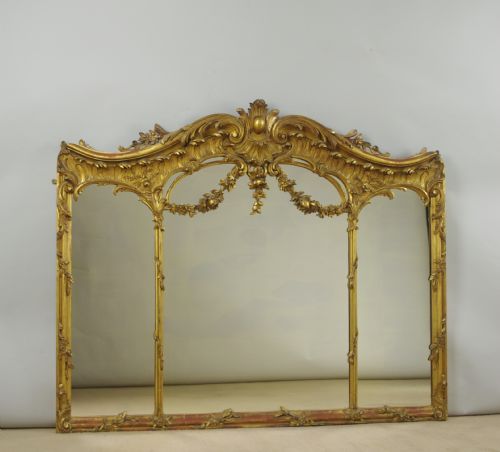


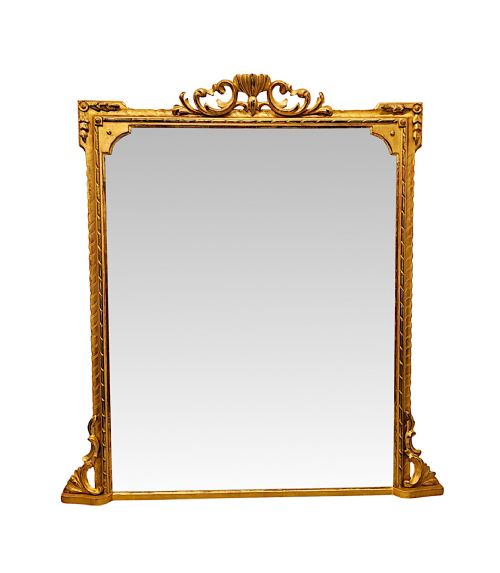
Fireplace Mantle Mirror
A fireplace mantle mirror sits above the hearth, anchored by the architectural periods and rich materials seen in nineteenth-century overmantel forms.

Identifying your fireplace mantle mirror
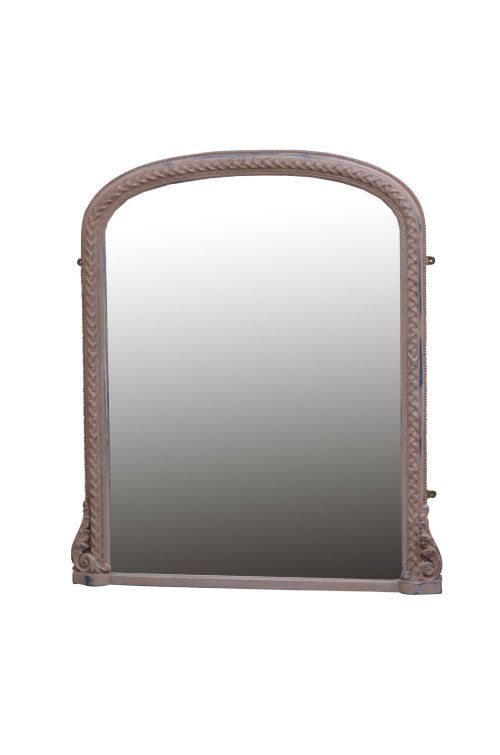
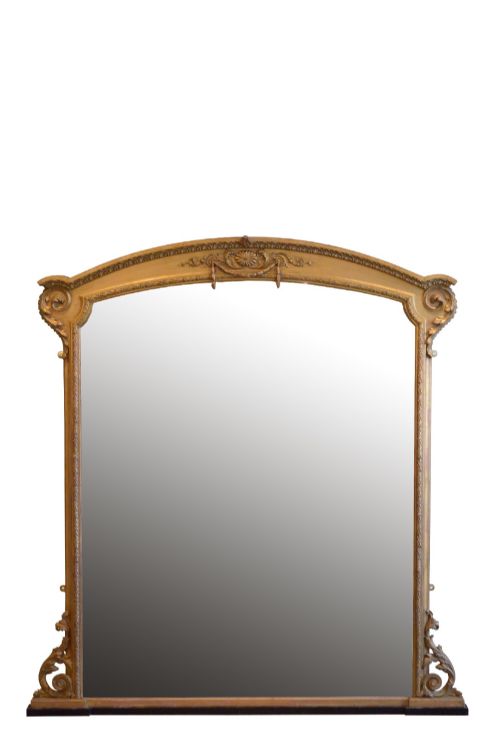
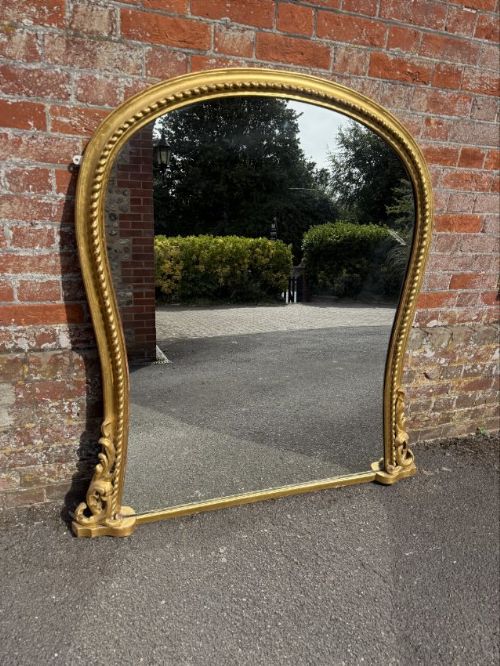
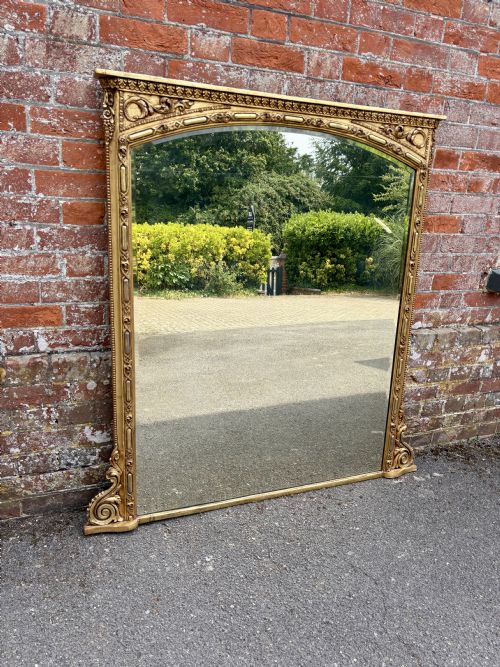
A fireplace mantle mirror takes the form of an overmantel mirror designed to mount directly above a hearth. These large mirrors reflect light and anchor the reception room interior.
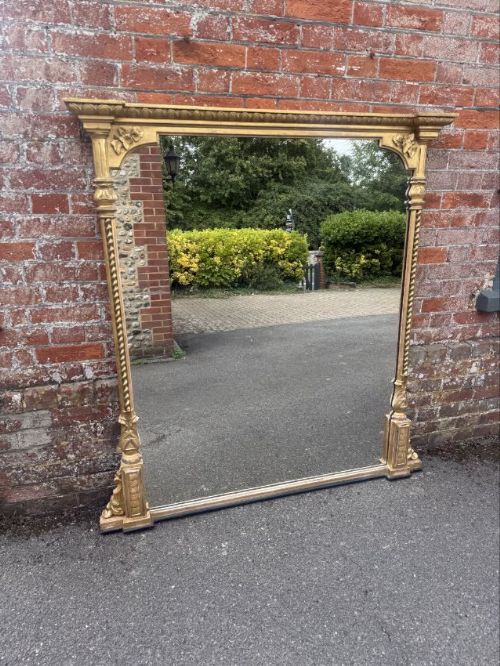
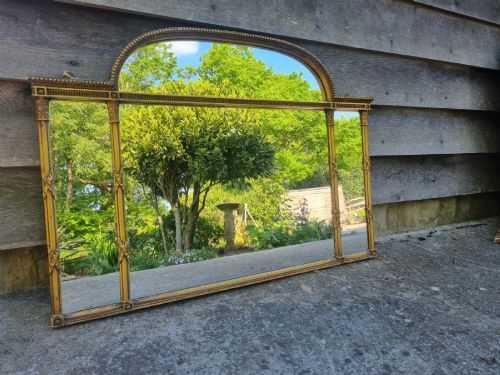
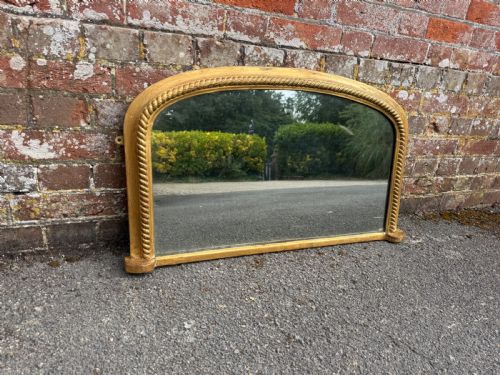
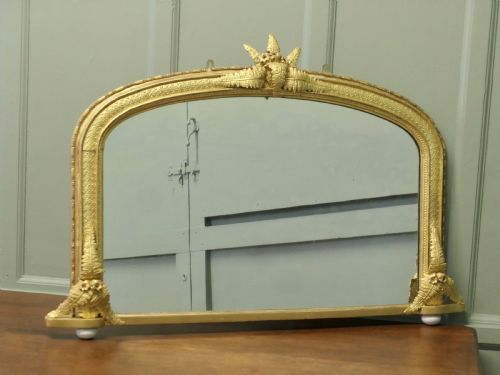
The pieces appearing on this page span the Victorian and Edwardian eras, alongside late eighteenth and early nineteenth-century examples. You will frequently encounter substantial arched and shaped top formats framed in giltwood or painted finishes.
Makers shaped these plates from wood and composition, adapting them to architectural proportions. Surviving items include pine, mahogany, and birdseye maple frames paired with original glass.
Materials and construction methods
Artisans built these frames using solid timber bases of pine, mahogany, and birdseye maple, carved with precision. They applied layers of gesso to create smooth surfaces for subsequent gilding or paint.
Giltwood and gold leaf finishes required meticulous hand-application over preparatory grounds. Composition ornaments were cast and applied to timber substrates to build intricate decorative relief.
Silvered glass plates were fitted into large rebates behind the timber frames. Original reflective glass often shows age-appropriate foxing and subtle distortion across the surface.
Retail Price Guide 2026
Typical UK retail prices for fireplace mantle mirror, calculated from the Sellingantiques database of over a million retail prices indexed since 2003. This retail price guide relies exclusively on Sellingantiques data; no external sources or auction records are used, so the figures do not describe the wider market.
The documented periods span the late eighteenth century, 1860, 1870, and the Edwardian era.
Assessing quality and craftsmanship
Quality rests in the depth and crispness of the hand-carved wood and gesso ornamentation. Finer examples retain their original gilding and early glass plates without modern replacements.
Proportion and scale dictate the visual weight of an overmantel against a chimney breast. Pieces showing integrated architectural moulding and uncompromised structural joinery command attention.
The Fireplace Mantle Mirror Glossary
- Overmantel mirror
- A large mirror designed specifically to hang on the wall above a fireplace mantelpiece. These pieces often feature horizontal proportions or grand arched tops.
- Gesso
- A plaster-like mixture applied to wood frames to create a smooth surface for gilding or painting. Skilled carvers incised details directly into this hardened layer.
- Giltwood
- Timber coated with fine gold leaf or metal powder applied over a prepared ground. It catches the ambient light of the room.
- Composition
- A moulded mixture of whiting, resin, glue, and linseed oil pressed into decorative reliefs. It offered a cost-effective alternative to deep hand-carving.
Frequently Asked Questions
Where should a fireplace mantle mirror hang?
These mirrors hang directly above the fireplace mantelpiece to reflect room light and draw the eye upward. Their large scale anchors the chimney breast and balances the hearth below.
Ensure the wall fixings match the substantial weight of the timber and gesso frame. Secure the mirror safely into masonry or solid wall studs.
What is original glass?
Original glass refers to the historical mirror plate retained within the antique frame since its manufacture. Such glass often displays characteristic foxing, minor speckling, and gentle surface waviness.
These subtle imperfections confirm the age of the piece. Collectors value original plates for maintaining the authentic historical character of the mirror.
How do I clean an antique mirror?
Dust the carved frame gently with a soft, dry brush to protect delicate gesso and gilding. Avoid liquid cleaners that might seep behind the frame and damage historical surfaces.
Clean the glass plate sparingly using a soft cloth dampened with water or mild glass cleaner. Prevent any moisture from contacting the edges of the silvered plate or the wooden backing.