
Fireplace Hearth Andirons
Fireplace hearth andirons support logs within an open hearth, bringing functional metalwork and period style to a chimney breast.
Fireplace Hearth Andirons
When you search for fireplace hearth andirons, you encounter vertical supports designed to hold fuel wood above the floor of an open hearth. These metal objects appear in pairs, often accompanied by fire baskets or grates.
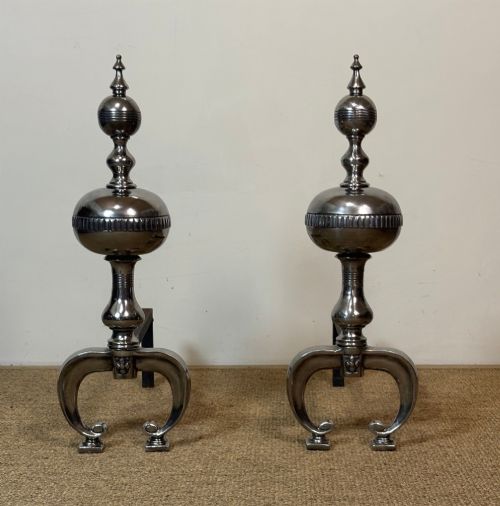
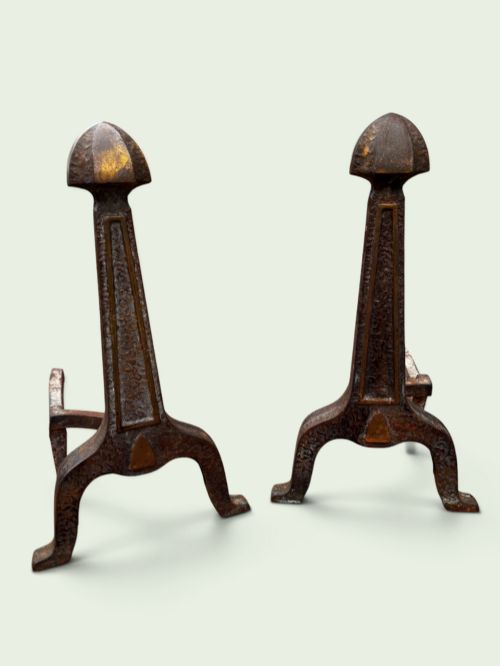
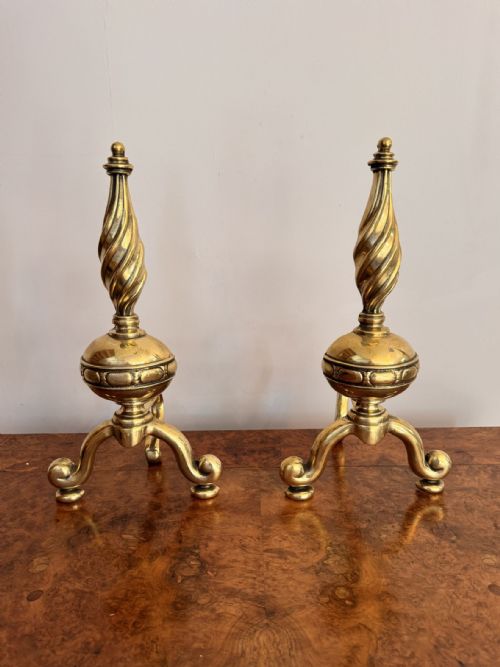
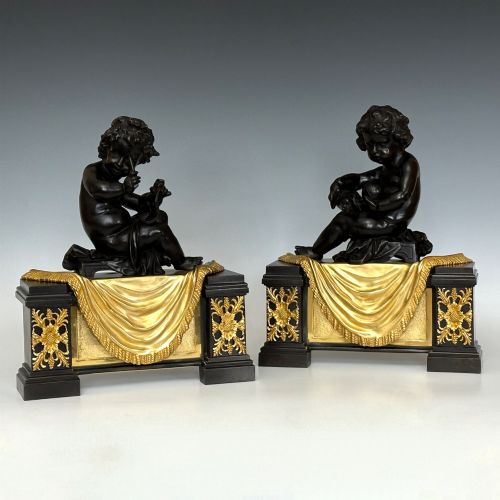
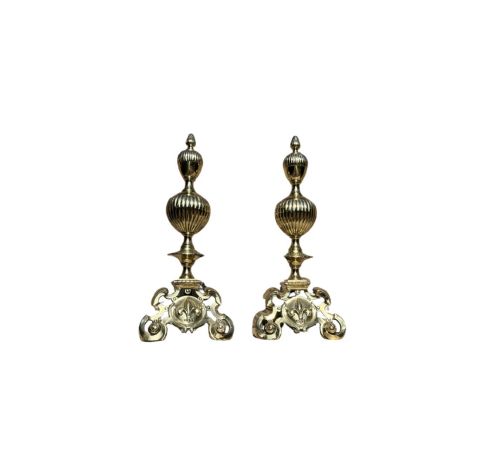
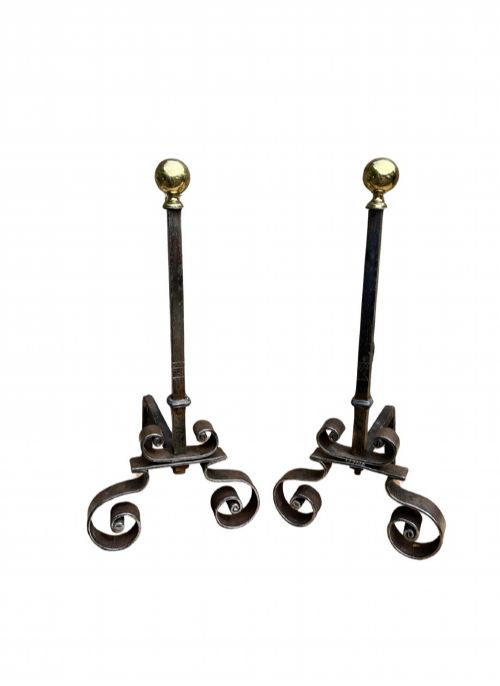
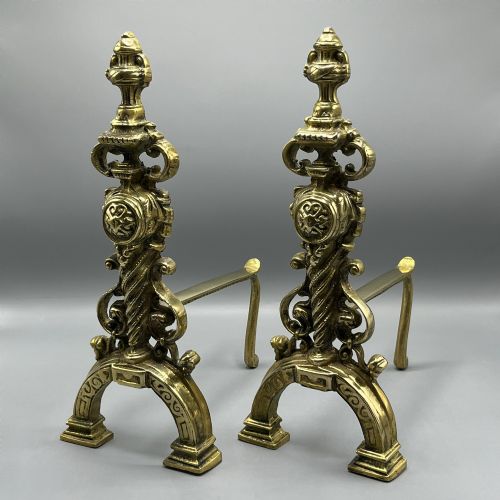
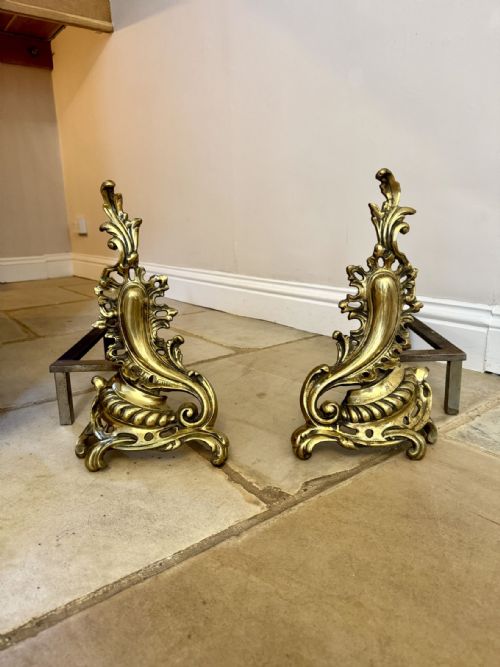
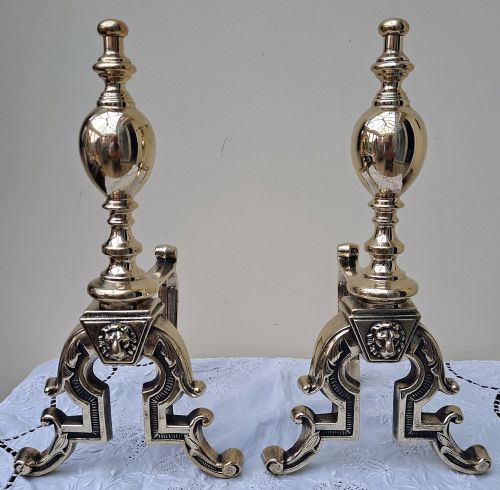
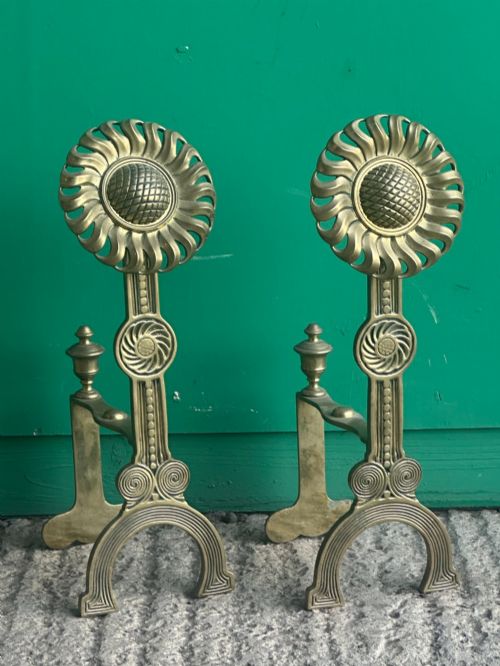
The pieces on this page span the eighteenth, nineteenth and twentieth centuries, taking forms such as French chenets, fire dogs and figural statuettes. Victorian and Georgian examples sit alongside French Rococo, Gothic Revival and Arts and Crafts iterations.
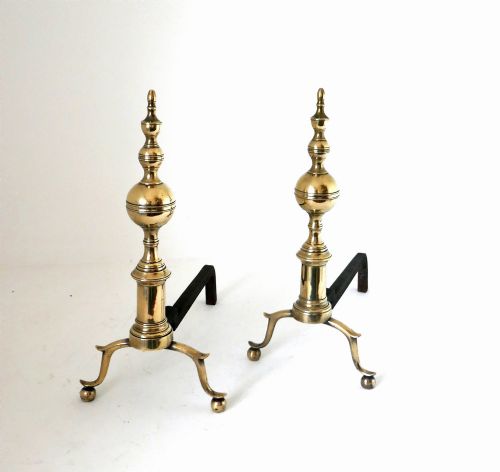
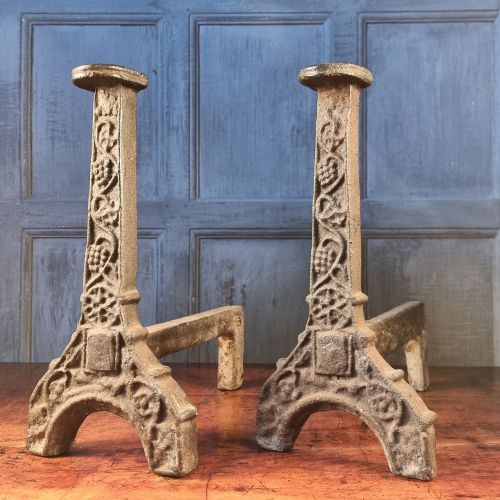
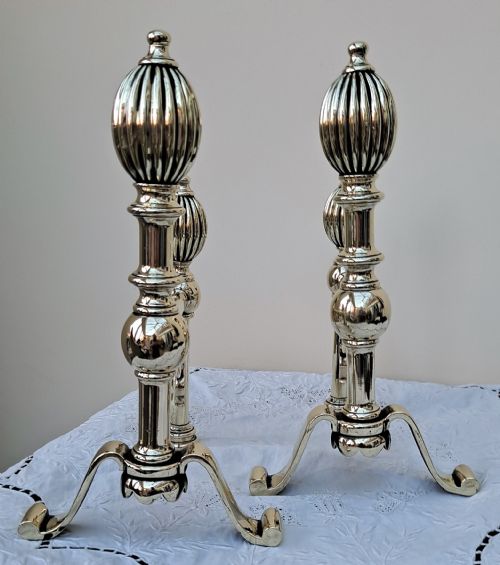
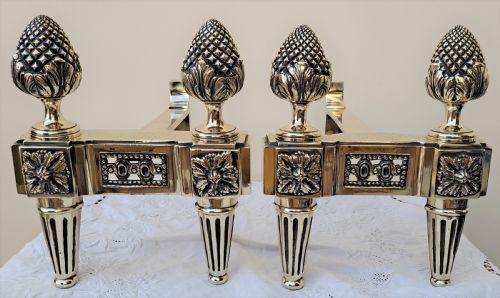
Most entries consist of heavy cast brass, wrought iron or bronze, reflecting domestic heating requirements from earlier centuries. They range from simple utility iron bars to monumental cast brass pairs bearing distinct decorative motifs.
Materials and construction
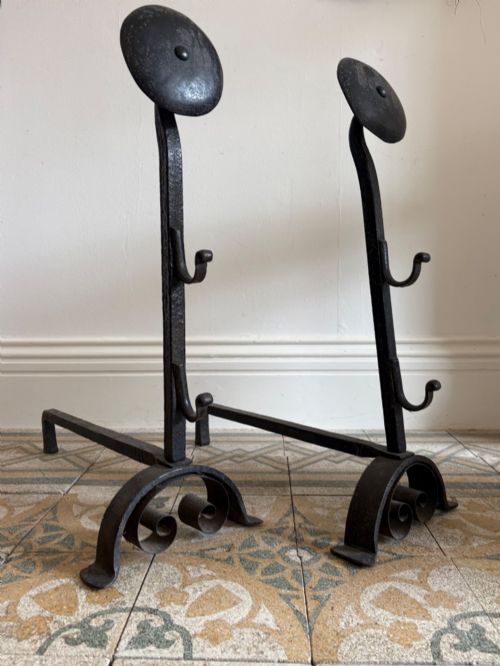
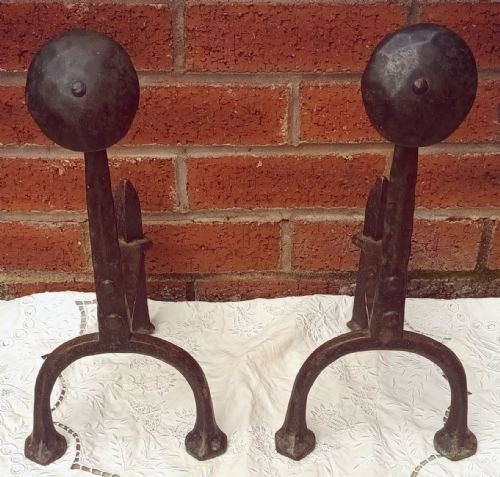
Foundry workers utilised brass, cast iron, wrought iron, bronze and steel to forge these hearth supports. Molten brass and bronze were poured into moulds to create decorative fronts, while iron was beaten and worked by hand for strength.
Ormolu and gilt finishes were applied to bronze and brass elements for decorative effect, particularly on French models. Wrought iron and steel components relied on traditional blacksmithing techniques to shape the legs and horizontal billets.
Some andirons double as roasting spits, proving that historic hearth furniture took its cooking duties quite seriously.
Distinctions in quality
The division between standard workshop production and superior craftsmanship rests on the weight of the metal and the crispness of the casting. Substantial mass ensures the iron or brass withstands intense hearth heat without warping.
Finely chased details on ormolu and bronze figures or intricate relief work on brass faces distinguish high-end examples. Simpler iron fire dogs rely on balanced proportions and clean forging rather than applied ornamentation.
William Tonks·Thomas Jeckyll
The Fireplace Hearth Andirons Glossary
- Andirons
- Supports for logs in an open fireplace, consisting of a vertical front pillar and a horizontal bar. They are also known as fire dogs.
- Chenets
- The French term for andirons, frequently denoting decorative metal ornaments used on hearths. They often feature bronze, ormolu or cast brass construction.
- Fire Basket
- A metal grate designed to hold coal or wood within a fireplace, frequently utilised alongside matching andirons. They sit within the hearth opening.
- Ormolu
- Gilt bronze ornamentation applied to decorative metalwork during the eighteenth and nineteenth centuries. The technique involves coating bronze with a gold amalgam.
Fireplace Hearth Andirons: Frequently Asked Questions
What do fireplace hearth andirons do?
Andirons hold logs off the floor of an open hearth, allowing air to circulate underneath for a better burn. They also prevent rolling fuel from spilling out into the room.
In period settings, the decorative front pillars served as a focal point for the room even when the fireplace was unlit. They frequently matched other fireside tools such as tongs and pokers.
How do I style andirons in a modern room?
Place a pair within the fireplace opening either flanking a fire basket or standing alone against a decorative fire back. They introduce historical texture and metallic warmth to an empty or working chimney breast.
Heavier brass or iron versions anchor the room visually, while French ormolu or Rococo designs add refined detail to the hearth floor.
How do I date a pair of andirons?
Dating relies on identifying the prevailing style, such as Georgian neoclassical lines, Victorian Gothic Revival motifs or Arts and Crafts hand-hammered ironwork. Material choices and manufacturing marks also help narrow down the decade of production.
Earlier eighteenth-century pieces often show simpler hand-forged iron construction, whereas nineteenth-century foundry pieces frequently employ complex cast brass and bronze components.
Are andirons and fire dogs the same thing?
The terms are used interchangeably to describe the same category of hearth furniture. Both refer to metal supports designed to hold firewood inside an open fireplace.
Regional preferences and historical catalogues tended to favour one term over the other, but the underlying function and form remain identical.