

Fine Marquetry Table
When you search for a fine antique marquetry table, you encounter intricate wood-inlaid surfaces spanning Victorian, Edwardian, and Regency periods.
Fine Marquetry Table
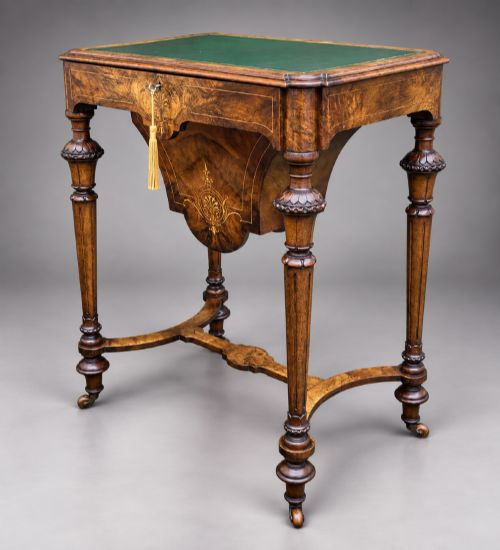
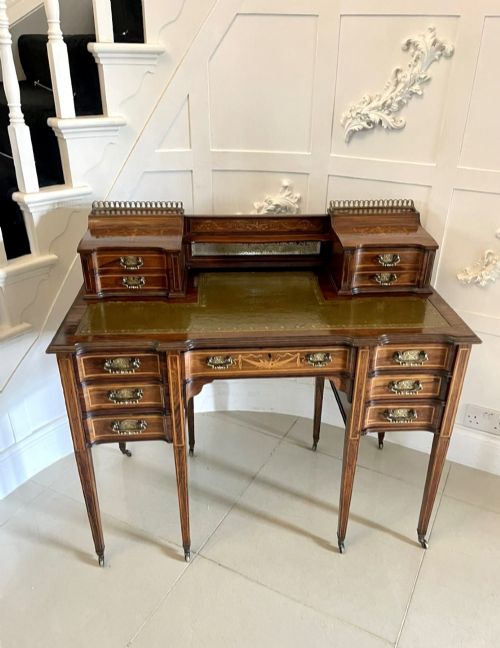
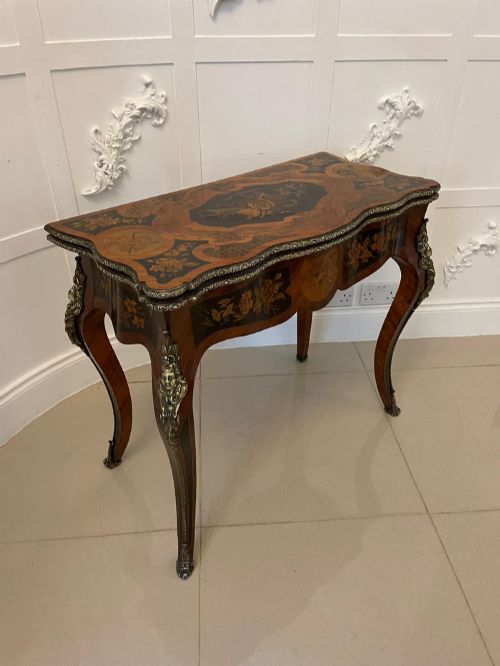
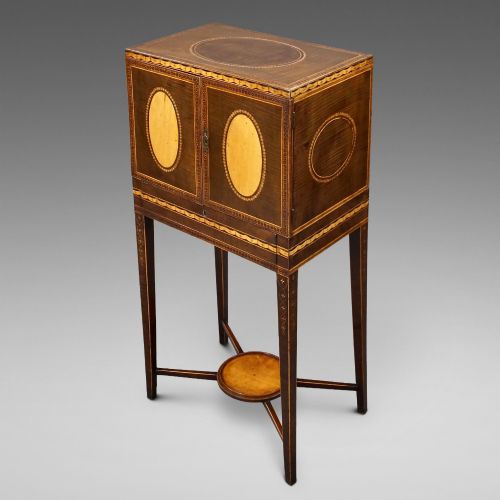
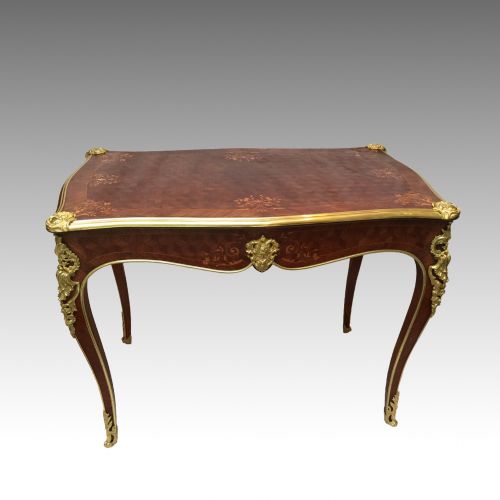
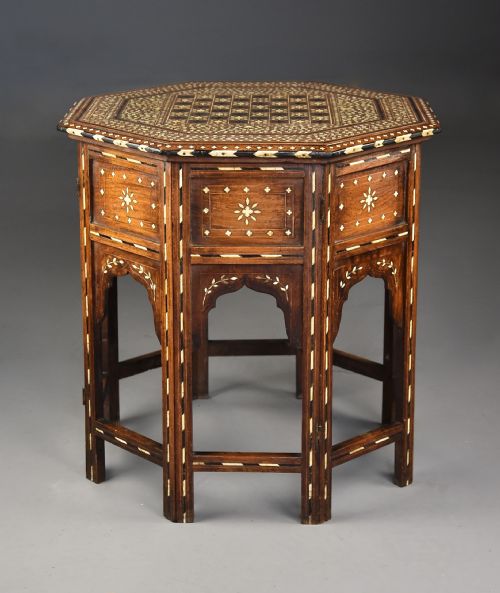
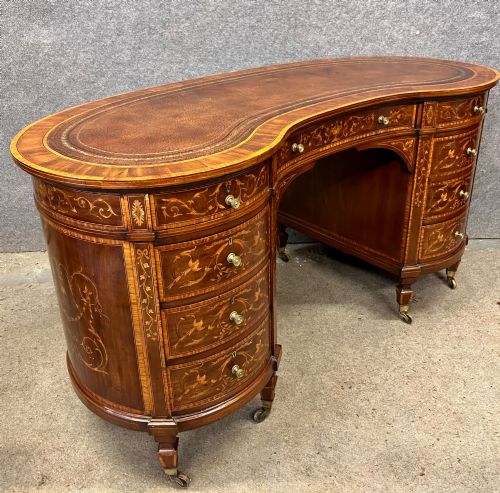
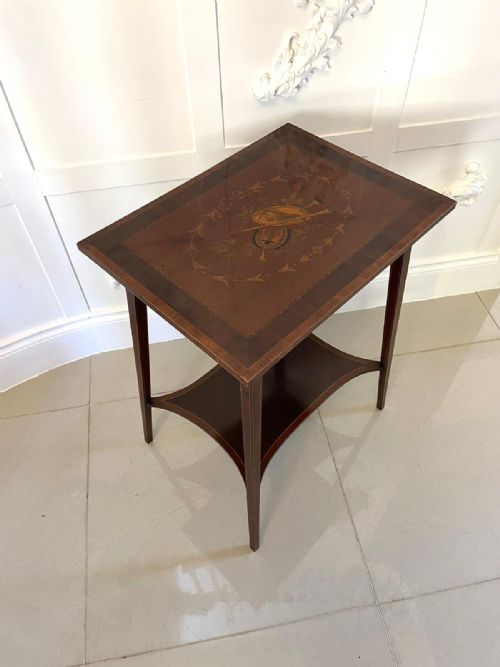
A fine antique marquetry table encompasses various forms designed for domestic use, including centre tables, card tables, writing desks, work tables, and occasional tables. These pieces span the nineteenth and early twentieth centuries, drawing heavily on French Louis XV and Louis XVI revivals alongside domestic Victorian and Edwardian craftsmanship.
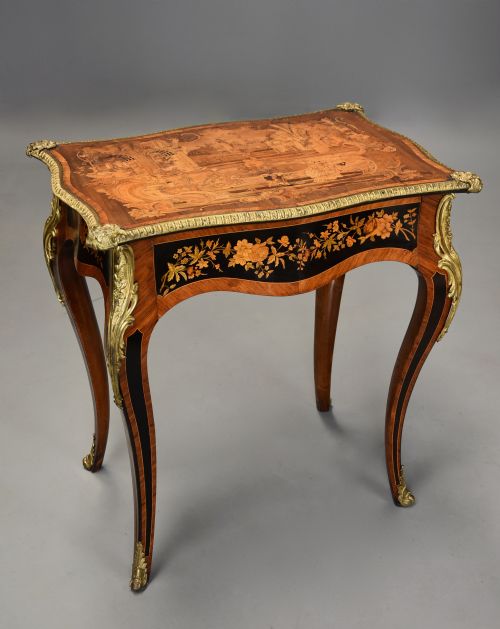
The version most commonly met on this page is the nineteenth-century Victorian or French table, frequently rendered in kingwood, walnut, or rosewood with elaborate floral or geometric inlay. Buyers often select these pieces as focal points for a room, utilising them as lamp tables, coffee tables, or functional writing desks.
How they were made
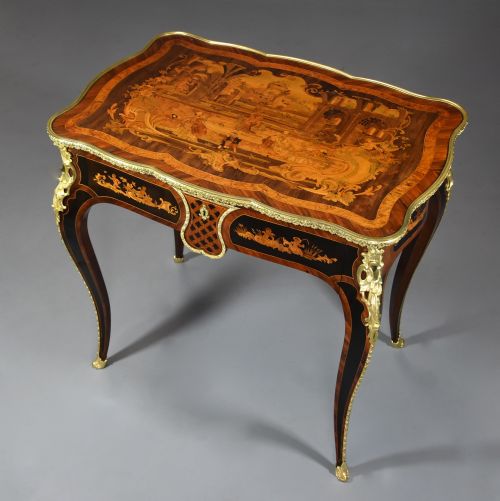
Craftsmen built these tables using robust carcase timbers such as mahogany or walnut, onto which finely sliced veneers of exotic woods like satinwood, kingwood, tulipwood, and rosewood were applied. The marquetry designs were meticulously hand-cut from contrasting timbers, sometimes incorporating lemon wood, maple, or brass to accentuate floral, foliate, and geometric motifs.
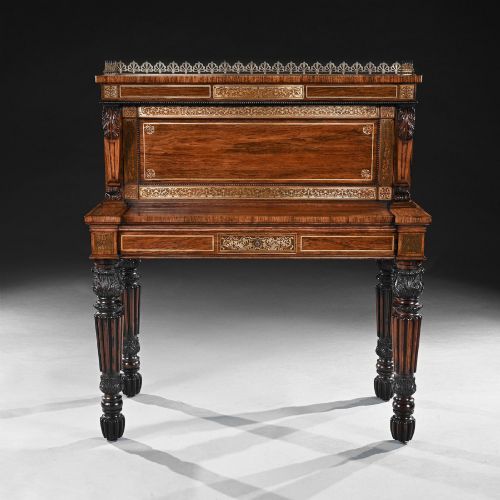
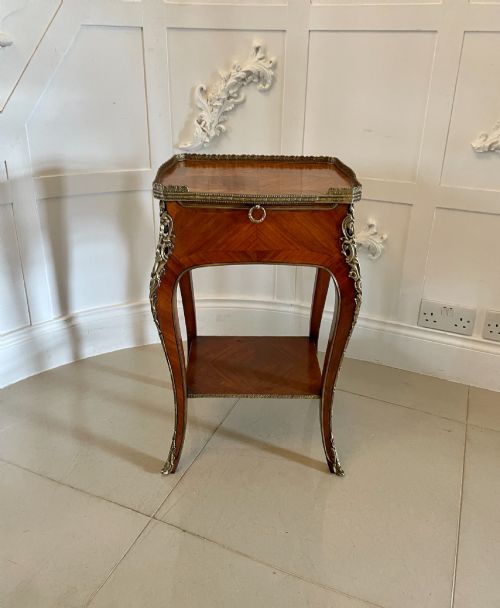
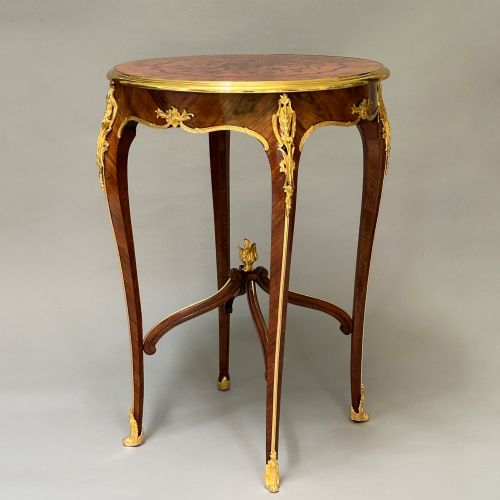
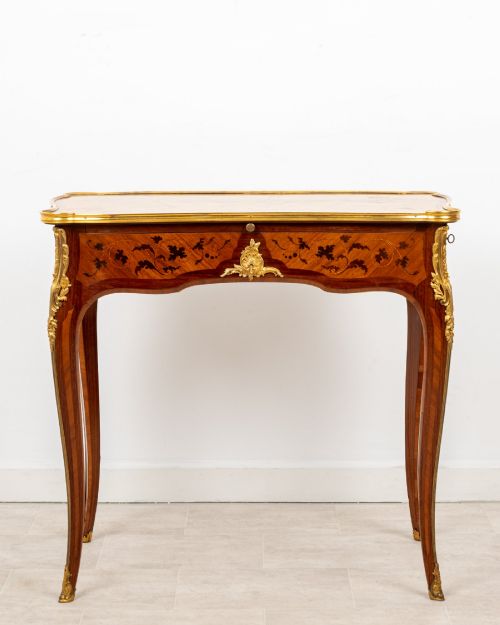
Many examples incorporate cast or chased ormolu mounts, brass stringing, and leather writing inserts to complement the wood-inlaid surfaces. Joinery techniques varied from traditional framing to sophisticated curved carcases forming kidney-shaped or serpentine occasional and card tables.
Materials recorded across current inventory include brass, ormolu, leather, mahogany, kingwood, rosewood, satinwood, walnut, and maple.
What varies in quality
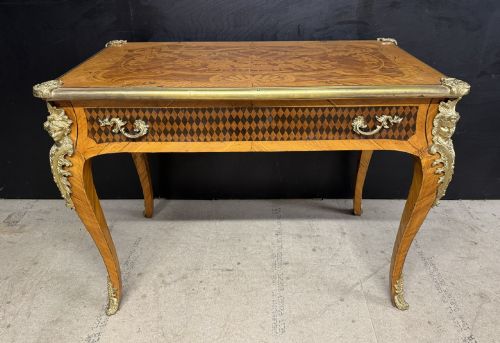
The distinction between standard production and the top of the range lies primarily in the precision of the veneer work and the integration of metal mounts. Superior pieces display seamless transitions between contrasting woods without visible filler, alongside crisp, heavy ormolu castings that follow the contours of the table precisely.
Makership and design ambition also dictate value, with signed pieces or those attributed to notable workshops demonstrating greater refinement in internal construction, secondary timbers, and balanced proportions across complex shapes like bureau plats and nest of tables.
Maple & Co.·Gillows Oxford Street Workshop·Durand·Émile Gallé·Edwards & Roberts·Gill & Reigate·George Bullock
The Fine Marquetry Table Glossary
- Marquetry
- Decorative veneer work forming pictures or patterns using various woods applied to a carcase. This technique defines the visual character of these tables.
- Ormolu
- Gilt bronze mounts applied to furniture edges and legs. It provides metallic contrast to the dark and figured wood veneers.
- Bureau Plat
- A freestanding double-sided writing desk featuring drawers and a flat top. They frequently display elaborate marquetry and ormolu mounts.
- Parquetry
- Geometric wood inlay forming repetitive patterns such as cubes or chequers. It differs from marquetry by utilising strict geometric arrangements rather than pictorial designs.
- Kingwood
- A dense, richly figured timber utilised extensively in French furniture of the nineteenth century. Its characteristic dark grain suits intricate veneering.
Fine Marquetry Table: Frequently Asked Questions
How do I use a marquetry table today?
These tables adapt easily to modern interiors as lamp tables, coffee tables, or functional writing desks in studies and living rooms.
Their decorative surfaces require simple placement away from direct sunlight and excessive heat to protect the delicate wood veneers.
What is the difference between marquetry and parquetry?
Marquetry involves cutting and assembling wood veneers to form pictorial or floral motifs such as flowers, scrolls, and landscapes.
Parquetry strictly uses geometric shapes like squares, diamonds, or cubes to create repeating mathematical patterns across the surface.
How do I identify French style tables?
French style tables typically feature shaped cabriole legs, extensive ormolu mounts, and kingwood or tulipwood veneers reflecting Louis XV and Louis XVI revivals.
Many bear the hallmarks of nineteenth-century French cabinet-making traditions, including bureau plat and etagere forms.
Are these tables suitable for daily writing?
Writing desks and bureau plats provide functional surfaces, often retaining original inset leather writing panels for daily use.
Care should be taken to use blotters and protect the polished wood and marquetry from scratches and liquid spills.