
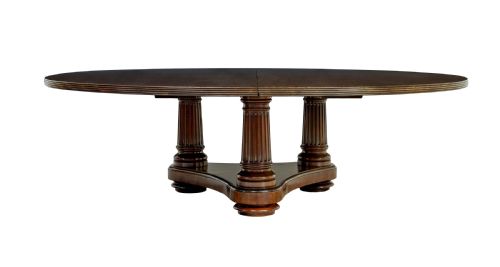


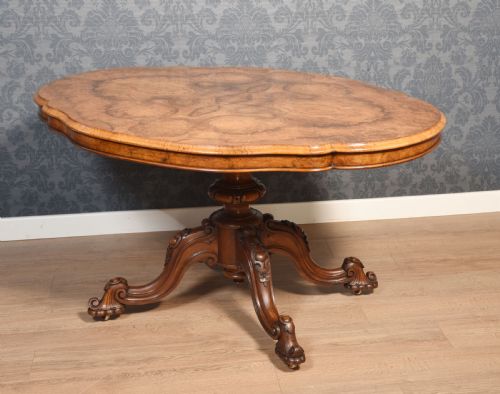


Mid Victorian Oval Table
A mid victorian oval table brings genuine nineteenth-century timber and proportion into a room, offering a distinct surface shape that softens linear spaces.
Mid Victorian Oval Table
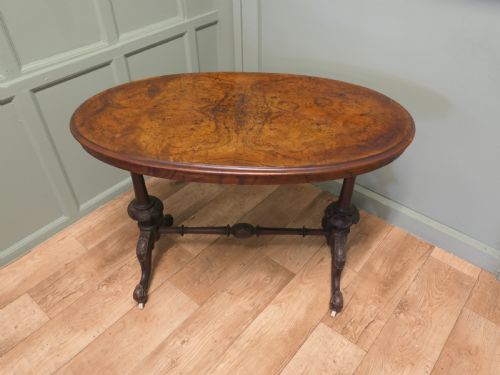
A mid victorian oval table serves primarily as a centre table, dining table, or loo table within nineteenth-century domestic settings. These pieces date from the 1850s to the 1880s, reflecting the Victorian era's taste for substantial furniture.
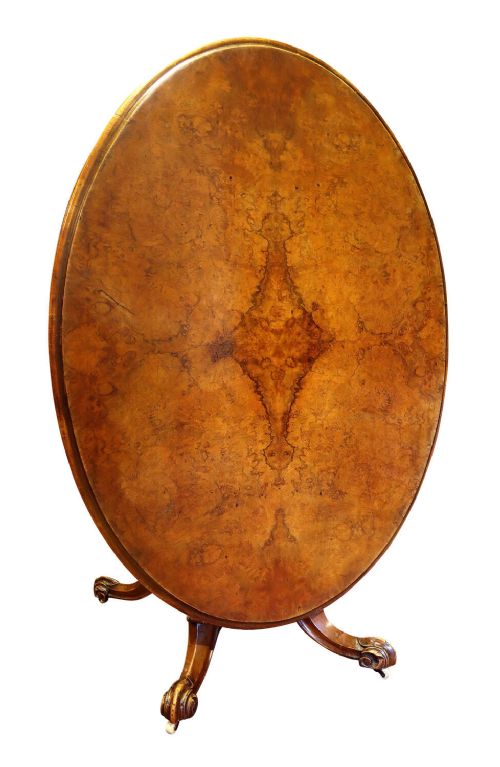
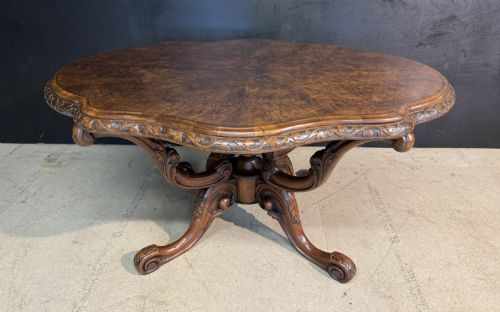
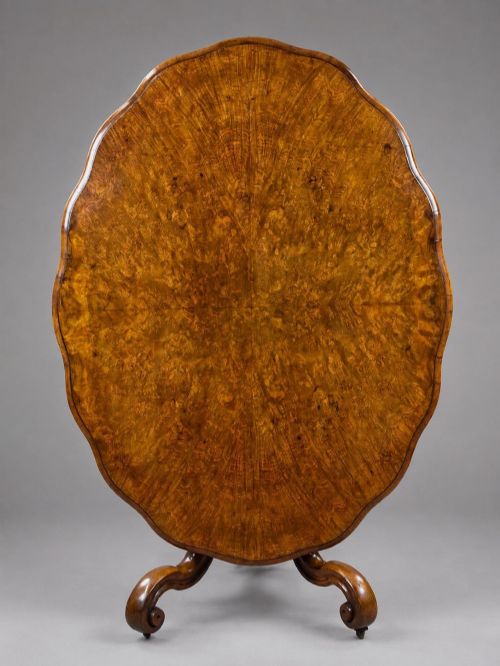
The most common form met on this page is the burr walnut or walnut loo table featuring an oval top. Buyers also encounter mahogany and rosewood examples configured as centre tables, pedestal dining tables, or smaller worktables.
How they were made
Cabinet makers utilised dense native and exotic timbers, frequently applying burr walnut veneer over solid carcases to create highly figured surfaces. Artisans incorporated boxwood inlay and brass mounts to accentuate the natural grain of walnut, rosewood, and mahogany.
Pedestal constructions often employed tip-up actions on loo tables, allowing the oval top to pivot vertically when not in use. Supporting structures relied on robust central pedestals anchored by carved basket bases or multi-legged feet.
Some tables retain their original tilt-action, ready to hide flat against the wall just as they did when the card games ended.
What varies in quality
The choice of timber grain dictates much of the visual merit, with deeply figured burr walnut commanding greater presence than plain solid walnut. Craftsmanship shows in the precision of boxwood inlay and the stability of the pedestal mechanism.
Proportions also separate standard domestic items from exhibition quality pieces designed for grander reception rooms. The integrity of the veneer work and the original polish determine the enduring visual weight of the table.
The Mid Victorian Oval Table Glossary
- Burr Walnut
- A timber harvested from the wart-like growths on walnut trees, yielding highly swirled and mottled grain patterns. Cabinet makers prized this wood for decorative table tops.
- Loo Table
- A large nineteenth-century round or oval table designed for the card game loo. These tables typically feature a tilting mechanism on a central pedestal.
- Centre Table
- A piece finished on all sides to stand free in the middle of a room rather than against a wall. Such tables appear frequently in nineteenth-century interiors.
- Boxwood Inlay
- Fine contrasting strips or motifs of pale boxwood set flush into darker woods like walnut or rosewood. This technique added geometric or floral detail to table tops.
Mid Victorian Oval Table: Frequently Asked Questions
What is a loo table?
A loo table is a nineteenth-century multi-purpose table designed for playing the card game loo after dinner. Many feature a tilting mechanism to save space when not in use.
These pieces function well as prominent centre tables in modern rooms due to their decorative burr walnut or rosewood tops.
How do I date these tables?
Dating relies on stylistic markers, timber choices, and construction methods recorded across the Victorian period from the 1850s to the 1880s. Burr walnut veneer and boxwood inlay point towards the middle decades of the nineteenth century.
Examining the underside and pedestal fixings reveals the joinery techniques specific to Victorian workshop practices.
Are these tables solid walnut?
Most examples utilise a combination of solid timber frames and decorative veneers applied to stable secondary woods. Burr walnut specifically appears as a thin veneer to showcase the swirling grain.
Solid walnut, mahogany, and rosewood also form the structural components and pedestals of these nineteenth-century pieces.
How do I use a tip-up table?
The tip-up action operates via a release catch beneath the oval top, allowing the surface to pivot ninety degrees into a vertical position. This original mechanism made storage easier in nineteenth-century homes.
In contemporary settings, the table remains locked flat for daily use as a dining or centre surface.