



Figured Walnut Coffee Table
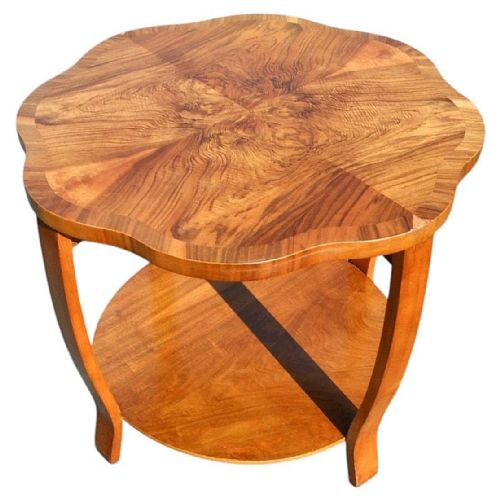
A figured walnut coffee table brings striking grain movement and rich timber warmth to a room, led by distinct Art Deco designs.
Figured Walnut Coffee Tables
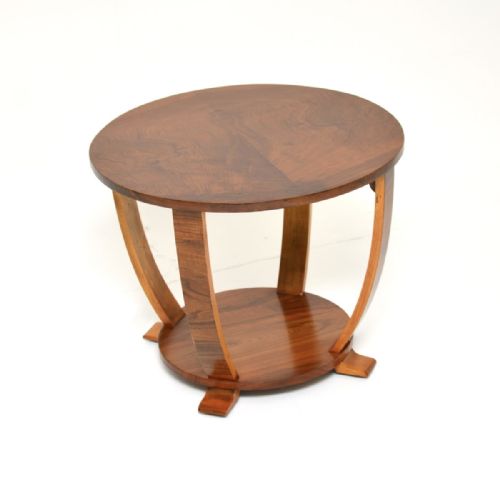
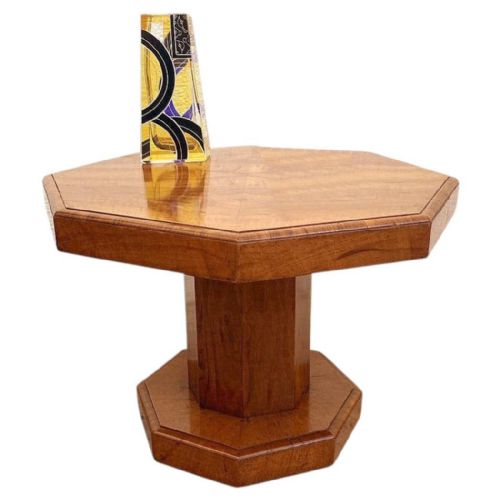
A figured walnut coffee table brings strong grain patterns and warm timber tones into a sitting room, anchoring the seating area with distinct character. Most examples seen here date from the 1920s and 1930s, aligning closely with the bold geometries of the Art Deco period.
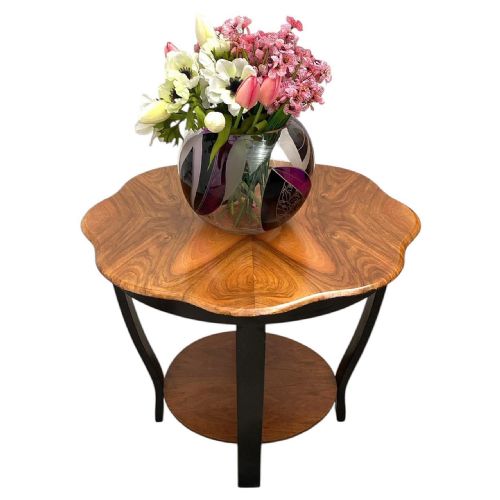
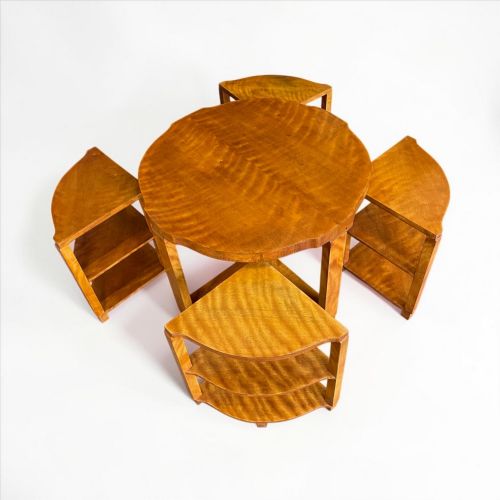
Beyond standard low tables, the selection includes occasional tables, side tables, nests of tables, and two-tier designs. These versatile forms offer functional surface space while displaying rich wooden surfaces in various shapes and proportions.
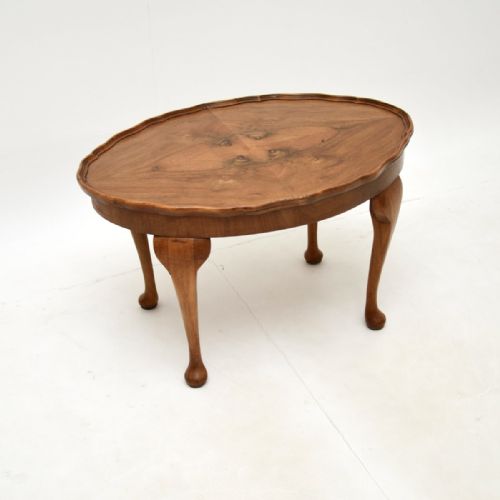
While the majority of pieces stem from the early twentieth century, earlier Victorian influences also appear in forms such as oval tables and pie crust edges. Buyers encounter both streamlined modernism and traditional revival styles within the same timber family.
Materials and Construction
These pieces rely on walnut, burr walnut, and veneer applied to solid timber carcases. Craftsmen selected veneer specifically for its decorative grain, allowing them to mirror or pattern the timber across wider table tops.
Construction techniques include cabinet making methods suited to the 1920s and 1930s, alongside older nineteenth-century joinery for Victorian-influenced pieces. Timber preparation involved careful cutting to expose the natural figuring within the walnut grain.
Retail Price Guide 2026
Typical UK retail prices for figured walnut coffee table, calculated from the Sellingantiques database of over a million retail prices indexed since 2003. This retail price guide relies exclusively on Sellingantiques data; no external sources or auction records are used, so the figures do not describe the wider market.
Listings combine Art Deco designs from 1930 with earlier Victorian walnut pieces.
Assessing Quality
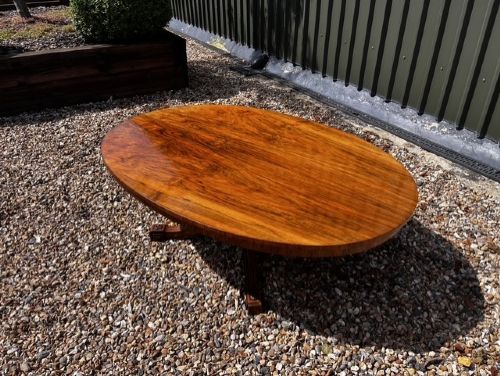
The visual impact depends largely on the selection and matching of the veneer. Superior examples display symmetrical grain patterns that make full use of the natural burr and figuring in the walnut.
The harmony of the design separates standard production from finer cabinet work. Strong proportions, clean lines in Art Deco pieces, and well-executed details such as tiered structures or inlaid elements indicate higher standard execution.
Harry and Lou Epstein
The Figured Walnut Coffee Table Glossary
- Figured walnut
- Timber cut in a specific manner to highlight natural distortions, swirls, and decorative patterns in the grain. This appearance adds depth and visual movement to flat surfaces.
- Burr walnut
- A growth deformity on the walnut tree that yields dense clusters of swirling knots when sliced. It provides some of the most intricate and prized patterning found in antique furniture.
- Veneer
- A thin slice of superior wood applied over a secondary timber base. This technique allowed makers to utilise expensive figured walnut efficiently while preventing warping.
- Art Deco
- A design movement prominent during the 1920s and 1930s characterised by streamlined shapes, geometric symmetry, and modern materials. It heavily influences the profile of these tables.
- Occasional table
- A small, versatile table intended to be moved around a room as needed. Many pieces in this category double as functional coffee tables.
Frequently Asked Questions
What periods do these tables come from?
The selection is centred around the 1920s and 1930s, representing the height of Art Deco design and modernist furniture production.
Earlier Victorian pieces also appear occasionally, offering different silhouettes like oval tops and pie crust edges.
How do I style a coffee table with this grain?
The strong natural patterns of walnut provide a bold visual base for a room. Keeping surface accessories minimal allows the timber grain to remain the focal point.
Pairing the table with neutral upholstery helps balance the rich tones and reflective veneer surfaces.
What is the difference between walnut and burr walnut?
Standard walnut displays straight or gently undulating grain patterns derived from the trunk of the tree. It offers a warm and consistent timber appearance.
Burr walnut comes from a tree growth that creates dense clusters of swirling knots, producing a much busier and more decorative pattern.
Are these tables solid walnut?
Most examples utilise walnut veneers applied over a stable secondary timber core. This technique was standard practice to showcase decorative grain without risking the warping associated with solid timber boards of that width.
Cabinet makers selected the finest figured sections specifically for these visible veneer surfaces.