
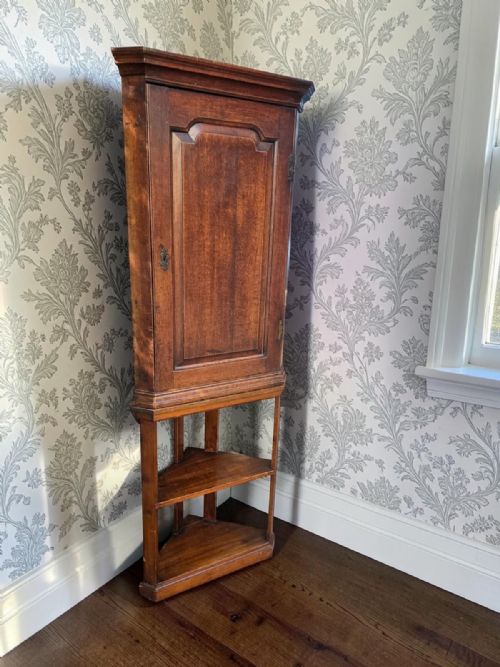
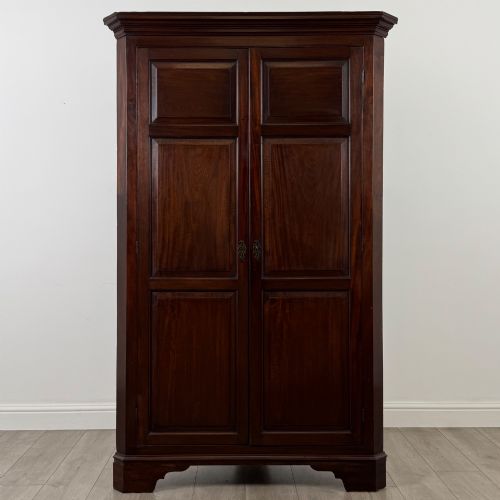
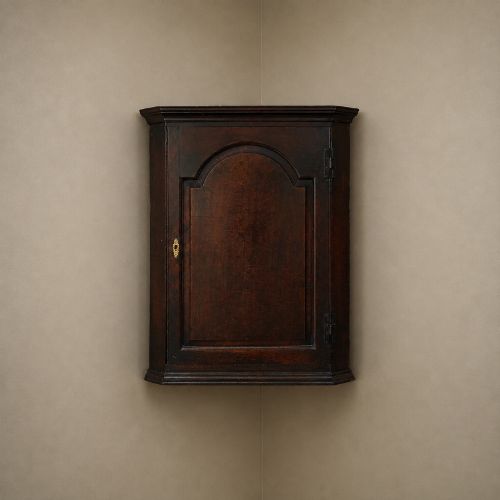


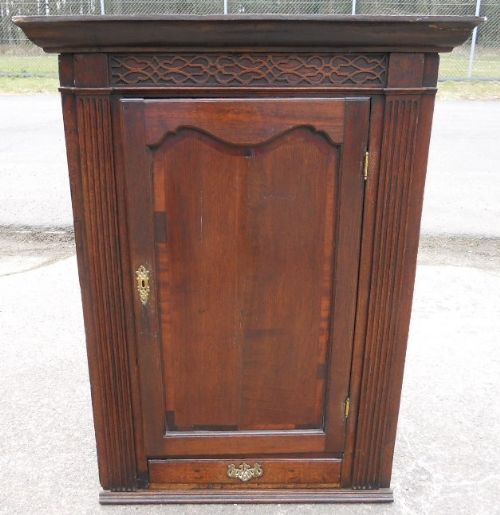
Fielded Panel Corner Cabinet
These fielded panel corner cabinet pieces transform awkward room junctions into display space with timber grain and brass hinges.
Fielded Panel Corner Cabinet
A fielded panel corner cabinet fits neatly into the intersection of two walls, making practical use of domestic space that usually remains empty. The pieces recorded here span the Georgian and Victorian periods, with examples originating from Welsh and Irish workshops alongside English ones.
Most items you encounter on this page take the form of wall-hanging cupboards or two-part floor-standing furniture. Timber selection dominates the inventory, with oak and mahogany providing the primary structural carcases.
How they were made
Carpenters constructed these cabinets primarily using solid oak and mahogany, often incorporating burr oak or yew wood for distinct grain patterns. Panels were rebated and fielded to reduce weight and allow for seasonal timber movement.
Iron and brass hardware, including butterfly hinges and key escutcheons, secured the doors and added functional detail to the timber facades.
Current listings feature oak, mahogany, burr oak, and yew wood across Georgian and Victorian periods.
What varies in quality
The distinction between standard examples and finer pieces rests upon timber selection and structural configuration. Floor-standing two-part cupboards and standing cabinets require greater carpentry skill than wall-hanging alternatives.
The Fielded Panel Corner Cabinet Glossary
- Fielded panel
- A wooden panel with its margins thinned down to fit into a groove in the surrounding frame. This technique creates a bevelled edge that adds depth to the cabinet door.
- Corner cabinet
- A cupboard designed specifically to fit into the internal angle of a room. These come in wall-hanging and floor-standing formats.
- Two-part
- A cabinet constructed in two separate sections, usually with an upper cupboard resting on a lower base. This facilitates transport and placement in domestic interiors.
- Escutcheon
- A protective plate surrounding a keyhole, commonly cast in brass on these period pieces.
Fielded Panel Corner Cabinet: Frequently Asked Questions
Where do I put a corner cabinet?
These cabinets fit directly into the internal right angles of a room, turning dead space into functional storage. They suit dining rooms, hallways, and living areas.
Wall-hanging versions mount securely to wall studs, whilst floor-standing two-part cupboards rest firmly on floorboards without additional support.
How do I date an oak corner cupboard?
Dating relies on construction methods, timber choice, and hardware styles. Pieces from the eighteenth century often feature hand-planed surfaces and pegged joints.
Victorian interpretations tend to utilise machine-sawn timber and different fastening techniques, reflecting the period of manufacture noted in the listing details.
Are these cupboards heavy?
Weight depends heavily on the scale and timber species used in the construction. Mahogany and oak floor-standing cabinets carry substantial weight due to solid wood carcases and two-part designs.
Wall-hanging versions are considerably lighter but still require proper wall fixings to support the load of the timber and stored items safely.
What is the difference between hanging and standing cupboards?
Hanging cupboards attach directly to walls at eye level or above, leaving the floor space underneath completely clear. They work well in smaller rooms where floor area is restricted.
Standing versions rest on the floor, frequently split into two sections for easier transport, and offer larger storage capacities that often include base drawers.