
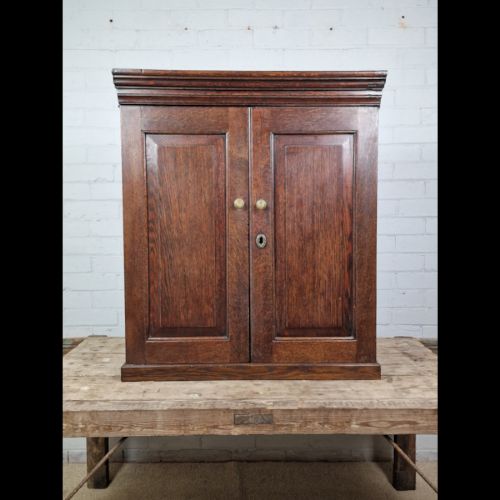
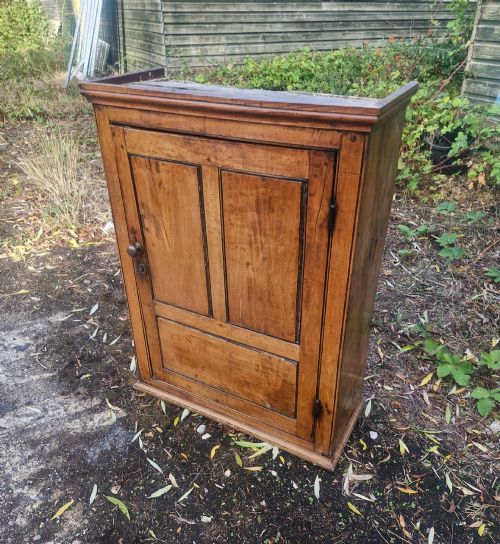
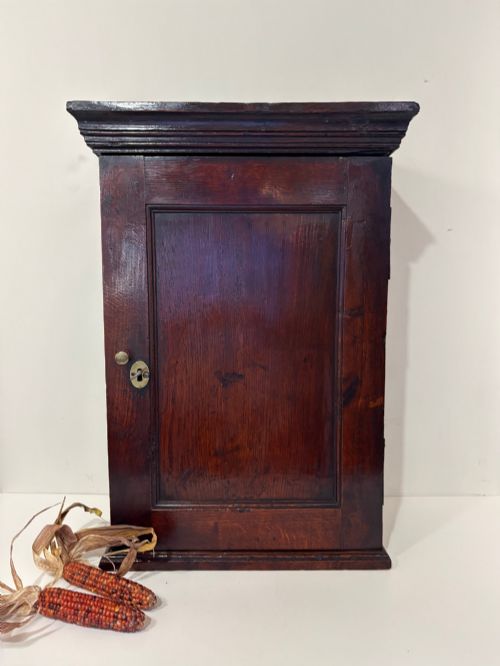
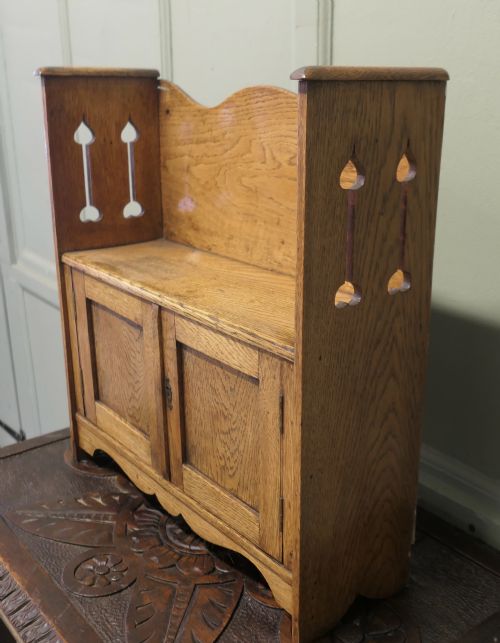
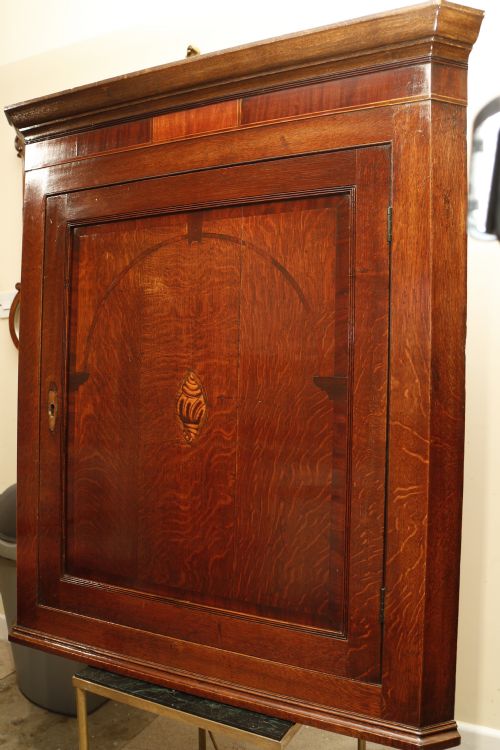


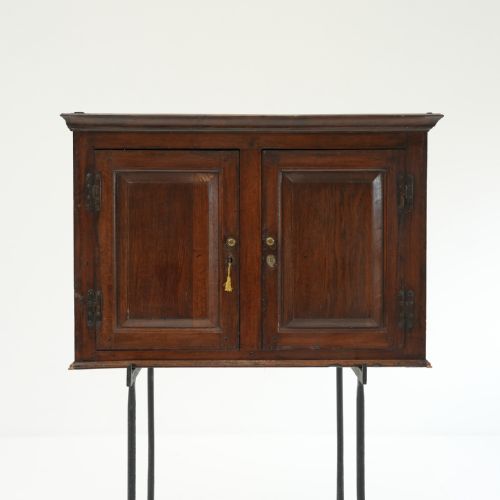


Rustic Oak Wall Cabinet
A rustic oak wall cabinet brings honest timber and compact storage to a room, grounding modern spaces with centuries of craft.
Rustic Oak Wall Cabinet
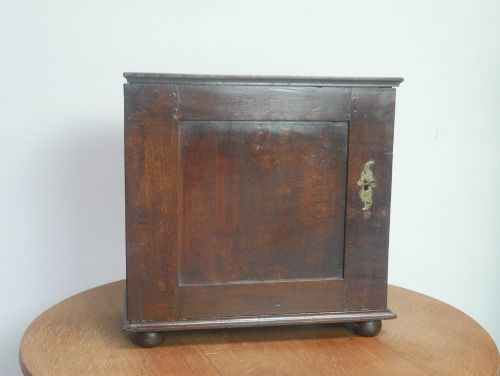
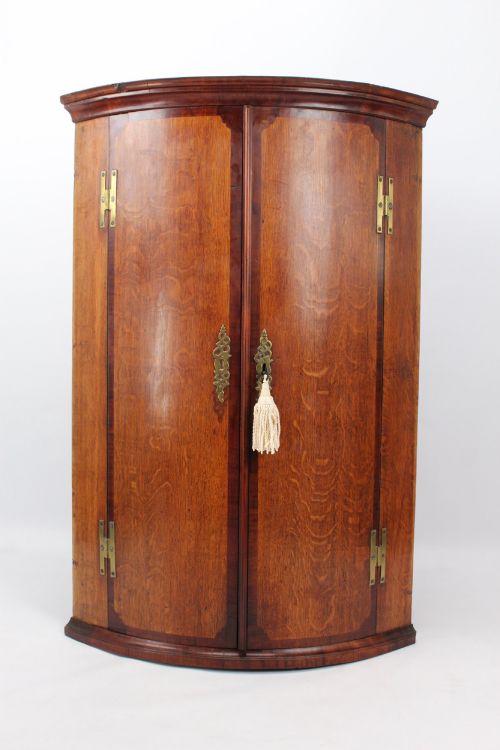
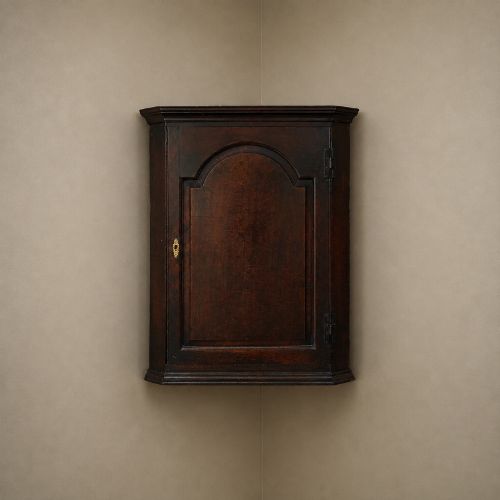
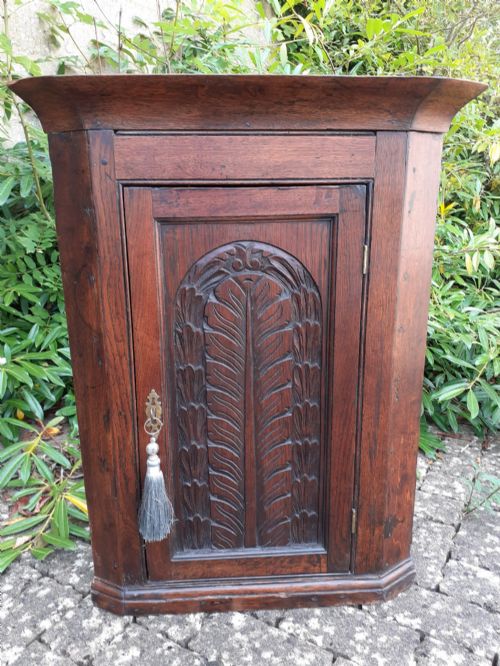
When you search for a rustic oak wall cabinet, you encounter sturdy hanging pieces designed to save floor space in period homes. These range from simple wall cupboards and spice cabinets to bow-fronted corner cupboards built to tuck into domestic rooms.
The selections span the eighteenth century, the Georgian era, and the nineteenth century, encompassing English country workshops, Welsh regional hubs, and French provincial houses. Most examples rely on oak timber, occasionally paired with pine or mahogany secondary woods.
Stylistic influences run from vernacular Georgian pieces to Arts and Crafts designs. Buyers often select these cabinets for kitchens, hallways, or living spaces where wall-mounted storage is both practical and visually warm.
Materials and construction methods
Makers built these cabinets primarily using solid oak, sometimes combining it with pine for internal shelves or backingboards and occasionally adding mahogany details or wood inlay and marquetry. Hardware typically includes brass hinges, escutcheons, and iron or wrought iron latches.
Joinery methods reflect regional traditions, from provincial French construction to Welsh country workshop practices. Surfaces often display the natural grain of timber, shaped shelves, and occasionally carved panels or painted finishes.
Rustic Oak Wall Cabinet Retail Price Guide 2026
Typical asking prices for rustic oak wall cabinet among the pieces listed under this phrase on Sellingantiques today, from the lower quarter to the upper quarter. They describe what is for sale here now, not the wider market.
Some provincial cupboards travelled from French manoir cellars to modern walls, carrying centuries of rural history in their timber.
What distinguishes finer examples
The distinction between standard utility cupboards and superior pieces lies in the choice of timber and the nuance of regional joinery. Well-proportioned cornices, well-fitted doors, and original brass or iron hardware elevate an object.
The integrity of the timber, whether an eighteenth-century Welsh piece or a later Arts and Crafts wall cabinet, dictates the character of the surface. Surviving original hinges, keys, and internal shaped shelves mark out the better survivals.
The Rustic Oak Wall Cabinet Glossary
- Corner cupboard
- A triangular cabinet designed to fit snugly into the corner of a room, maximising wall space in smaller interiors. These pieces often feature single panelled doors and shaped interior shelving.
- Spice cupboard
- A small wall-mounted storage box historically used for precious dry goods, typically fitted with a small panelled door and internal drawers or tiny shelves. Eighteenth-century examples frequently appear in oak.
- Bow front
- A convex curved cabinet front that projects outward, softening the hard angles typical of standard corner cupboards. This decorative shaping requires advanced woodworking skill.
- Marquetry inlay
- The technique of applying small pieces of veneer to form decorative patterns on furniture surfaces. It adds visual contrast to the plain timber ground of certain cabinets.
- Provincial
- Describing items made in regional areas outside metropolitan centres, often displaying local building traditions and straightforward utilitarian charm.
Rustic Oak Wall Cabinet: Frequently Asked Questions
Where should I hang a rustic oak wall cabinet?
These cabinets suit kitchens, dining rooms, and hallways where wall space allows for secure mounting. Because many are corner cupboards or spice cabinets, they utilise neglected angles effectively.
Ensure the wall structure can support the weight of solid oak timber before hanging. Placing them away from direct heat sources protects the antique wood from drying out.
How do I date an 18th century oak cupboard?
Dating relies on examining construction techniques, hinges, timber preparation marks, and vernacular style markers. Eighteenth-century pieces often show hand-sawn board marks and traditional pegged joinery.
Regional variations, such as Welsh or French provincial traits, also help narrow down the period. Hardware styles like wrought iron H-hinges further assist in identifying the manufacturing era.
Are these cabinets suitable for modern homes?
Their compact proportions make them practical for adding character and storage to contemporary spaces. They work well in kitchens for mugs or jars, or in studies for small supplies.
The warm tones of aged oak contrast pleasingly with plain plastered walls, bridging traditional and modern interiors.