


Georgian Period Corner Unit
A georgian period corner unit brings eighteenth-century proportion to awkward spaces, offering clever storage in rich timber.
Georgian Period Corner Unit
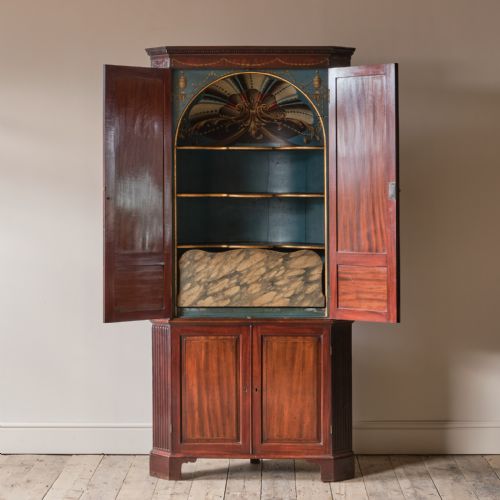
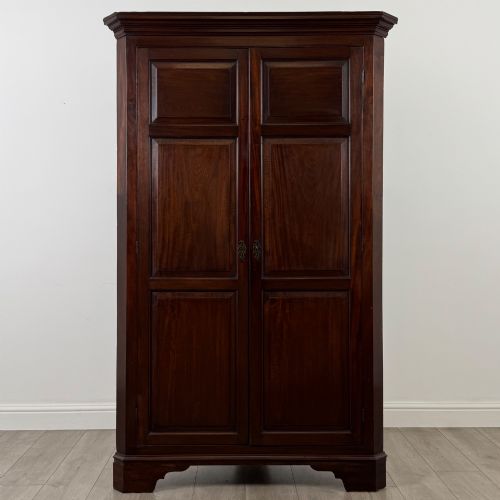
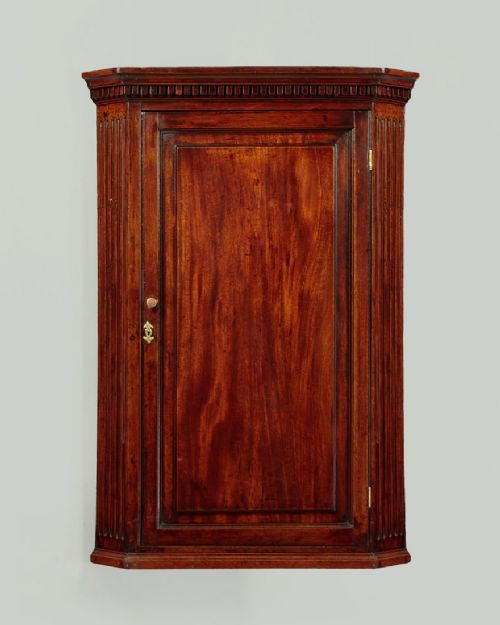
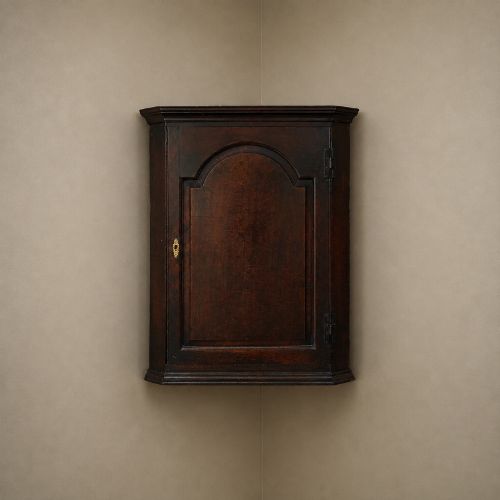
A georgian period corner unit serves as a practical architectural solution designed to fit snugly into room angles while displaying valued possessions or concealing household stores. Buyers hunting for a georgian period corner unit encounter various forms, including wall-hanging versions, standing floor cabinets, and multi-tiered etageres.
The pieces spanning this era originate across the eighteenth and early nineteenth centuries, encompassing the reigns of George III and George IV alongside the Regency period. Oak and mahogany dominate the offerings, occasionally embellished with satinwood inlay or red walnut grain.
Standing examples often feature bow fronts, while wall-hung variants frequently utilise panelled doors to secure the contents. Simpler vernacular pieces emerge alongside more formally styled sheraton iterations suited to polite reception rooms.
Materials and construction
Cabinet makers relied heavily on native oak and imported mahogany, selecting solid boards for structural integrity and longevity. Finer examples incorporated satinwood for contrasting stringing and inlay work.
Brass hardware, including hinges and escutcheons, fastened doors and secured hanging cupboards to domestic walls. Iron fixings appeared in structural framing, while leather occasionally lined associated surfaces like wash stands.
Some corner units doubled as wash stands, proving that even eighteenth-century aristocrats needed a tidy place to splash water.
Assessing craftsmanship and proportion
Superior examples display careful timber selection, matching grain patterns across panelled doors and bow fronts to create a harmonious visual rhythm. Finer pieces maintain crisp mouldings and tight joinery that withstands centuries of atmospheric change.
Refinement in secondary woods and interior shelving construction distinguishes standard utility pieces from high-status commissions. The handling of decorative inlays and the retention of original brass fittings further elevate the standing of individual items.
The Georgian Period Corner Unit Glossary
- Bow front
- A convexly curved cabinet face popular during the Georgian era. This shape softens room angles and maximises internal volume.
- Etagere
- An open tiered shelving unit designed for displaying small decorative objects. These pieces often feature multiple platforms supported by slender uprights.
- Whatnot
- A freestanding set of open shelves used for books or ornaments. The form gained popularity during the Regency period.
- Stringing
- Thin lines of contrasting timber inlaid into a wood surface. This decorative technique frames panels and drawer fronts.
- Escutcheon
- A protective plate surrounding a keyhole. These fittings were frequently cast from brass to complement the surrounding hardware.
Georgian Period Corner Unit: Frequently Asked Questions
Where should I hang a wall cabinet?
Wall-hanging corner cupboards require secure fixing into solid masonry or substantial studwork to bear the weight of heavy oak and mahogany timbers.
Position them at a height that allows easy access to internal shelves while clearing existing furniture below.
How do I clean mahogany?
Maintain polished mahogany surfaces with a soft, dry cloth to remove dust without disturbing the underlying finish.
Avoid modern silicone sprays, opting instead for traditional beeswax applied sparingly to nourish the timber.
Can I use a corner unit in a modern room?
These units integrate well into contemporary spaces by utilising previously neglected angles for storage or display.
Their restrained proportions prevent them from dominating smaller modern rooms.